The Mystery of Grace

Notes for a sermon preached at Holy Trinity Anglican Church (Old Strathcona), Edmonton AB, Oct. 15, 2023. Text: Matthew 22:1-14; (Exodus 32:1-14)

In 26 years of parish ministry, I officiated at around 100 weddings, and was a guest at many receptions. I never once heard of a wholesale rejection of an invitation, with a substitute guest list, and if anyone was ever ejected from one of those occasions for how they were dressed, it didn’t come to my attention. But today we hear Jesus telling a story of those two things happening, in a parable told to the leaders of the nation (the chief priests and the elders of the people), clearly aimed at them.

The story may have been directed to a particular group in a particular time, but I believe it has something important to say to us today. I would suggest that the central act of the story is invitation – the King invites the people of the story to a wedding banquet for his son. By their responses, the prospective guests showed themselves unworthy of the invitation. The King’s response seems violently over the top but remember that Jesus often uses hyperbole like this to emphasize a point. The A-list guests won’t come, so the King invites everyone he can find to the banquet – everyone!

The first invitation might have been a matter of asking his usual guest list who might have treated it as nothing special. The prospective guests find something better to do, like the people of Israel at Sinai, who spurned the covenant made through Moses for something much more exciting – a great feast around a golden calf. “…the people sat down to eat and drink, and rose up to revel.” Note however: in the Exodus story, God does not carry out the threatened destruction, but graciously relents when Moses intercedes. In Jesus’ story, the people with something better to do suffer dire consequences for their rejection of the invitation.

But then comes the great turnaround: if the expected guests won’t come, the King graciously extends the invitation to everyone. The invitation is not made according to the usual criteria. (Who IS on the A-list, anyway?) Instead, the invitation is a matter of pure grace – opening the doors to all who will come, making a place at the table for both good and bad. No one had to qualify for this guest list. They just had to say “yes.”

Except… one man was not wearing a wedding robe, and he was thrown “into the outer darkness.” We are left wondering,

“Where’s the grace in that?”

The grace of the second invitation reflects unconditional love: it doesn’t matter who you are; God loves you and wants you at the banquet. But the removal of the improperly-clad guest looks like love with strings attached – putting limits on God’s infinite love.

Unconditional love means that God loves us just the way we are. God loves all his creation! But with that comes the realization that God’s love is beyond our imagining, and that God loves us too much to want us to stay the way we are.

Or as Anne Lamott wrote:

I do not at all understand the mystery of grace –
only that it meets us where we are
but does not leave us where it found us.
[i]

I have encountered many congregations in my life in the church, in a variety of settings and roles. Not once have I heard a church say that they did not want to be welcoming. People generally understand on a very basic level that welcoming all is part of living into God’s grace, but we sometimes forget that just welcoming people is only part of the job. The other side of the equation is that God has expectations of us, as individuals and as a church. The church may be a “come as you are” party, but it’s also a “come prepared to change” party.

Being a church that welcomes all is a good thing, but being a church with a mission is also a good thing. Being only a welcoming church can be self-defeating when it develops into as “anything goes!” This seems to be one of the major subtexts of Matthew’s gospel: some in his audience believed that the Law had been set aside, and they were free to do as they pleased.[ii]

Being only a missional church is likewise self-defeating when it presents as welcoming people only according to their ability to fit into the mission. Down the one road lies chaos as everyone does what pleases them, and the church loses sight of its reason for being. Down the other road lies exclusivity, as insistence on “fitting in” drives people away.

How to fix the chaos? Invite people to share in the church’s mission.

How to fix the exclusivity? Welcome everyone – without question.

The “chaos road” is characterized by what Dietrich Bonhoeffer called cheap grace:

Cheap grace is the grace we bestow on ourselves.
Cheap grace is the preaching of
      forgiveness without requiring repentance,
      baptism without church discipline,
      Communion without confession…
Cheap grace is grace without discipleship, grace without the cross,
grace without Jesus Christ, living and incarnate
.[iii]

In a church dominated by ideas of cheap grace, nothing really matters. Bonhoeffer challenged the church of his day (in pre-war Germany) to realize that everything matters; that following Christ is a matter of life and death.

He wrote (edited for inclusive language):

When Christ calls a [person], he bids [them] come and die.[iv]

The balance between welcoming and exclusivity is never easy, and it is never static. Churches constantly swing between the two poles. Healthy churches understand that swing as a response to the mystery we call the grace of God, on guard against both chaos and rigid exclusivity. Healthy churches invite and welcome people to join with them in the mystery of grace: meeting us where we are but calling us ever deeper into a life ruled by the love of God, seeking to be part of God’s mission.

All are invited to this place. All are welcome. And all are challenged to learn day by day the mystery of costly grace, which calls us ever forward into new life in Christ. So today and every day:

Come to the table – all are welcome.
Come to the banquet of the King – all are welcome.
Come to the wedding feast of the Lamb – all are welcome.

Yes, come, but come expecting to be changed.
Come with open eyes and ears and hearts and minds.
Come with your spirit laid bare to God.

Put on the wedding robe of those who seek to know and serve Christ in all things. Come into the mystery of God’s grace – and give thanks.

Amen.


[i] From “Traveling Mercies”
[ii] Matthew 5:17-20
[iii] From “The Cost of Discipleship”
[iv] Ibid.

The Sower, the Seed, and the Soil

Notes for a sermon on Matthew 13:1-9, 18-23, July 16, 2023, Holy Trinity (Strathcona), Edmonton

The Gospel readings for today and next Sunday are taken from Chapter 13 of Matthew, sometimes referred to as “The Parabolic Discourse.” This doesn’t mean it’s about parabolas, but rather about parables. Same Greek root, different but related concepts – but you’re not here for a lecture on etymology, are you?

The Discourse comprises seven parables, most with an agricultural theme, plus explanations for the two we are hearing. These are the only parables for which Jesus gives explanations, and then only privately to his disciples. The rest of his listeners get that somewhat maddening exhortation: “Let anyone with ears listen!” In other words, some will understand, and others (maybe most?) will go away puzzled.

It seems that the disciples were among those who were puzzled. Otherwise, why would they ask Jesus for explanations? And why those two parables?

The answer to the first question (the desire for explanations) lies in the nature of parables. Some parables are very short and to the point, while others are longer stories, like the Good Samaritan and the Prodigal Son. Most parables use imagery from daily life, making them accessible to the hearers. What sets them apart from ordinary stories is that they usually have a twist, something unexpected in the telling, that opens the door to seeing reality in a new way. The standard reaction to this kind of story is “But what does it mean?” and Jesus’ response doesn’t help. Another notable feature of parables is that they are typically capable of different interpretations – in other words, there’s no “right answer.”

In today’s parable, the Sower, the image is of a farmer sowing seed, seemingly almost at random, not looking carefully at where he tosses it. The seed falls in various places, with various results. The seeds that fell on the path or on rocky ground or among thorns were wasted, bearing no fruit for the harvest. Only the seeds that fell on good soil brought forth grain. Sowing seed is a normal activity, but is it normal to strew the seed around quite so carelessly? Why not take care to make sure that the seed falls where it will do some good? Some have called this parable “The Wasteful Farmer,” which may say something about the disciples’ puzzlement. No-one stays in business long with such a careless attitude. This suggests a possible answer to the second question I posed: why these two parables? Perhaps because they seemed particularly troubling to them as compared to some of the others, and perhaps because Jesus wanted to point to some aspects of discipleship.

The explanation Jesus gives to them suggests to me two things to take from the parable:

First, the disciples are being trained to spread the Good News, the Word of God. They need to understand that picking and choosing with whom they share the Word is not their task. Rather, they are to share the Word with everyone, knowing that not all will bear fruit as they might wish.

That lesson still stands today. Spread the Word to everyone and let those with ears hear! God will take care of the rest.

Second, the disciples themselves are the soil upon which the seed is sowed. Jesus no doubt wished that they all might be good soil, bearing fruit a hundredfold, or sixty, or thirty. But Jesus also knew that they all had cares and worries and difficulties in their lives, and at various times they would be the path, the rocky ground, or the thorn-infested soil. The message: aim to be good fertile soil, understanding that your own lives can sometimes provide less than perfect growing conditions.

That lesson also still stands. No-one is a perfect disciple all the time. Things happen which make it hard to hear God’s Word, difficult to thrive, sometimes impossible to bear much fruit. That’s just the nature of ordinary human life. Strive to bear fruit, knowing that you will fail at times. Our Baptismal Covenant makes that clear, referring to “when you fall into sin,” not “if you fall into sin.” God will use us as we are able – and God is always there, welcoming us back again and again.

I found a piece on the internet this past week called “Rules for Doing Theology.” With a little tweaking, it could easily be re-titled “Rules for Being a Disciple.” The last rule needs no tweaking: “Make a mess. Fail. Try again. Grow in grace. Repent and forgive.” As a friend once said, the Gospel is like playing baseball, except you get to keep swinging until you hit a home run.

And here’s one more way of reading this parable, which played an important role in my early formation as a priest. I had never paid the Sower close attention until one day about a year and a half into my time in my first charge, when it turned up as the Gospel for the day in the Daily Office Lectionary. Life was getting a bit difficult, as some parishioners were expressing disappointment that the church wasn’t growing much, if at all. They believed that having their own priest after 20 years of being half of a shared ministry would result in the parish suddenly blossoming to look something like it did in the ‘50’s and ‘60’s. “We thought the Sunday School would be full again, like it was back then,” was one of the things I heard. In other words, they saw it as my responsibility to make the church grow. And I fell into the trap of beating myself up for not fulfilling their expectations.

When I read this parable that day, it suddenly dawned on me: if I put myself into the role of the Sower, I could see that my job was to spread the seed – to proclaim the Good News by word and example – and it was up to God to make the seed grow and bear fruit. Reflecting on both the Baptismal Covenant and the vows of ordination has shown me how important this distinction can be.

Friends, we are called to be the Sower, the Seed, and the Soil, remembering that people have different roles at various times, as Paul said in I Corinthians 3.6:

I planted, Apollos watered, but God gave the growth.

We are called to sow the seed freely, not choosing where but letting God deal with the seed wherever it may fall, giving thanks that growing the seed is not up to us alone. God will give the growth, and God will give fruit in due season.

We are called to seek to be fertile soil for the seed to grow. God the Holy Spirit will open our hearts and minds.

Finally, we are called to be the seed itself: to be and to bear the Word of God in person for others, seeking to let the Good News be visible in all that we say and do.

May it be so!

10 years on…

Ten years ago today, I preached my last sermon at St. Matthew’s Cathedral, Brandon, handed my keys back to the churchwardens, enjoyed a lovely lunch and party with the parish, and then walked away from more than a quarter-century of full-time ordained ministry. The memory of that day has dimmed a bit, but I do remember some feelings — a strange mixture of joy, relief, sadness, and some anxiety and fear.

The years since then have been a whole other adventure, as I became used to being one of those people who are paid not to work, otherwise known as the retired. I have learned to enjoy having the time to do just what I want to do — and also not do what I don’t want to do. A friend said a few years ago “I thought you were retired. You always seem so busy.” “True,” I said, “but I’m as busy as I want to be.” In stipendiary ministry, the busyness of life comes from external, job-related pressures. In retirement, any busyness is my choice. In this time, I have taken on various commitments voluntarily, and have enjoyed working at most of them. Things which no longer gave pleasure could easily be walked away from, as I have done a couple of times.

I have fewer commitments now than I did five years ago, but they are all things that give me life, keeping my mind and body active and engaged. Health considerations aside, life is pretty good as I mark this anniversary, and face a milestone birthday in a couple of weeks.

But those feelings…

There was joy, especially in the way the congregation expressed their gratitude for my ten and a half years among them. Parting can be sorrowful, but in this case it was sweet sorrow. I left knowing that my work had been mostly well received, and I could walk out with head held high.

There was relief, because most of the pressures I had felt in that position, especially in my final year, were being taken away. I could hand off the problems to someone else!

There was sadness, because we were moving far enough away to make continued relationships with many people I had come to treasure very difficult to maintain. This was the sorrowful aspect of parting.

There was anxiety and fear, because I was moving into a wholly new phase of my life, and I was quite unsure about how that would work out. I’m not a person who deals well with surprises, so we had made reasonable plans, but I was well aware that these plans could come unstuck in the twinkling of an eye.

But over-riding all of that was the sense that I had followed God’s call to that place, striven to serve to the best of my abilities there, and was now following God’s call to a new place.

I haven’t achieved most of the projects I had envisioned for retirement, but that doesn’t matter. I am still trying to follow the call day by day in this adventure we call life. As it has been said, “Life is what happens when you’re busy making other plans.”

And now onward, to wherever God may lead.

What is Tradition?

Is tradition this saying (maybe not from Mahler, BTW):


Or this meme from Facebook?

Or this?

“The accumulated wisdom and experience of the past.” – Michael J. Pitts

The word is one which is used in in a variety of ways in different places and groups. There is some truth in all of the above three, but in my view none of them really get to the heart of the matter.

The issue is that “Tradition” is most often used as a noun, but must also be seen more as a verb. What I call “small-t traditions” are customs and practices that we have received from people in the past — perhaps the near past, perhaps antiquity, or something in between. They can be things we do, truths we believe, symbols we hold dear. For many, these things are of great importance, helping to provide a link to where we have come from and who we are.

I distinguish the small-t variety from “big-T Tradition,” which is, above all else, a process devoted to connecting us to our roots. By means of Tradition, we keep our group’s story alive. A biblical example may be found in I Corinthians 15:1-5:

Now I should remind you, brothers and sisters, of the good news that I proclaimed to you, which you in turn received, in which also you stand, through which also you are being saved, if you hold firmly to the message that I proclaimed to you—unless you have come to believe in vain. For I handed on to you as of first importance what I in turn had received: that Christ died for our sins in accordance with the scriptures, and that he was buried, and that he was raised on the third day in accordance with the scriptures, and that he appeared to Cephas, then to the twelve.

Paul is here describing a process and a message, which he describes “as of first importance.” He received this message and handed it on to his Corinthian converts, and it has been handed on to Christians through two millennia “as of first importance.” Here is the central story of the Christian faith, without which we become disconnected from our roots.

Christianity is not the only group to have a foundational story. Other faiths, nations, organizations, ethnic groups, families: all tend to look to where they have come from to know who they are and what their purpose in life may be. The process of Tradition aims to keep these threads unbroken, often giving rise to traditions (small-t) which help to tell the main story.

And here’s the problem: sometimes the small-t things end up being treated as big-T matters. To quote a friend of mine, “We end up majoring in the minors,” and can run the risk of diminishing the power of our root story. Michael Pitts is correct in his assessment of Tradition quoted above, which summarizes nicely the result of attending to the process of making sure that the Big Story is kept central. Lore from the past may be wisdom, but it may also be nonsense. Careful handing on the big truths helps us sort out the two.

The point of the Tradition process is not to enshrine the past, but to learn from it so that our future may be in continuity with the past in creative ways. I think that Pablo Picasso’s rather earthy definition points in this direction:

“Tradition is not wearing your grandfather’s hat; tradition is begetting a baby.”

Whatever group you may align yourself with (for me that’s the Christian faith in its Canadian Anglican manifestation), you may be assured that the group has a root story that needs to be remembered, taught to our children, and learned from to be used as a guide for the future.

Caveat #1:

Root stories are often written by the dominant people of history, and can obscure or even deny the stories of others. I was taught Canadian history from a settler/colonial point of view, which saw our indigenous peoples as proper subjects of displacement, assimilation, and cultural genocide. I believe I know better now, but I was the recipient of a historical tradition that denied much of its own truth. Just because our elders taught us in that way does not make it right.

One example from church history: Mary Magdalene is sometimes described as a former prostitute, but the biblical offers no support for this idea. Rather, it came from a misreading of various texts that became enshrined in our teaching. Today, we are able to see Mary as the first witness of the Resurrection, a leading member of the early church, and one whom Jesus loved.

Caveat #2:

Small-t traditions very easily acquire a life of their own, and must be treated with caution. Here’s a tongue-in-cheek view of how easily things become entrenched:

The Growth of (Church) Tradition
Year 1: “That was different for a change.”
Year 2: “That’s what we did last year.”
Year 3: “We’ve always done it that way.”

If we have a beloved tradition (or custom, the word I prefer), we need to ask ourselves from time to time whether it is still helping us to hand on the Story. Is it part of Tradition, or are we just doing it because “We’ve always done it that way?” If we’re doing the latter, we are indeed succumbing to peer pressure from dead people.

So let’s not wear our grandfather’s hat and call it tradition. Let’s continue to tell our stories so that the babies we beget will grow to know them in all their truth. Let’s hand on the fire!

Be like that Pharisee?

Notes for a sermon on Luke 18:9-14 at Holy Trinity, Strathcona, Oct. 23, 2022

Many interpretations of today’s Gospel reading end up saying, “Thank God we’re (I’m) not like that Pharisee,” portraying the Pharisee as the “bad guy.”

Don’t be like that Pharisee? I would suggest that there is much about him for us to emulate. He is almost a paragon of faithfulness. The things he points to go far beyond what the Torah (the written Law) requires.

We tend to see the Pharisees in the negative because of the bad press about them in the Gospels, but they were held in high esteem by many of their contemporaries. They appeared as a movement around the time of the Roman occupation of Judea, almost a century before Jesus. They were a religious resistance movement, dedicated to keeping themselves separate from the Romans by keeping the Law in its fullness, keeping covenant with God to remain in God’s favor, observing both the written Law (the Torah), and what is often called the oral law (Halakah). One of its principles was “building a fence around Torah,” which means doing things to ensure you will never violate the written Law. For instance, the third commandment forbids taking the name of God in vain. How do you know if you have used God’s name in vain? The easiest way to avoid doing that is never to utter the name of God, the norm among Jews to this day.

The Torah has laws about fasting and tithing, the two practices the Pharisee in our lesson points to in his prayer. Fasting and tithing more than the letter of the Law requires ensures that you don’t miss your legal obligations. He is striving actively for the purity to which all faithful Jews were to aspire. He appears to be an admirable and pious person, worthy of emulation.

I have no hesitation in saying, “Be like that Pharisee.”

Then there’s the tax collector. While most citizens of Judea detested the Romans, and the Pharisees and most other Jewish sub-groups had their own ideas about how to shed the invader’s yoke, some actively collaborated, including tax collectors. Operating under contract, they collected the taxes levied by the Romans, allowed to add something for themselves. Laborers do deserve their wages, but it seems that many used their position to line their pockets. Out of greed, they were both actively working for the oppressor and oppressing the people in their own way. Their practices may not be expressly banned in the Torah, but they were certainly regarded in the same light as sinners. They weren’t necessarily ritually impure, but they lived on the edge of the community, unwelcome in most places.

I have no hesitation in saying, “Don’t be like that tax-collector.”

If Jesus had told the story up to the content of the two men’s prayers, and then asked which of them went home justified, most of his hearers would have replied “The Pharisee,” the seemingly obvious answer.

However, Jesus did not ask a question, instead making a pronouncement which stood the standard view right on its head. Which of these two went home justified? Not the well-intentioned and pious Pharisee, but the sinful tax collector. The likely response from the listeners was likely “What?!” The response from many of us today would likely be the same.

Why does Jesus upend his audience’s perception of the story? The second half of the pronouncement is “…all who exalt themselves will be humbled, but all who humble themselves will be exalted”, reflecting one of the major themes of Luke’s Gospel, reversal of fortunes, seen very clearly in Mary’s song in 1:52-53:

He has brought down the powerful from their thrones,
   and lifted up the lowly;
he has filled the hungry with good things,
   and sent the rich away empty.

Reversal of fortune challenges our comfort with the way things are and contrasts it with God’s desire for the world. If we are seeking like the Pharisees to fulfill God’s desire for the world, we need look no farther than Micah 6:8:

He has told you, O mortal, what is good;
   and what does the Lord require of you
but to do justice, and to love kindness,
   and to walk humbly with your God?

The Pharisee’s prayer is all about himself and his acts. Do we hear justice in his word? Kindness? Hard to find. And humility? I think not. The prayer is more a pride-filled boast about the pious life he has achieved, mostly without ascribing it to God. He sets himself above others, using the tax-collector as a handy target.

The other man is “standing far off,” perhaps meaning just inside the door to the Court of the Israelites, where Jewish men went to pray. (Not women, who had their own court, separate from the men.) He is on the edge of the inside. Where he gets it right is in acknowledging his sin and casting himself totally on God’s mercy. His prayer is about what God can do, and which the supplicant hopes will happen. Will he leave his work and make restitution in the community? We aren’t told. What we can see is that he has placed himself in God’s hands in a way that the other has not.

If we hold up his prayer against Micah’s words, I believe we can see self-understanding of his lack of justice and kindness, and true humility before God. Humility does not mean to count ourselves as worthless. It means being honest about ourselves—our gifts, achievements, and failures—before others and before God, without exalting ourselves in any way.

There’s no sin in being pious like the Pharisee. But let us seek to understand that our piety is not of our own doing, but rather a Spirit-led response to the God who is already at work in our lives.

Friends, let us seek to be like the Pharisee, living faithful and pious lives, striving to do what God needs done in this world. But let us do so as we seek to be like the tax-collector, presenting ourselves humbly before God and others, seeking to be as God has called us to be.

May we know who we are before God, giving humble thanks for what God has already done in us, seeking to amend our ways where needed, and praying for the grace to put God’s gifts to work for all of God’s people.

Amen.

Surfacing – with thanks!

Late in his life, the great composer Ludwig van Beethoven poured his soul into a work for string quartet, the third movement of Op. 132 in A Minor. He subtitled it “Heiliger Dankgesang eines Genesenen an der Gottheit, in der Lydischen Tonart” (“Holy song of thanksgiving of a convalescent to the Deity, in the Lydian mode”). I was privileged to hear a riveting performance of the whole quartet recently, which helped the Isidore String Quartet win the first-place prize at the Banff International String Quartet Competition (aka “BISQC“). If you have 15 minutes available, give it a listen here.

When I heard this performance, I was recovering from an ailment that had troubled me since mid-June. Most of the summer had been lost, while I sat and stared at the walls, without the energy to do much of anything except pant for breath after walking from the living room to the kitchen. The doctors were puzzled, running all sorts of tests, all normal, but finally one came up with a symptomatic remedy, which I was still on when we went to Banff. I was doing much better by then, but it took until mid-September for me to feel almost myself again.

During these long months of the COVID-19 pandemic, I have heard many people lament the virus and its effects, especially from those suffering with “Long COVID.” Fortunately, my wife and I have both escaped it to date. When I first got sick in June, I tested for the virus five times in ten days, and all were negative. While I did not have the “virus of the day”, I was experiencing ill-health in a way I had never done before.

For much of my earlier life, I saw myself as a healthy person. I have had only one in-patient operation, a tonsillectomy when I was five, which was the only time I have ever been hospitalized. I have never broken a bone that I know of for sure. (I might have broken a toe some years ago, but I was able to get around well enough that visiting the doctor seemed pointless.) In 26 years in parish ministry, I never once missed a Sunday due to illness. Prior to about three years ago, I had experienced only one blip in my health, during my second year of my theological studies, when I was diagnosed with a mild case of lupus. Regular medication, reasonable precautions, and some modification of my life-style kept the disease at bay, until 25 years after diagnosis, when I was declared disease-free. Hallelujah!

I retired a few years later in good health, with a lot of energy which I proceeded to pour into various activities. All was good until I started to have severe pain in one hip, which was determined to be osteoarthritis. This is almost certainly traceable to when I fell while skiing at the age of 16, and tore up my knee. Some years later, a physiotherapist noted that I walked crookedly, turning my left foot out. It appears that the old injury had never properly healed, so I had been twisting my hip and knee for decades. Result? A knee which occasionally hurts, and a hip which hurts most of the time. I have had to learn new physical habits, which have helped the condition become more or less manageable, although a hip replacement was a possibility in the early times after my diagnosis.

A hip replacement is very probably off the table now, because of the next diagnosis, which I received last February. It was found that I had prostate cancer which had already spread to various bones, including the femur just below the arthritic hip. I doubt very much that I would be seen as a candidate for a hip replacement, when the bones around the joint are not in good shape.

In the meantime, I am dealing with the cancer diagnosis. It was devastating at first. A horizon had appeared in my life in a way that I had never before experienced. The doctors gave various predictions of time-lines, but all of them had an end-point. They said that this condition is not curable, but it is controllable. Because of the bone involvement, I was not a candidate for surgery, so I am on Androgen Deprivation Therapy (aka “Hormone Therapy”). All appearances seven months later are that this is having the desired effect, but I will be on the medication for the rest of my life, or until it ceases having effect.

I had not previously been very public about this, because I was really unsure about how things were going to go. Things now seem more predictable and manageable. I’m not looking for sympathy or an outpouring of prayer intentions, but if that’s your inclination, so be it.

The effect on my life has been to spur me to get some things done that had been left lying for years. People often call this “putting your affairs in order.” The realization of the need was made very real to us right around the time of my initial diagnosis, when our son-in-law died suddenly and unexpectedly at the age of 54, leaving no will.

Aside from some rather intimate matters (Permit me not to overshare!), the main physical effect of the cancer and the treatment has been a general reduction in my energy. I have found it necessary to back away from some activities, especially some that take place in the evening. I was just getting used to this new normal when the other thing happened in June, and I was knocked flat on my backside for the next two months. You might understand if I describe my state of mind in most of this time as depression and anxiety. I would sit down to a meal, often not feeling much like eating, and try to give thanks, when I really could not see much to give thanks for.

The last few weeks have given me new hope, new energy, and a new resolve to live my life to the fullest as I am able in the months and years ahead, however many they may be. I was invited to preach at another parish on October 9, the weekend of the Canadian holiday of Thanksgiving, and prepared for it by pondering Paul’s exhortation in Philippians 4:6 to “…not worry about anything, but in everything by prayer and supplication with thanksgiving let your requests be made known to God.”

The message? Even when things seem awful, there is still much for which to give thanks, which should underpin the whole of our approach to God. As the medieval mystic and theologian Meister Eckhart said “If the only prayer you say in your life is ‘thank you,’ that would suffice.”

I listen to Beethoven’s wonderful music, and I am reminded that the call to give thanks becomes very profound when one has faced one’s destiny. I wasn’t anywhere close to dying last summer, but there were times when I wondered if I would ever recover. But now…

I am surfacing. I feel well. I am enjoying life more.

Thanks be to God!

Truth and Reconciliation and the Exile

September 30, 2022

September 30 in Canada is National Day for Truth and Reconciliation, also known as “Orange Shirt Day.” This is now the second annual observance of the day, after being proclaimed by the Federal Government in response to the finding of over 200 unmarked graves on the grounds of the former Kamloops Indian Residential School. Federal services are suspended for the day, and many federally regulated businesses such as banks are closed. A variety of events are happening across the country, including CBC Music broadcasting an entire day of music by Indigenous artists. Our parish church, Holy Trinity in Old Strathcona, is marking the day in Sunday’s liturgy.

It will naturally take some time for this day to become a fixture in people’s consciousness. Some might be impatient at this pace, but social changes take time. That’s a simple human reality. It is analogous to the impatience some have expressed about reconciliation, wanting to have it NOW. What they are not recognizing is that reconciliation is not something you can just “have,” but rather something that must be worked at. It’s a process, not an event. It is linked to Truth, without which it is impossible.

I have heard a great deal of anger expressed by Indigenous people, directed at the Government and its policies, the churches which ran the Residential Schools, and the people who took over their ancestral lands, whether by treaty or not. Much of that anger is well-justified, but my people (“settlers”, to use the current term) often react badly to it.

In pastoral work we learn a lot about the grief process, which in general terms is a response to loss. Elizabeth Kübler-Ross identified five things that she first called “stages”: denial, depression, anger, bargaining, and acceptance. Today we more often call them “aspects,” because we have learned that grief is not linear. Rather, different aspects of grief may manifest at any time after the loss.

I believe that indigenous anger is part of a long-term historical process of collective grief, stemming from the loss of land, a way of living, language, and culture. I am suggesting that a Biblical analogue to Indigenous grief may be found in the story of the Exile and the post-exilic period.

There are two main formative events in the history of the Jewish people: the Exodus and the Exile. The Exodus from Egypt, with all its drama, is still remembered by Jews as the event that made them a people with a land. It is celebrated at Passover to this day. The Exile to Babylon lacks a similar celebration, likely because it is difficult to celebrate a disaster. However, responses to disaster have a profound effect on a people’s self-understanding, which is certainly the case here. I note that the 20th-century Holocaust has had a similar re-shaping effect on modern Jewish life.

While large parts of the Hebrew Bible (aka the “Old Testament”) have their origin in pre-exilic times, most of what we have today came into its present form in the post-exilic period. The dominant questions raised by the Exile were “Why did this happen?” and “What can we do to prevent its recurrence?” Their land has been lost, their temple has been destroyed, their way of life has become impossible. Responses to these questions run the spectrum from near-universalism (see Isaiah 40-55) to law-based exclusivism (see Ezra and Leviticus).

The writings from the Exile period often exhibit aspects of grief, as the people come to grips with the reality of the events that have overtaken them. Our Sunday liturgy will include Psalm 137, which begins with “By the waters of Babylon we sat down and wept,” and ends with a howl of vengeful anger towards Babylon. In its nine verses it displays all the aspects of grief except acceptance. I invite you to pray through this Psalm slowly, reflecting on the grief it manifests, and on how it may help us on the truth-paved path of reconciliation.

35 and counting…

Notes for a sermon preached at Holy Trinity Anglican Church, Edmonton, Alberta
May 29, 2020, the Seventh Sunday of Easter

When the Rector asked me to cover services this Sunday, I said “Sure”, and than looked at my calendar and realized it was the 7th Sunday of Easter, only two days before May 31. 35 years ago, the 7th Sunday of Easter fell on May 31, when I was ordained a Deacon. (It was also the night that the Edmonton Oilers won their 3rd Stanley Cup, so I can take no credit for the street party outside afterwards.) When I realized what the day was, I told the Rector that I wanted to take the opportunity to reflect on my time in ordained ministry, and she quickly agreed.

Then I looked at the readings and came up against the closing portion of Jesus’ “high-priestly prayer” from John’s Gospel. As John tells it, these are the last words Jesus spoke to his disciples before his death, praying for those who will come after “that they may be one.” That’s us!

When I was involved in campus ministry as an undergraduate (U. of Alberta, B.Sc. ’69), the big thing was the Ecumenical Movement, after Rome had started to open its doors through Vatican II. I recall starry-eyed students – yours truly included – running around proclaiming unity, singing “They’ll know we are Christians by our love,” and expecting organic unity among the churches – soon! By the time I was ordained, I knew that organic unity was a pipe dream, but I still had some hope for all Christians to be one. I still hold that hope after 35 years, but the history of these years has been very mixed in this respect, even within the Anglican Church.

There’s been a lot of change. For some people, the best change is no change at all. Others say we have not changed nearly enough. What I do know is that change is inevitable. The Greek philosopher Heraclitus held that “impermanence is the characteristic feature of the world,” which certainly rings true for me. It has certainly been true in the Anglican world in recent years.

It’s hard to proclaim unity among Christians when our own church has seen divisions, mostly arising from changes in the church which some people reject. One predates my ordination, the ordination of women to the priesthood and later to the episcopacy. The Anglican Church of Canada first ordained female priests in 1979, and some clergy and laity responded by moving to Roman Catholicism or Orthodoxy. It was an issue for some of my classmates during my time at seminary. It remains an issue for some today, even at Holy Trinity. For me, it has been one of the most positive changes in our church in the past half-century, bringing a new wholeness to our understanding of Christian ministry.

Another change which I regard as positive, but which has led to division in our ranks, is in gender and sexuality issues. As we have moved toward fuller inclusiveness in welcome, ordination, and marriage, some people who disagreed have gone elsewhere, including establishing a parallel Anglican Church. Some others stay, but reluctantly.

A big positive: the development of a closer relationship with the Evangelical Lutheran Church in Canada. Again, some saw this as negative, but for me, it was long overdue. When our two churches sat down to talk, we quickly discovered that we agreed on almost everything and had done for centuries. We used different theological languages, and came at church order from different directions, but these proved easy to deal with. I was privileged to be a delegate to General Synod 2001, and to take part in the great celebration of the signing of the Full Communion agreement. I doubt that I’ll ever forget seeing our Primate and the Lutheran National Bishop dancing together around the arena in Waterloo. Our two churches have been enriched by this relationship, a visible sign of being one as Christ prayed for us.

Shortly after my ordination, we began to be aware of the issues around Residential Schools, a subject about which I had been woefully ignorant. As lawsuits began to pile up, there was some real fear that our whole institutional structure would collapse if we didn’t properly address the matter. Our Primate gave an apology to the Anglican Council of Indigenous Peoples’ Sacred Circle in 1993, opening the door to the work of healing and reconciliation. Since that time, we have become more aware of our colonial history and its effects on indigenous people. Healing and reconciliation will take years – well beyond my lifetime! – but we are on the road towards being one with our indigenous brothers and sisters.

One place where change has been at best mixed is our response to sexual abuse and harassment within the church. In times past everything was left up to Bishops’ discretion, but it became clear that this was inadequate, at times leading to greater harm. (The pattern of moving offending clergy to other parishes is not solely the province of the Roman Catholic Church. It has happened in the ACC. Most dioceses now have policies and procedures in place, but they lack consistency across the church, and a tendency to protect the institution before the victims persists. The “#ACCToo” issue is the most recent and visible example, dealing with how our national office handled a draft story intended for the Anglican Journal, potentially identifying victims when confidentiality had been assured. An open letter circulated around the national church, gathering hundreds of signatures, calling for accountability and for care for the complainants. The Primate responded in an interview on CBC News. I found her words less than helpful, but I do understand that the situation is still unfolding. Assurances that steps are being taken to ensure that it won’t happen again are not enough when people have been hurt. We have made some positive changes here, but much remains to be done.

That’s a bit of a downer, but now let’s look at one of the most positive areas of change – the growing understanding of the church as “missional.”

I served in three parishes before retiring. Two of those had long histories, and their understanding of the church had been deeply shaped by history. One was characterized by the “chaplaincy model,” seeing their role as ministering to people like them – mostly of British heritage. The other had played a big role in local history, and people looked back to the glorious past when the church was full and there were 200 children in Sunday School. I’m not criticizing them, rather observing that their sense of mission had been formed through many years of ministry practises that seemed to me to no longer fit the societal situation.

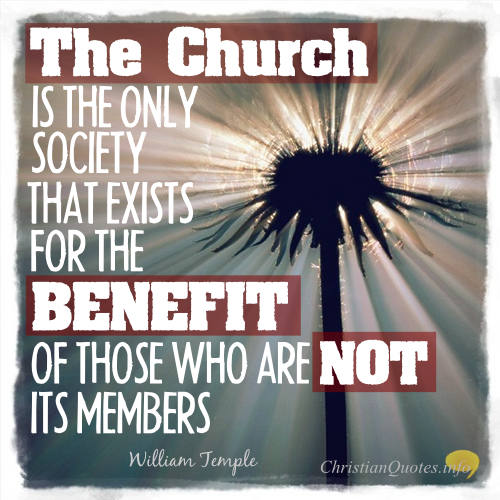
What I have experienced in other places and very much at Holy Trinity is a growing sense of the church as missional – existing for the benefit of others, not just those who are “on the list.” There will always be echoes of our history, but I don’t find it driving our agenda. The agenda continues to evolve. In some ways, the pandemic has been a blessing, forcing us to find new ways to be the Church, but God’s mission is still the same, as Jesus handed it to his disciples on the night before his death.

The church of 2022 is facing some huge challenges. With the Holy Spirit as our guide, we may move forward contributing our share of God’s mission in this world. Things won’t ever again be the same – but that’s always been true.

It has been a joy and a privilege – and at times a great challenge – to be part of the changes of the past 35 years. I do not expect to see the next 35 to their completion. But I am certain they will happen, and I believe that God will be glorified in God’s people.

May we all be one.

Amen.

The “Great Clean-up”

Notes for a sermon at St. Matthew’s Anglican Church, St. Albert, Alberta, May 22, 2022
Texts: Revelation 21:10, 22-22:5; John 14:23-29

I bought a new phone a few weeks ago. The old one was working reasonably well, but the manufacturer was no longer providing security support, and some newer apps required a more current operating system. Transferring all my stuff to the new phone was quite easy, and then I turned to the old one, first deleting all the personal stuff I could find, and then deleting the apps. I realized afterwards I didn’t need to bother with all those deletions, because doing a factory reset would clear everything identifiable. The factory reset took a few minutes, and by the time it was done the old phone was in the same state as when I took it out of the box several years ago — just as its builder intended.

Something like this is going on in today’s lesson from the Revelation to John, a part of the great vision which concludes the book in Chapters 21 and 22. Revelation is easily the most misunderstood book of the Bible, and it has unfortunately become one of the most often-cited texts by certain kinds of Christians. The error many people make is to treat it as prophecy for these times, connecting its images and scenes to events today. These things are then interpreted as “signs of the times,” an indication that God is about to step in and wipe everything out. It is commonly seen as foretelling the end of the world. Wrong!

Revelation is the New Testament’s only example of “apocalyptic,” a genre of literature common in Jewish circles in the centuries before and after the time of Jesus. The only other example that made it into the Bible is Daniel, from which Revelation draws much of its imagery and themes. Both books were written to people of faith suffering oppression from an oppressive power. In the case of Revelation, the intended audience was Christians under the Roman Empire. Both books are written in a kind of code which would be understood by the faithful, but not by the oppressors. Both have the same message: stand firm in the faith, and the conqueror will be vanquished.

Revelation’s message is really very simple: God wins!

One of the book’s images is the “Beast,” a metaphor for the Roman Empire. The city of Rome is never mentioned by name but is referred to in another metaphor as “Babylon the Great,” another oppressor of God’s people in times past. Much of the book makes horrifying reading, but the tone shifts dramatically in Chapters 21 and 22. Instead of doom, death, and destruction we are presented with a vision of a “new heaven and a new earth”. That word “new” is perhaps a bit misleading – it should better be read as “renewed” or “re-created.”

In some video lectures (“Victory and Peace or Justice and Peace?”) I watched recently, New Testament scholar John Dominic Crossan said that Revelation is not about the end of the world. Rather, he said, we should see it as God’s “Great Clean-up.” This is the reset to end all resets! At the end of this age, earth will be restored to God’s purpose, as Jesus taught us to pray:

Thy kingdom come, thy will be done,
on earth as it is in heaven.

The book does not end with a destroyed earth, but rather a redeemed earth. In the new age, on this reborn and renewed earth, all evils and sorrows will be gone, and everything will be according to God’s will, God’s holy purposes. As Genesis tells it, the world began being broken in one garden, around one tree. God will restore it to its original purpose in a second garden, with a new tree of life and a new river flowing from the throne of God.

But that’s in the future – sometime! It’s a wonderful promise, but it has not yet been fulfilled. Just look around you to see how things are not as God would wish them to be. War, mass shootings, civil unrest, famines, pandemics… Do I need to go on?

Almost everyone is aware in their own way that “Things just ain’t right!” And almost everyone seems to have their own recipe for making things right. Politicians of various stripes will give you a variety of remedies. Raise the question with five friends over coffee (or some other libation), and you’ll get at least six answers. If you’re so inclined, you can consult your horoscope or your tea leaves. But what I often hear is this: some people are ready to give up, and some others claim to know what will fix everything. I don’t accept either of these all-too-human views.

If we only listen to human voices, all we will get is human solutions to human messes. We must look elsewhere, finding a different sort of guidance from a different source for helping to bring this world closer to the reality expressed in the Great Clean-up. Another well-known New Testament scholar, N.T. Wright, calls this activity “building for the kingdom.” In the video companion to his book “Surprised by Hope,” (HarperOne 2008) he likens it to being like a stone mason carving individual stones for the building of a great cathedral. The mason knows his task, and he also knows that if he does not do it up to standard, the piece may not fit where it is intended, and part of the big enterprise may fail. The mason is guided by the master mason, who is guided by the architect, who is guided by a higher authority.

And that’s how it is with Jesus’ people in this in-between time while we await the Great Clean-up. We are not called to sit idly by as we wait for God to get in with the push broom and the Lysol. We have a role to play, working as if it has already begun. But how do we know that what we are doing is according to God’s will, and not ours? My friends, we have a guide for our work. Jesus promised this guide to his disciples before he went to his death:

the Holy Spirit, whom the Father will send in my name,
will teach you everything, and remind you of all that I have said to you.

The Great Clean-up will come in God’s own time. In the meantime, amid all the troubles of this present age, we are called to work for that coming, living into it, living as if it had already happened. It’s a tall order, I know, but we are not alone.

Jesus is with us always to the end of the age, and the Holy Spirit, the Advocate, is within us – individually, and (more importantly) corporately – at all times to guide us into the peace which Jesus left us. Our job is to listen – to pray! – and then, hearing, to work for what is good and holy and peaceful and loving.

We are not alone.

Thanks be to God!

The Scandal of Unconditional Love

Notes for a sermon preached at Holy Trinity, Edmonton (Old Strathcona)
Mar. 27, 2022. Text: Luke 15:1-3, 11b-32

If it’s not about love, it’s not about God.” – Bishop Michael Curry.

We learn from texts in both testaments of the Bible that love is God’s essential nature, notably in Exodus 34:6f:

The Lord passed before (Moses), and proclaimed,
‘The Lord, the Lord, a God merciful and gracious, slow to anger,
and abounding in steadfast love and faithfulness,
keeping steadfast love for the thousandth generation,
forgiving iniquity and transgression and sin,

Also in the first letter of John 4:7-8:

Beloved, let us love one another, because love is from God;
everyone who loves is born of God and knows God.
Whoever does not love does not know God, for God is love.

And from Jesus himself, in John 13:34, in the only thing he called a commandment:

I give you a new commandment, that you love one another.
Just as I have loved you, you also should love one another.

Today’s we heard one of the best-known and best-loved stories in the Bible about love. It’s most often known as “The Prodigal Son,” but it’s about three people, not one.

It is easy to focus on the younger son, and his father’s joyful reception of him when he returns to the family home. It is a heartwarming account of how much and how unconditionally the father loves his errant offspring. This first scene could stand on its own as a lesson. But then Jesus adds the second scene, in which the older brother refuses to join the welcome. An apparently simple story of restoration takes on greater depth.

The younger brother received a huge gift from his father – one-third of his estate, according to the custom of the time. It would likely have been a large sum, and the father would have had to go to great lengths to free it up. The young man lived high on the hog for a while, and then – disaster struck. Not an uncommon turn of events for people who are unprepared for wealth.

Did the young man repent? The word doesn’t appear in the text, but we are told that he resolved to go home because his life has become unbearable. He rehearses a confession but is never allowed to complete it. His father greets him without condition, without anything but sheer joy at his return. His love overrules everything, even the young man’s waste of the great gift he received.

Things change dramatically when the older brother enters the scene. He can’t even refer to the younger one as his brother and is angered by his father’s behaviour. This reveals the scandal of unconditional love. The father loves both sons, but the older cannot accept the father’s love for the younger. How can he love such an obvious sinner?

I have heard similar sentiments from people over the years. God’s love is a wonderful thing when it applies to us or to those we love or agree with. But when we hear that God’s love extends to some other people – well, it can be very troubling.

Martin Hattersley was a lawyer, a politician, and an Anglican priest. He served as an Honorary Assistant at several city parishes before his death in 2020. His life was profoundly changed when his daughter was murdered in 1988. Out of this came a ministry of involvement in victim support and advocacy on behalf of prisoners. He did not come to it easily. I heard him speak to a clergy gathering, when he talked about the process of coming to terms with the reality of his daughter’s death, and with the troubling idea – born from the teachings of Jesus – that God could still love her murderer. Martin talked about days spent raging at God. He spent days pacing his family room, sometimes in tears, sometimes in visceral anger. How could God love a person who did such an evil thing?

That’s a very important question. I pray none of us ever need to grapple with it in the kind of circumstances that Martin Hattersley did, but it’s a question that I believe is raised every time we deal with people whose actions we see as evil, whether greater or less.

Can we ever see the offender as a child of God, equal to us in God’s eyes? It’s hard; it’s really hard. But we must remember that we are all part of God’s creation, God’s great labour of love, and all human beings are loved by God. Even people whom it is easy to hate – and there are plenty of such people – even they are objects of God’s love.

However…

God’s unconditional love does mean that God loves us – everyone of us – just as we are. But it also means that God loves us too much to want us to stay the way we are. The younger brother is on the road to repentance and a new life. The father deeply loves the older brother, now his sole heir, and he invites him to shed his bitterness and join in the party. Although there is good reason for the older to resent the younger, to continue living with this kind of feeling will only serve to further divide the two. His younger brother wasted the great gift he received, but the older is now in danger of scorning and wasting the great gift of his father’s love.

Loving and praying for our enemies is very difficult. It goes against the grain for most of us, but it’s a significant part of the Gospel imperative. I am reminded of the words of the Absolution from BCP Morning Prayer, which say that God “…desireth not the death of a sinner, but rather that (they) may turn from (their) wickedness, and live.” God desires the best for all his children. God desires life for all of us. Out of this desire, when we are on the wrong track, God calls us to a change of mind, a change of heart.

Did the older brother’s heart ever soften? Did he relent and join the party? We are not told, but that is his father’s wish for him. God calls us to join the party, to turn from whatever is keeping us from entering into the fullness of joy.

And let’s remember that Jesus told the story in response to scribes and Pharisees who were upset at Jesus’ welcome of “tax-collectors and sinners.” Who is invited to dine with Jesus? Not just the supposedly holy, but everyone!

Let’s join the party, not condoning the acts of those who do us harm, but praying for them, and looking for reconciliation in the light of God’s love.

May we seek the good of all.

May we love our enemies and pray for those who persecute us.

May God’s steadfast love for all of God’s children guide us today and always.

Enjoy the party!

Amen.