Come Out!

Notes for a sermon preached at Holy Trinity Anglican Church (Strathcona), Edmonton, on June 1, 2025. Text: John 17:20-26 – Easter 7, Year C

Thirty-eight years ago today, Edmonton was in a celebratory mood, after the Oilers won the Stanley Cup on home ice. The street party on Jasper Avenue went on for hours, trapping some friends who had come from Saskatoon for another event. They had parked their car near All Saints Cathedral, right on Jasper. They sat there for a while.

The event they had come for was an ordination at All Saints, when Archbishop Kent Clarke ordained a priest and three deacons, one of whom was me. The ordination took place on the seventh Sunday of Easter, the Sunday we are observing today. My family and friends and I had reason to celebrate, although our celebrations were a bit more muted than the near-chaos on the streets.

Looking back at that day, I realize that I don’t remember much of it, except for a few odd details. What I do know is that the Gospel lesson read that night was taken from the same chapter as the selection we just heard. John 17, known as Jesus’ “High-Priestly Prayer”, is spread over the three years of the Lectionary. The Prayer is at the end of the Farewell Discourse, after the Last Supper, immediately before the Passion. As John tells it, these are the last words in Jesus’ earthly ministry. As his time draws to its end, Jesus first prays for his own “glorification,” going on to pray for his disciples, that they will be protected from evil and sanctified in truth. Finally, in today’s lesson, he prays “…on behalf of those who will believe in me through their word, that they may all be one.”

This passage has often been used as the Gospel lesson for services of Christian Unity, as churches from different traditions gather to pray that we may be one. In my University years, in the first excitement of the ecumenical movement after Vatican II, many of my Christian friends were running around proclaiming that organic unity was just around the corner. I wish it were so, but historic change usually takes a lot longer than 50 or 60 years. Churches don’t change easily! In recent decades we have entered full communion with other denominations, all taking years of talk and prayer, and those full communion declarations are only half-steps toward visible unity.

However …

One of the things I have observed since June 1, 1987, is that while churches may have erected barriers between themselves and others, those walls often vanish when we seek to serve the wider community. Time does not permit me to elaborate on the many examples in have in mind. Suffice it to say that Churches which have deep differences in doctrine and worship often find themselves much more united when they are called to do things like feed the hungry, care for the homeless, and advocate for people on society’s margins. Getting outside our church buildings brings us together in ways that inviting people to worship with us does not. Shared worship is valuable in itself, but I believe that it is an act with a wider purpose – calling on all God’s people to follow Jesus in the world.

Look over to your right, at the second stained glass window from the front. The image in the central panel is a rendering of William Holman Hunt’s 1854 painting “The Light of the World.” It was inspired by the text of Revelation 3:20: “Listen! I am standing at the door, knocking; if you hear my voice and open the door, I will come in to you and eat with you, and you with me.” One of the notable features is that there is no door handle on the outside. Jesus cannot enter unless someone inside opens the door.

Shortly after Pope Francis died, I read a story allegedly dating from the conclave which elected him. It seems that Cardinal Bergoglio, as he was then, preached a short homily to the assembled cardinals, referring to this same image. He suggested that it could be viewed in another way: Jesus, the Light of the World, is inviting people huddled behind locked doors and closed minds to come out and share in his ministry – to come out into the world, to be light-bearers with him amid all the world’s strife and needs. In this view, Jesus is not saying “Let me in,” but “Come out!” The story went on to say that it may have been this homily that helped Cardinal Bergoglio become Pope Francis. I believe his ministry shows how much importance he gave to this message.

While it is sometimes comforting to shut ourselves into our safe spaces (which we absolutely do need!), it is important to remember that the holy havens to which we retreat are not the only places, or even the main places, where the church’s mission is fulfilled. The gathered church is like a ship in harbor, doing little as it remains there. It must eventually set sail to carry its cargo across the open seas. Jesus prays for those who will follow him into those wider places (his disciples) and then for those who believe in him through the disciples’ words – US! – for protection, for unity, and for the bonds of love, which bear us up as we venture into the world beyond these walls. As we go, we are to shed the light of Christ in all places.

As Jesus said in the Sermon on the Mount:

‘You are the light of the world. A city built on a hill cannot be hidden. No one after lighting a lamp puts it under the bushel basket, but on the lampstand, and it gives light to all in the house. In the same way, let your light shine before others, so that they may see your good works and give glory to your Father in heaven.’                                                                                       (Matthew 5:14-16)

When the Oilers beat the Flyers 38 years ago, people felt the need to get out to share their joy, to celebrate with others their faith in their hockey heroes. That’s one kind of celebration (and a pretty good one!), but we Christians have something more to share. We are called to share in the joy of the Resurrection of Christ, which calls us out of our safe places to share the Good News with the wider world.

And how do we share that joy? How are we to be the light of the world? We could, of course, buy an amplifier and shout over the crowds on Whyte Avenue. Some have done that, but it seems to me to be self-defeating, shedding more heat than light. Instead, we should share our joy and light by being joy and light for others. That joy and light takes different forms for different people at different times. For the hungry, it is food. For those who mourn, it is comfort. For the lost, it is a helping hand, a guiding presence. For the lonely, it is a friendly presence. All of these and others are ways to shed God’s light into a world which so often seems plunged into darkness.

So, I believe the question for each of us today is this:

How am I light for other people, and
        How do I share Resurrection joy with them?

Friends, let us come out of our safe places.

Let us come out and spread Christ-light wherever we go.

Let us come out and be the Church,
doing God’s holy work among God’s people.

May it be so.

35 and counting…

Notes for a sermon preached at Holy Trinity Anglican Church, Edmonton, Alberta
May 29, 2020, the Seventh Sunday of Easter

When the Rector asked me to cover services this Sunday, I said “Sure”, and than looked at my calendar and realized it was the 7th Sunday of Easter, only two days before May 31. 35 years ago, the 7th Sunday of Easter fell on May 31, when I was ordained a Deacon. (It was also the night that the Edmonton Oilers won their 3rd Stanley Cup, so I can take no credit for the street party outside afterwards.) When I realized what the day was, I told the Rector that I wanted to take the opportunity to reflect on my time in ordained ministry, and she quickly agreed.

Then I looked at the readings and came up against the closing portion of Jesus’ “high-priestly prayer” from John’s Gospel. As John tells it, these are the last words Jesus spoke to his disciples before his death, praying for those who will come after “that they may be one.” That’s us!

When I was involved in campus ministry as an undergraduate (U. of Alberta, B.Sc. ’69), the big thing was the Ecumenical Movement, after Rome had started to open its doors through Vatican II. I recall starry-eyed students – yours truly included – running around proclaiming unity, singing “They’ll know we are Christians by our love,” and expecting organic unity among the churches – soon! By the time I was ordained, I knew that organic unity was a pipe dream, but I still had some hope for all Christians to be one. I still hold that hope after 35 years, but the history of these years has been very mixed in this respect, even within the Anglican Church.

There’s been a lot of change. For some people, the best change is no change at all. Others say we have not changed nearly enough. What I do know is that change is inevitable. The Greek philosopher Heraclitus held that “impermanence is the characteristic feature of the world,” which certainly rings true for me. It has certainly been true in the Anglican world in recent years.

It’s hard to proclaim unity among Christians when our own church has seen divisions, mostly arising from changes in the church which some people reject. One predates my ordination, the ordination of women to the priesthood and later to the episcopacy. The Anglican Church of Canada first ordained female priests in 1979, and some clergy and laity responded by moving to Roman Catholicism or Orthodoxy. It was an issue for some of my classmates during my time at seminary. It remains an issue for some today, even at Holy Trinity. For me, it has been one of the most positive changes in our church in the past half-century, bringing a new wholeness to our understanding of Christian ministry.

Another change which I regard as positive, but which has led to division in our ranks, is in gender and sexuality issues. As we have moved toward fuller inclusiveness in welcome, ordination, and marriage, some people who disagreed have gone elsewhere, including establishing a parallel Anglican Church. Some others stay, but reluctantly.

A big positive: the development of a closer relationship with the Evangelical Lutheran Church in Canada. Again, some saw this as negative, but for me, it was long overdue. When our two churches sat down to talk, we quickly discovered that we agreed on almost everything and had done for centuries. We used different theological languages, and came at church order from different directions, but these proved easy to deal with. I was privileged to be a delegate to General Synod 2001, and to take part in the great celebration of the signing of the Full Communion agreement. I doubt that I’ll ever forget seeing our Primate and the Lutheran National Bishop dancing together around the arena in Waterloo. Our two churches have been enriched by this relationship, a visible sign of being one as Christ prayed for us.

Shortly after my ordination, we began to be aware of the issues around Residential Schools, a subject about which I had been woefully ignorant. As lawsuits began to pile up, there was some real fear that our whole institutional structure would collapse if we didn’t properly address the matter. Our Primate gave an apology to the Anglican Council of Indigenous Peoples’ Sacred Circle in 1993, opening the door to the work of healing and reconciliation. Since that time, we have become more aware of our colonial history and its effects on indigenous people. Healing and reconciliation will take years – well beyond my lifetime! – but we are on the road towards being one with our indigenous brothers and sisters.

One place where change has been at best mixed is our response to sexual abuse and harassment within the church. In times past everything was left up to Bishops’ discretion, but it became clear that this was inadequate, at times leading to greater harm. (The pattern of moving offending clergy to other parishes is not solely the province of the Roman Catholic Church. It has happened in the ACC. Most dioceses now have policies and procedures in place, but they lack consistency across the church, and a tendency to protect the institution before the victims persists. The “#ACCToo” issue is the most recent and visible example, dealing with how our national office handled a draft story intended for the Anglican Journal, potentially identifying victims when confidentiality had been assured. An open letter circulated around the national church, gathering hundreds of signatures, calling for accountability and for care for the complainants. The Primate responded in an interview on CBC News. I found her words less than helpful, but I do understand that the situation is still unfolding. Assurances that steps are being taken to ensure that it won’t happen again are not enough when people have been hurt. We have made some positive changes here, but much remains to be done.

That’s a bit of a downer, but now let’s look at one of the most positive areas of change – the growing understanding of the church as “missional.”

I served in three parishes before retiring. Two of those had long histories, and their understanding of the church had been deeply shaped by history. One was characterized by the “chaplaincy model,” seeing their role as ministering to people like them – mostly of British heritage. The other had played a big role in local history, and people looked back to the glorious past when the church was full and there were 200 children in Sunday School. I’m not criticizing them, rather observing that their sense of mission had been formed through many years of ministry practises that seemed to me to no longer fit the societal situation.

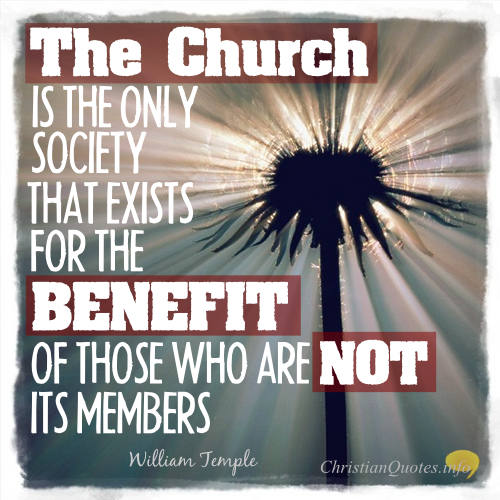
What I have experienced in other places and very much at Holy Trinity is a growing sense of the church as missional – existing for the benefit of others, not just those who are “on the list.” There will always be echoes of our history, but I don’t find it driving our agenda. The agenda continues to evolve. In some ways, the pandemic has been a blessing, forcing us to find new ways to be the Church, but God’s mission is still the same, as Jesus handed it to his disciples on the night before his death.

The church of 2022 is facing some huge challenges. With the Holy Spirit as our guide, we may move forward contributing our share of God’s mission in this world. Things won’t ever again be the same – but that’s always been true.

It has been a joy and a privilege – and at times a great challenge – to be part of the changes of the past 35 years. I do not expect to see the next 35 to their completion. But I am certain they will happen, and I believe that God will be glorified in God’s people.

May we all be one.

Amen.

Sports and me, and other things

I had a brief exchange with a Facebook friend the other day. The friend is a baseball fan; I am not. To be truthful, I’m not much of a fan of any sport. OK, I’ll watch the occasional hockey game, and once in a while I’ll turn on a Canadian Football League game, but on the whole, my life proceeds very well without watching any sports, whether on TV or live.

It hasn’t always been so. In my first year of university, some of the great events of my first year living in residence were the football parties. A black-and-white TV, several pizzas, and the inevitable and (then-illegal) cases of beer. And all sorts of guys hanging around having a good time. The action on the fuzzy screen was almost incidental. I’ve never played football, except a couple of ill-advised forays into “touch” football, both of which ended with many bruises and sore joints for most participants.

I used to watch the Edmonton Oilers on TV, back in the glory days of the ’80’s w
hen Wayne Gretzky was in his prime. I enjoyed the daring and skill the team displayed, even if I’ve never really understood the game’s subtleties. My love for the Oilers started to wane when Gretzkoilersy was traded to LA in 1988. The only other hockey I ever watched much of was my home town’s senior team, the Drumheller Miners, who won the Allan Cup in 1966. My father was the team physician, and got free admission. I went to a lot of the games with him, sitting in the high bleachers behind the goal. The ambiance counted more for me than the game. As I said, I’ve never really grasped the subtleties of the game.
Hockey is only one game that I don’t really get. Truth be told, I don’t really get any of the common team sports, which may be because I was never any good at any of them, or any other athletic pursuit, team or otherwise. As a child, I was clumsy, slow, and badly coordinated, and Physical Education in school was usually something akin to torture: I couldn’t do most of what we were asked to do, and my classmates teased me endlessly about my incompetence.

There’s good reason why I don’t relate well to sports!

Nonetheless…
I still find myself getting caught up in others’ excitement about sporting events, because it seems to have something important to do with community. The great days watching football with my university buddies were great times of community. The rejoicing over the Oilers’ Stanley Cup victories was a collective party for the whole of this city.

If you like a sport, well and good. If you care deeply about it, that’s your business. I’ll try not to rain on your parade by revealing my lack of interest in something that you love very much.  All I ask is that you be tolerant of me when my eyes glaze over as you discuss the accomplishments (or lack thereof) of your favorite team or player.

I get excited by other things (classical music, church history and politics, food, photography…), and I know that my own passions can provoke the same kind of glazed-eye response as much of sports talk evokes in me. It takes all kinds to make a world, and that’s good.

Whether it’s sports, music, knitting, or whatever, let’s try to rejoice in each other’s passions, without trying to make our own passion someone else’s.