On bishops and other callings

bishop-mitre-h-87A good friend and colleague recently disclosed that he had been chosen as one of the four final candidates in an election for Bishop. (Read about it here.) It put me into a reflective mood, recalling the occasions when I had a brush with episcopal office.

The first time was in 1997 in the Diocese of Edmonton, my home and current diocese. I had been serving as an Archdeacon for a couple of years, and for the first time had had some significant interactions with people in other parishes. Out of that came a request from someone present in one of those events that I allow her to put my name forward in the upcoming election of a new bishop. I was quite daunted by the idea, even though I admit to being flattered by the request. After some thought and prayer and discussion with my wife, I decided to let it happen.

The search committee asked each candidate to submit a fairly large bundle of material, including a detailed CV in a particular format, and a personal statement about ministry, and my sense of the episcopal office and how I might fill it if I were so called.

Assembling the CV was a good exercise: it was the first time since my ordination that I had put all of my work history down in one place. The document turned out to be much longer than I expected, considering I had only been ordained for 10 years. I felt a real sense of accomplishment when I re-read it after finishing.

The statement was quite another matter. I sweated blood over it, reading, thinking, praying, writing, tearing up, writing again, finally telling myself that it wasn’t going to get any better. It may be the best piece of writing I’ve ever done. In the years since, I have returned to it often, to check up on my continuing sense of vocation, and where my ministry is headed.

At the electoral synod, I was seated with the rest of the clergy, as required for voting. My wife was sitting in the observers’ seats at the back of the Cathedral, along with some other people from my parish. The preliminaries having been taken care of, we proceeded to vote, and then to sit and wait for the results. I wasn’t dead last in that first ballot, but pretty close, with 2 clergy and 3 lay votes. I knew who the clergy votes came from (me and my proposer), but to this day I have no idea who were the 3 laypeople who felt I was the best choice for bishop. On the second ballot, it was down to 1 clergy and 2 lay votes, still not the very bottom, but it seemed like a good time to drop out and stop wasting people’s time. The folks from the parish said they could all hear my wife’s sigh of relief when my withdrawal was announced.

That day, the diocese of Edmonton elected the Rt. Rev. Victoria Matthews as the first female diocesan bishop in the Anglican Church of Canada.

The second time I found myself on an episcopal election slate was for the Diocese of Qu’Appelle in 2006. I had been quite astonished to get the call from their search committee asking me whether I would accept the nomination. (My proposer had not contacted me first, as should have happened.) I asked for some time to consider it, coming as it was more or less out of the blue. My wife and I talked about it at length, and I  consulted my Bishop of the day. I was less than 3 years into a new ministry, and it hardly seemed the time to leave.

Nonetheless…
A call like this did not seem to be one that could be ignored — it might well be of the Spirit. My bishop suggested that the only real way to determine that was to let my name stand. And so I did. It felt quite different from Edmonton in 1997. For one thing, I would be moving to a completely new city, working with people I did not know at all. For another, that Diocese is a land of wide-open spaces, and many small multi-point charges. As bishop, I would likely spend much of my time in long-distance driving. The final thing was that I was nine years older and more experienced, and had a much better sense of my own capabilities and what the office of Bishop entailed.

The documentation they required was much like that asked for in 1997, so had most of it more or less ready to go, after another revisit to my personal ministry statement.

The results of that election were somewhat more gratifying. There were six candidates, and I ran a solid third until the third and final ballot. My good friend Gregory Kerr-Wilson was elected that day, while I sat at home in Brandon with my phone handy, waiting for results of the ballots.

That’s the story, although there’s an epilogue of sorts. I was approached to let my name stand in another election a year or two later. After considerable thought and prayer, I concluded that I did not hear the call to episcopal office, and did not let my name stand.

The formal processes I went through were quite different from the one my friend is in. Nonetheless, it is very clear to me that the internal process of seeking to discern a call to ministerial office is much the same however it may be externally structured. The writing of my personal ministry statement was an important turning point in my own ministry, and the document became one of the touchstones of my continuing vocation.

I learned, particularly in the 1997 election, that vocation must be heard within, and that requires intense prayer. My understanding of prayer is that it begins with listening, not with telling God what you want God to do. That became abundantly clear in 1997, in 2006, and then when I declined nomination.

Did I ever want to be a Bishop? I don’t know. I do know that some people say that anyone who really want the office shouldn’t get it — but probably deserves it. The office is almost impossible, but some people of my acquaintance have managed to make it look easy. I know that’s not true. I am also quite sure that, had I been elected, I would probably have managed to make it look very difficult!

Thanks be to God for all who let their names stand for Bishop.
And thanks be to God for all Bishops who serve Christ in His Church.
 

What’s Missing?

I haven’t posted much in the past year, ever since passing the 1st anniversary of my retirement. Some, maybe most, of the issues that were on the top when I first left full-time ministry have evaporated, or at least receded into the background. It’s now two years since I retired, and I’m feeling more in tune with what a newly-retired colleague once said: “I have discovered that God made me for retirement.”

I have several places to serve in the community, plus frequent-enough opportunities to preach and preside at worship. There’s not a lot of pressure in my life, and that’s just fine with me. My health is pretty good, we have enough income to live on, and we have reasonable reserves for the future. All told, life is pretty much OK.

And yet…

It feels like there may be something missing. Many days I accomplish almost exactly nothing that anyone else might consider useful. I’m going to take more time in the next while to think and pray about where I’m headed. I know I need to read more: there are several books on my shelf with bookmarks in them, mostly pretty near the beginning. That’s a start.

Home? And home again.


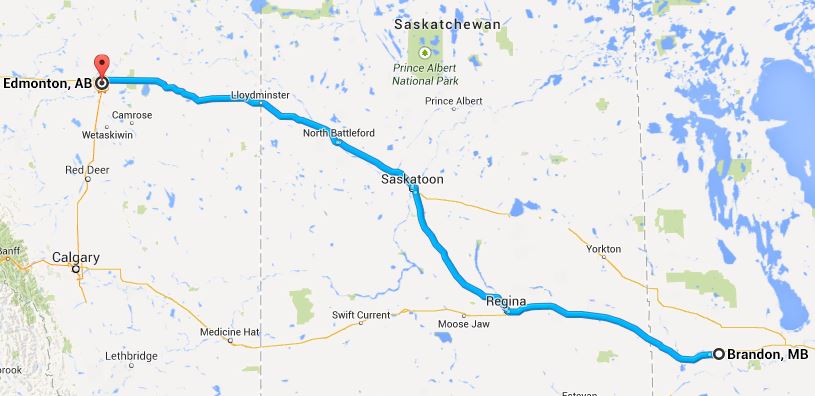
My spouse and I went back to Brandon this past weekend for the first time since I retired last June. It was a very quick trip, squeezed in between commitments here in Edmonton, but it was not a short trip. Our total road time was over 25 hours, somewhat  inflated by poor weather in Saskatchewan on Monday morning.

JourneyThe purpose of the trip was to attend a wedding. The bride had joined the choir as a choral scholar at St. Matthew’s Cathedral three years ago, becoming in time not just a paid singer but an active congregant. Her fiance came with her in the second year. It was a joy to be asked to celebrate their marriage with them and old friends.

On the Sunday morning, we decided that we had to go to church at St. Matthew’s. There is something of an unwritten rule that departed clergy should steer clear of the previous place for a while, but we really wanted to see some people. Besides, the parish is still between rectors, so I was hardly stepping on the toes of my successor.

I left a happy, healthy parish, and I found that not much had changed. A few people had left, but there were also a number of fresh faces in the pews, along with (hallelujah!) a substantial contingent of children. Most things were much the same, with a few things now done a bit differently, but the folks we talked to were still the same great people whom we had come to love over our 10½ years there.

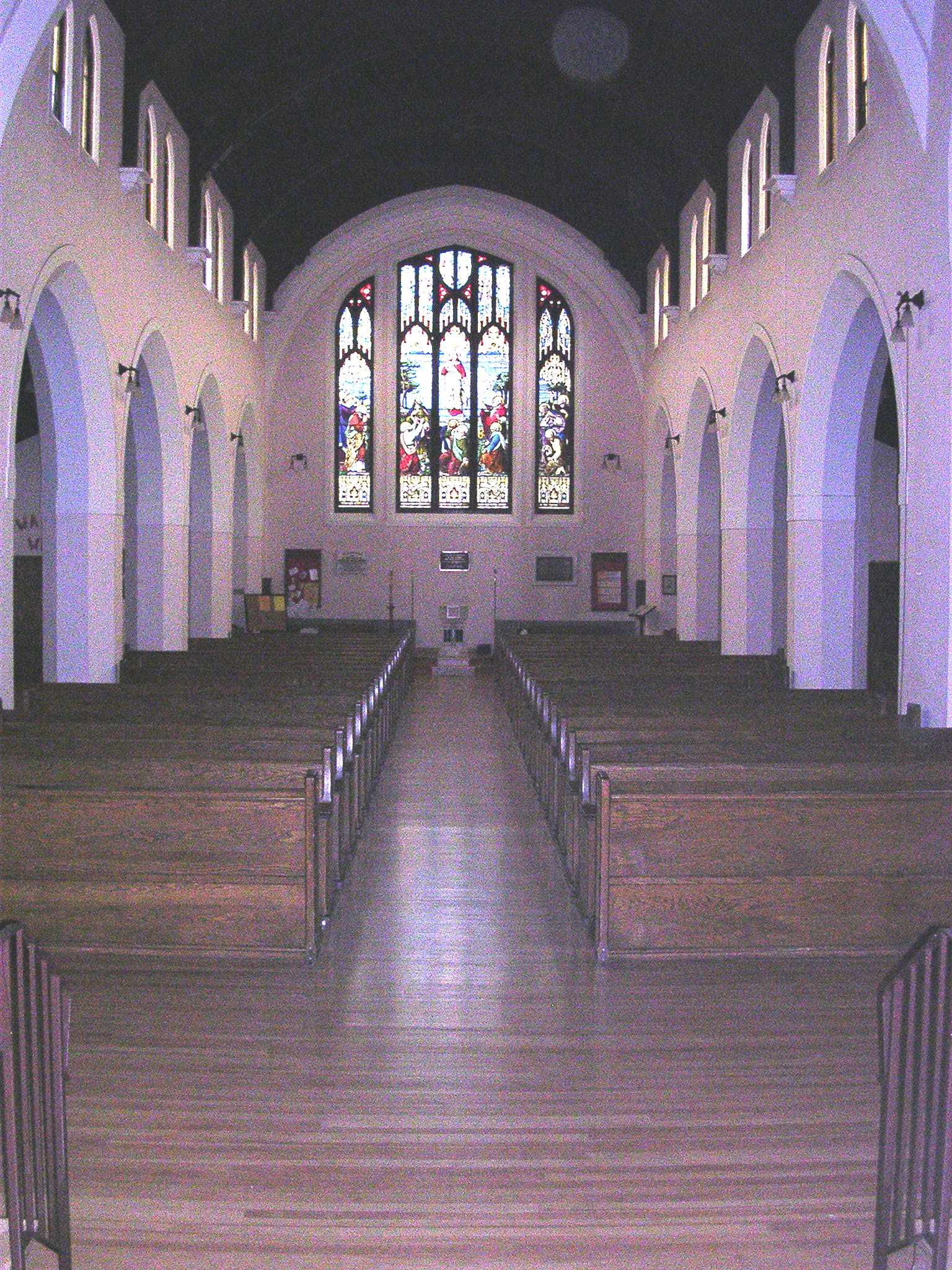
DSCN0165A big difference for me was sitting in the congregation for a Sunday for the first time ever, realizing just how long a building it is, and how far away is the celebrant at the Eucharist. It might have helped my ministry there if I’d taken some time to sit in the pews — but that’s history now. That parish was home for a decade, and the people there still hold a big piece of my heart. Nonetheless, it is clear that we have moved, both physically and spiritually. Holy Trinity is becoming home, for which we are very glad.

Some people wanted to discuss parish issues with me, but I was quite able to say, “That’s not my problem.” That ended the discussion, but not the conversation. The relationship is different now — simply as friends, not as pastor and congregant. For at least one person, that seemed to be a relief! And indeed, it is a bit of a relief for me too, because I don’t have to be “on,” as clergy always have to be in public. Today I can go to coffee time after worship and see the stipendiary clergy having serious conversations with various people, and I can think, “That used to be me,” and then I can smile.

We went to our previous home, and then we came home again.

Five years — a very short time

It’s been quite a while since I posted to this blog. I’ve been thinking about it a lot, and a lot has happened in the past few months, giving me good grist for the mill. But something got in the way every time I thought I might post. (Yes, I know;I’ll quit procrastinating tomorrow…)

What energized me out of my torpor was reading some preacher friends’ posts about their sermon work for this coming Sunday (February 23). The lectionary Gospel text, from the Sermon on the Mount, is Matthew 5:38-42,  Jesus’ teaching about the law of retaliation. We read there the exhortation to “turn the other cheek,” a message which some people have use to deride Jesus and his people as wimps, or to characterize Jesus as completely out of touch with human reality.

What particularly grabbed me about this was the realization that five years have now passed since the lowest moment of my 26 years in full-time stipendiary ministry. The details of the event do not need to be rehearsed here. Suffice it to say that I found myself under attack within my own parish, culminating in a very unpleasant congregational meeting. At the end of the meeting, a vote was taken, which went in my favour. That was all to the good, but it left me in pain and confusion, and not a little anger at those behind the issue. I was tempted either to 1) lash out, or 2) to run away and hide. People would have understood either response, but something within me said “No. Stay the course. Do your job. Hold your head up.”

And so I did.

The ensuing months and years taught me a huge lesson about Jesus’ wisdom. “Turning the other cheek” does not mean allowing the other person to continue walking all over you. Rather we should see it as an assertion of one’s true person-hood: “I am worthy of your respect as a fellow child of God.” Either fight or flight would have given credence to the tactics and words used against me. By taking the high road and doing neither one, I believe I was able to bring healing into the parish in a way that would not otherwise have happened. I believe I took Jesus’ way in this, and for that I am glad. Much prayer and reflection went into that time, a new wilderness experience for me.kramskoy-christ

Five years have passed, and I am now retired and a long way away from the scene of this story. Nonetheless, I still bear the scars of the pain it caused me, and of the immediate damage it did to the congregation. I would not willingly walk that way again, nor would I wish such a thing to happen to anyone else. But…

Out of the ashes of that painful time came a stronger person and a stronger congregation. We learned together what it means to follow Jesus’ teaching to “Love your enemies and pray for those who persecute you.” Five years on, I believe I am a better person because of this experience, hard as it was, and I became a better priest to my parish.

Maybe I had to get past this anniversary before moving on with some things. I am now an Honorary Assistant Priest at the parish where we chose to make our church home. I’m on the preaching schedule and am preparing to lead a Bible Study group during Lent. My life has more shape than it did at the time of my last post, and I am really looking forward to the months and years ahead.

Thanks be to God!

Both Fish and Fowl

After four Sundays taking services at St. George’s, Devon, I will be back to the choir at Holy Trinity Anglican Church (HTAC, for short) this weekend. I really enjoyed doing the services, but I also missed being part of the HTAC community for those weeks. The folks at Devon were kind enough to say they wished I could stay, but other arrangements have been made, and I really want to be able to worship with my wife during Advent and Christmas.

Will I take another such assignment? Very likely, if it is feasible. We shall see what the future brings.

Last Thursday I attended a diocesan clergy day, led by the Rev. Dr. Eric Law, founder of the Kaleidoscope Institute. For the most part I enjoyed the presentation, but I came away from the day feeling a bit down and anxious. That may have been partly because I was dog-tired, but there had to be something else. After a few days’ reflection, I have come to the realization that events like this used to stimulate me because I was always looking for something to take home to my parish — and I no longer have that focus. Future ministry in the Diocese may give an outlet, God willing.

While in parish ministry, I was constantly looking for ways to improve things. I am an incurable reviser, never fully satisfied with a piece of work. That’s how things get better, I do believe. Learn from your failures and shortcomings — it’s the best school going! [check this out!] I would do (e.g.) an Advent Lessons and Carols service one year, and then ask myself “how could it have gone better?” If I had received the material from Eric’s presentation two years ago, I know that it would have shown up in some way in my ministry.

So what do I do with it now? In my current situation, it’s an interesting concept, but of no immediate utility. Time was, that would not have bothered me. Much of my early educational career was taken up with studying pure mathematics, which is subject to the same assessment. But more recently… let’s just say I found the need to focus myself on my part in God’s mission, and I have tended therefore to study things which seemed to be leading somewhere practical.

The other thing that happened last week was that I didn’t go the parish conference at HTAC, also led by Eric Law. It would have been interesting, I’m sure, but I was very much of two minds about attending. When we first started there, most folks accepted me just as another body in the pews, but as I have met more people, and they have found out I am ordained, I have sensed them responding to me differently. To be sure, that may be from my wearing a clergy shirt when I came to pick up J. from HTAC. Nonetheless, it has made me conscious of being in a liminal state: neither fully one thing nor the other, but on the threshold.

Am I a person in the pew, or am I clergy? Or is it both/and?
Am I …

Neither Fish nor fowl?
Or
Both Fish and fowl?

Stay tuned.