Notes for a sermon preached at Holy Trinity Anglican Church, Edmonton, Alberta, March 15, 2026
Texts: John 9:1-41; 1 Samuel 16:1-13; Psalm 23; Ephesians 5:8-14
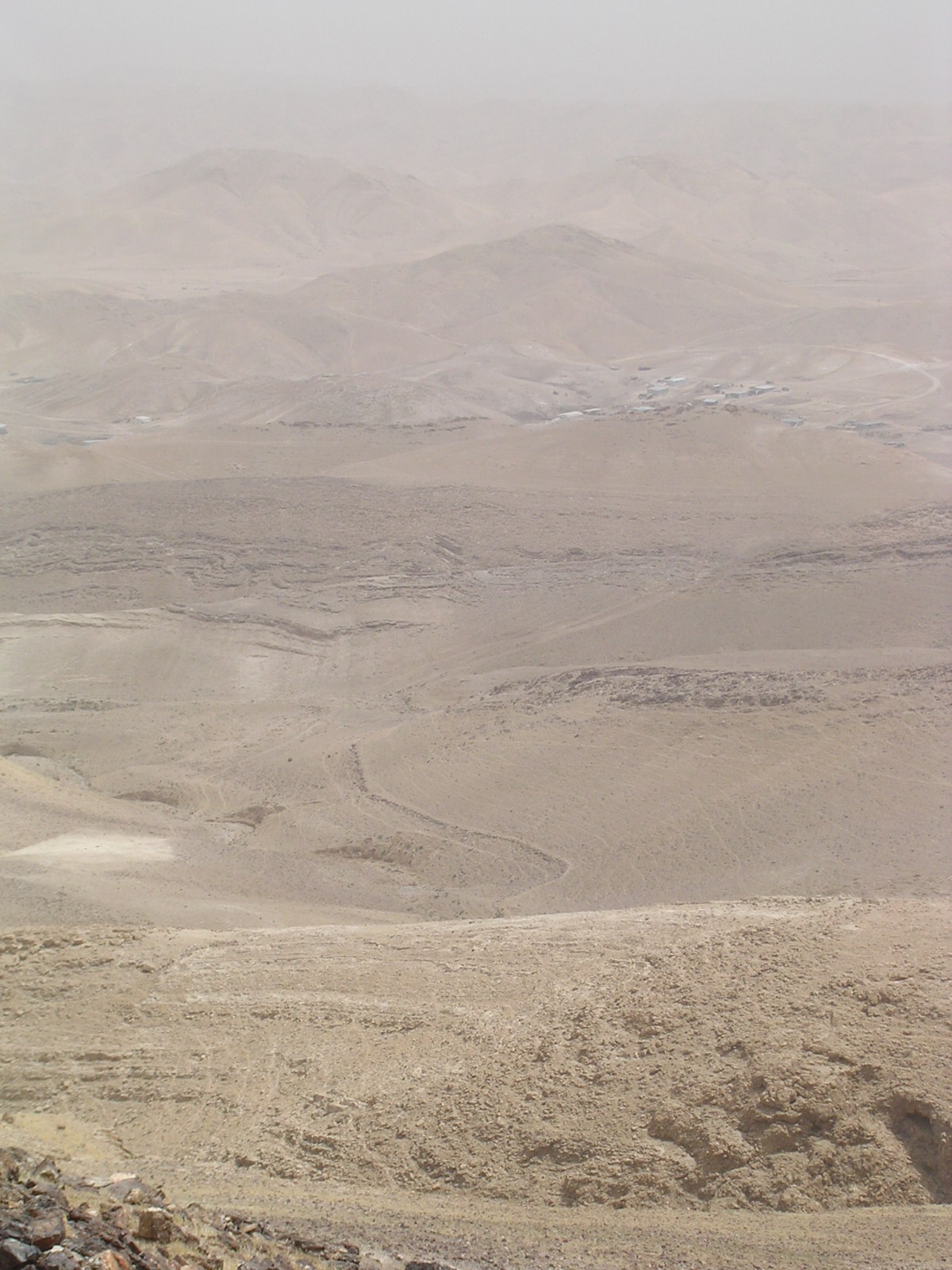
The preaching theme during Lent has been “wilderness.” I once heard the late Herbert O’Driscoll, priest, poet, and preacher, say that the telephone number for Christians today should be 1-800-WILDERNESS. His point was that followers of Jesus in these times can find the going difficult as we seek our way ahead in an increasingly hostile or apathetic world. “Wilderness” suggests a place or state where it is easy to become lost. Drawing on this idea, the Diocese of Edmonton is engaged in a process of strategic planning is called “A Way Through the Wilderness.”
The Danish philosopher and theologian Søren Kierkegaard said that we live our lives forward but understand them backward. Just so, we may only recognize our wildernesses by looking back. I want to think about today not so much about finding our way through but rather seeking to understand such experiences which have shaped our own lives, whether or not we called them “wilderness” at the time.
The man born blind in our Gospel lesson lived in a wilderness not of his own (or anyone else’s?) making. Note that he didn’t ask to see. Jesus simply stepped in and gave him sight. The rest of the story deals with his coming to see, not just physically but spiritually, with the climax of the story coming when
‘He said, “Lord, I believe.” And he worshiped him.’ (John 9:38)
Coming to believe is to gain spiritual sight, which is the point of Jesus’ dialogue with the religious authorities, whom Jesus calls blind for refusing to see what is before them, and to understand what has happened. (Lawyers might call this “willful blindness.”)
We don’t know anything about the rest of the formerly blind man’s life, but it seems to me that he would probably have looked back on his years of blindness as a wilderness that he had now left, to begin a new life of following Jesus, something like what John Newton wrote of in his great hymn “Amazing Grace,” one verse of which goes this way:
Through many dangers, toils, and snares
I have already come;
‘tis grace that brought me safe thus far,
and grace will lead me home.
I was told in seminary that a preacher should keep his or her own story out of their preaching as much as possible, but I’m about to violate that instruction. Please bear with me!
In high school, I was known as a kid who loved Math. and went to church – odd behaviour on both counts! My love for Math. led me into studying it at university, and my love for church life led me into involvement in what was then called the “Anglican-United University Parish.” That association opened my eyes to the social dimensions of Christian faith, which profoundly changed my worldview.
When I returned to my hometown to teach school, I also returned to the church of my youth. It seemed that the church had changed, but I soon realized that I had changed, and that my eyes had been opened to aspects of following Jesus that I had never imagined before. Liturgy and music didn’t quite cut it for me anymore. They were still important, to be sure, but a whole dimension had opened for me, and I was able to see that congregation in a way I had not before. It was not a happy experience, and when we returned to Edmonton for further studies, I was quite happy to put things of faith behind me. This was reinforced by my choice of study – graduate-level Math., in which the number one issue is proof – reason is everything! I found this attitude later reflected in a song by Paul Simon, who wrote:
Faith is an island in the setting sun,
but proof is the bottom line for everyone.
(“Proof,” Track 4 of “Rhythm of the Saints,” 1990)
If I couldn’t reason it out, I wasn’t going to believe it. I’m now a bit embarrassed by that ego-centric view – making myself the arbiter for truth. My own intellect ruled! But it endured for some years, as I went to work as a researcher, where my stock in trade was truth.
This started to change when we became parents, and my parents wanted us to have our daughter baptized. We went to the nearest Anglican church, where to my wonder we rapidly made friends and church became part of our life once more. My suspicion about faith lingered until one day, out for a walk at lunchtime, I suddenly realized that I no longer had to understand everything. Faith was not just possible but had become a part of me. Looking back, I became able to see that time as my own wilderness, which by the grace of God I had now left behind.
I have met people from other faith traditions who have demanded to know the date and place of my “conversion.” Their idea was that you needed something dramatic like Paul’s Damascus Road experience to count yourself a Christian. The only event I could cite was that lunchtime walk, which wasn’t quite good enough for most of them. They wanted something more: a sudden leap into faith which turned my life around in an instant.
The reality of my conversion, and most people’s conversion, is much more gradual. It’s like climbing a mountain. Most of the time, you can’t see the top – your goal. All you can see is what’s ahead of you, as you choose your hand- and footholds. But when you need to rest, you find a ledge and stop and sit, look back, and realize that you’ve come a long way from the valley below. The mountaintop still calls, and you still need to work hard to get there, but things have changed.
Kierkegaard was right. We only really understand the wilderness when we look back at it, and realize that by God’s grace we have become, and are becoming, one of God’s “children of light,” as Paul says in Ephesians. We come to understand that God’s way of seeing is not our way, and our eyes are opened to God’s will, as Samuel’s eyes were opened when he looked at David.
Looking back on our wilderness times, whatever they may have been, gives us the opportunity to see how God has been at work in us, often without our recognition. And when we see what God has done, we can only say, “Thank you, God, for opening my eyes.”
And then we turn our attention to what lies ahead, trusting in God’s promise to be with us always. We may walk through the valley of the shadow of death, but God has promised to be with us, bringing us to the other side, and welcoming us to God’s table and God’s house forever.
Thanks be to God!
 Into the blue...