God is With Us or “What’s Next?”

Notes for a sermon preached at Holy Trinity Anglican Church,
Edmonton, Alberta, November 9, 2025
Texts: Hag 1:15b-2:9; Ps 145:1-5, 18-; 2 Th. 2:1-5, 13-17; Luke 20:27-38

In twenty-six years as a parish priest, I was only once involved in prison ministry. The man I was called to visit had asked to see an Anglican minister, which suggested to me that he might have some church background. What I found was a person who had been dragged to church as a child by abusive parents. He said, “I guess I’m Anglican—that’s what I was baptized,” but he knew next to nothing of the Christian faith and wasn’t even sure he believed there was a God. He told me he had decided that he needed “a faith,” a statement that raised so many questions I hardly knew where to begin. In many ways, his life had been a battlefield for over thirty years. And he was wondering “What’s next?”

It seems to me that this question relates in various way to all of today’s readings, to observances of Remembrance Day, and to our parish’s current situation.

When the Sadducees came to Jesus with a trick question about marriage in the resurrected life, their interest was not so much in getting a legal opinion, but in continuing their ongoing argument with other Jews over whether there is life after death. They would answer “What’s next?” by saying “nothing.” Dead is dead, and that’s that—a position which Jesus demolishes with an appeal to scripture: the patriarchs remain alive to God, so the question is simply foolish. “What’s next?”—life in the nearer presence of God.

Paul wrote to the Thessalonians, who were sure they knew what was next—Jesus was coming back any day now, and the delay was shaking their faith. He urged them to stand firm, living as if the day of the Lord had already arrived, giving glory to God who has sanctified them by the Spirit. “What’s next?”—life lived in the awareness of God’s presence in all things.

The prophet Haggai exhorted the returned exiles to get on with re-building the temple. Work had started, but they were dispirited and disorganized, and the new temple was unfinished. Life in the ruins of Jerusalem was nothing like they had dreamed it would be, maybe even far inferior to their existence in Babylon. “What’s next?” Why bother rebuilding the temple? Things were bad, and it didn’t seem that they were going to get any better. But the prophet told them that God was with them, and would be with them, and would give them prosperity in this place.

“What’s next?” In every case, we are assured that God is present and at work among his people, always leading them into new life, in this world and the next. I think of in-between times like this as “Holy Saturday experiences,” recalling the day between Cross and the Resurrection when Jesus’ disciples waited in fear, grief, and confusion behind closed doors for a future they could not begin to comprehend or foresee. But God was with them even on that darkest of days! Another writer has called such times the “Sacred In-Between,” saying this:

…what’s next will come. It always does. But who you’ll be when it comes, that’s what the in-between is shaping right now.[i]

This week we remember those who died in the wars of the past century, conflicts which overshadowed and profoundly shaped our country’s history. We sent men and women overseas to fight for “King and country,” often to die. In retrospect some of those battles were questionable, and some of the so-called sacrifices almost meaningless.

Veterans of various combats often came home to a hero’s welcome, but all too often that home had changed almost beyond recognition. War changes people—on both the battlefront and the home front. Many veterans of both wars bore scars of the battle in their psyches for the rest of their lives. And both world wars changed our society profoundly, sometimes for the good and sometimes not.

The difficult memories and the challenges our country faced in post-war times were tempered by our being on the winning side. But what happens on the other side? The reading from Haggai may help us understand.

For many years, the exiles in Babylon had lived with the knowledge of defeat and destruction. They had been sustained by the dream of their homeland, and the memory of Jerusalem’s lost glory. When they returned, reality did not match their dreams. The temple lay in ruins, the city walls were piles of rubble, and the people of the land seemed to have given up. As a line in the hymn “Abide with Me” says, “Change and decay in all around I see.”[ii] Defeat had become the people’s mindset. Is it any wonder they could not find the energy to rebuild the temple?

And then the prophet said to them:

…take courage, all you people of the land, says the Lord; work, for I am with you, says the Lord of hosts, according to the promise that I made you when you came out of Egypt. My spirit abides among you; do not fear.[iii]

“What’s next?”—a new temple, a fresh start, and new prosperity, for God is with them. It may not have been what they had been dreaming of for half a century, but it was where God had been leading them.

It’s easy to perceive God’s spirit among us when things are going well. When things are not going so well, during the muddy hell of World War I, or on the return to a defeated land, we may have a different awareness of God. The man I met at the jail was not sure he could believe in God, because his life had been a personal hell. Nonetheless, he was wondering if he did in fact believe, because he sometimes found himself praying to God for help. I wish I could tell you that his story ended as he prayed, but what was next for him was a court appearance. He was sentenced to time served in that province, but police from another province were waiting for him at the back of the courtroom to re-arrest him for other offences.

We need to remember, to know our story, and to understand how we got here. On Remembrance Day, we give thanks for our war dead who helped bring this story to where we are today. Nonetheless, we do not live in the remembered past, but in the often-uncertain present, in hope for the future, always asking God “What’s next?” Always we know that God’s answer—for the people of ancient Israel, for the earliest Christians, and for us today—is “I am with you.”

Holy Trinity is facing challenges in the months ahead. Clergy changes are always difficult, and the community is justified in asking “What’s next?” But the prophet’s words continue to ring true:

…take courage…; for I am with you, says the Lord of hosts

And the hymn continues,

“O thou who changest not, abide with me.”[iv]

God abides with us, in war and in peace, in victory and in defeat, in hardship and in prosperity, in times of change and in times of stability. May we always remain aware of God’s presence, ready to hear God’s call into the future waiting for us.

“What’s next?”

God is with us always. That’s what’s next.

Thanks be to God.

Amen


[i] Shawn C. Branch, https://shawnbranch.substack.com/p/the-sacred-in-between?triedRedirect=true

[ii] Henry Francis Lyte, vs. 2, line 3

[iii] Haggai 2:4b-5

[iv] Henry Francis Lyte, vs. 2, line 4

Post scripts:

  1. Holy Trinity is about to enter into an interim period, after the resignations of our Rector and her Associate.
  2. I was introduced to the idea of “Holy Saturday” experiences through “Between Cross and Resurrection: a Theology of Holy Saturday,” by Alan E. Lewis, Eerdmans, 2001.

Come Out!

Notes for a sermon preached at Holy Trinity Anglican Church (Strathcona), Edmonton, on June 1, 2025. Text: John 17:20-26 – Easter 7, Year C

Thirty-eight years ago today, Edmonton was in a celebratory mood, after the Oilers won the Stanley Cup on home ice. The street party on Jasper Avenue went on for hours, trapping some friends who had come from Saskatoon for another event. They had parked their car near All Saints Cathedral, right on Jasper. They sat there for a while.

The event they had come for was an ordination at All Saints, when Archbishop Kent Clarke ordained a priest and three deacons, one of whom was me. The ordination took place on the seventh Sunday of Easter, the Sunday we are observing today. My family and friends and I had reason to celebrate, although our celebrations were a bit more muted than the near-chaos on the streets.

Looking back at that day, I realize that I don’t remember much of it, except for a few odd details. What I do know is that the Gospel lesson read that night was taken from the same chapter as the selection we just heard. John 17, known as Jesus’ “High-Priestly Prayer”, is spread over the three years of the Lectionary. The Prayer is at the end of the Farewell Discourse, after the Last Supper, immediately before the Passion. As John tells it, these are the last words in Jesus’ earthly ministry. As his time draws to its end, Jesus first prays for his own “glorification,” going on to pray for his disciples, that they will be protected from evil and sanctified in truth. Finally, in today’s lesson, he prays “…on behalf of those who will believe in me through their word, that they may all be one.”

This passage has often been used as the Gospel lesson for services of Christian Unity, as churches from different traditions gather to pray that we may be one. In my University years, in the first excitement of the ecumenical movement after Vatican II, many of my Christian friends were running around proclaiming that organic unity was just around the corner. I wish it were so, but historic change usually takes a lot longer than 50 or 60 years. Churches don’t change easily! In recent decades we have entered full communion with other denominations, all taking years of talk and prayer, and those full communion declarations are only half-steps toward visible unity.

However …

One of the things I have observed since June 1, 1987, is that while churches may have erected barriers between themselves and others, those walls often vanish when we seek to serve the wider community. Time does not permit me to elaborate on the many examples in have in mind. Suffice it to say that Churches which have deep differences in doctrine and worship often find themselves much more united when they are called to do things like feed the hungry, care for the homeless, and advocate for people on society’s margins. Getting outside our church buildings brings us together in ways that inviting people to worship with us does not. Shared worship is valuable in itself, but I believe that it is an act with a wider purpose – calling on all God’s people to follow Jesus in the world.

Look over to your right, at the second stained glass window from the front. The image in the central panel is a rendering of William Holman Hunt’s 1854 painting “The Light of the World.” It was inspired by the text of Revelation 3:20: “Listen! I am standing at the door, knocking; if you hear my voice and open the door, I will come in to you and eat with you, and you with me.” One of the notable features is that there is no door handle on the outside. Jesus cannot enter unless someone inside opens the door.

Shortly after Pope Francis died, I read a story allegedly dating from the conclave which elected him. It seems that Cardinal Bergoglio, as he was then, preached a short homily to the assembled cardinals, referring to this same image. He suggested that it could be viewed in another way: Jesus, the Light of the World, is inviting people huddled behind locked doors and closed minds to come out and share in his ministry – to come out into the world, to be light-bearers with him amid all the world’s strife and needs. In this view, Jesus is not saying “Let me in,” but “Come out!” The story went on to say that it may have been this homily that helped Cardinal Bergoglio become Pope Francis. I believe his ministry shows how much importance he gave to this message.

While it is sometimes comforting to shut ourselves into our safe spaces (which we absolutely do need!), it is important to remember that the holy havens to which we retreat are not the only places, or even the main places, where the church’s mission is fulfilled. The gathered church is like a ship in harbor, doing little as it remains there. It must eventually set sail to carry its cargo across the open seas. Jesus prays for those who will follow him into those wider places (his disciples) and then for those who believe in him through the disciples’ words – US! – for protection, for unity, and for the bonds of love, which bear us up as we venture into the world beyond these walls. As we go, we are to shed the light of Christ in all places.

As Jesus said in the Sermon on the Mount:

‘You are the light of the world. A city built on a hill cannot be hidden. No one after lighting a lamp puts it under the bushel basket, but on the lampstand, and it gives light to all in the house. In the same way, let your light shine before others, so that they may see your good works and give glory to your Father in heaven.’                                                                                       (Matthew 5:14-16)

When the Oilers beat the Flyers 38 years ago, people felt the need to get out to share their joy, to celebrate with others their faith in their hockey heroes. That’s one kind of celebration (and a pretty good one!), but we Christians have something more to share. We are called to share in the joy of the Resurrection of Christ, which calls us out of our safe places to share the Good News with the wider world.

And how do we share that joy? How are we to be the light of the world? We could, of course, buy an amplifier and shout over the crowds on Whyte Avenue. Some have done that, but it seems to me to be self-defeating, shedding more heat than light. Instead, we should share our joy and light by being joy and light for others. That joy and light takes different forms for different people at different times. For the hungry, it is food. For those who mourn, it is comfort. For the lost, it is a helping hand, a guiding presence. For the lonely, it is a friendly presence. All of these and others are ways to shed God’s light into a world which so often seems plunged into darkness.

So, I believe the question for each of us today is this:

How am I light for other people, and
        How do I share Resurrection joy with them?

Friends, let us come out of our safe places.

Let us come out and spread Christ-light wherever we go.

Let us come out and be the Church,
doing God’s holy work among God’s people.

May it be so.

The Hardest Part of Following Jesus?

Families are wonderful, until they’re not! Families have great power to provide loving care and nurture. But there is a downside: they also have the power to inflict enormous hurt upon their members. The high expectations we place on families means that when they fail, they fail badly. The same can be said for churches, the difference being that we can choose our church community, but usually have no choice in belonging to a family. Hurt caused within a family is uniquely devastating to the one sinned against.

Today’s lesson from Genesis is the climax of a story that begins with a massive wrong done to one family member by other members. It began when Joseph’s older brothers were well and truly fed up with him, their father’s favorite and dreamer of troubling dreams, so they planned to be rid of him. Although they did not kill him as they originally intended, he ended up being sold into slavery in Egypt.

We have to fast forward our story for some time, maybe decades, to get to today’s reading. (See Genesis chapters 37 – 43 for the back-story.)

By the time of today’s reading, a famine has spread across all of Egypt and the neighbouring countries. Jacob has sent his ten older sons to Egypt to look for food, because they have heard that Egypt has sufficient stores to feed themselves. What they do not know is that their younger brother had risen to become the second-in-command to Pharaoh, and was responsible for the prudent planning that saved the Egyptians from starvation.

Joseph recognizes the brothers when they come into his presence, but they don’t know who he is. He was a boy of seventeen when he was taken, and years have passed. He might have looked vaguely familiar, but they certainly wouldn’t have expected to see their brother dressed as a high official. It fell to Joseph to make the connection, to reveal his identity to his brothers, who reacted in dismay and fear. Joseph! The brother they had conspired against, now in a position to pay them back. And here’s where the story takes its decisive turn: Joseph is not angry and vengeful, but asks after his father, and calls them to him. He sends them back to bring his father and his brother Benjamin, promising them food, land, and livelihood in Egypt.

Although the word “forgive” doesn’t appear in the text, Joseph forgave his brothers, saying that God had brought him to this place to be a blessing both to the people of Egypt and to his own people. Forgiveness changed the story beyond imagining. It’s easy to see the story taking a different turn. What if Joseph had harbored anger in his heart throughout those years? Thoughts of hatred and vengeance might have ruled his life. At the very least, he would have sent them back to their father empty-handed. At worst? Let’s not go there! We could easily understand a story which went that way, but that way was not God’s purpose. God had promised to Abraham, Isaac, and Jacob that a great people would come from their line. Joseph became God’s unexpected human agent in keeping that promise alive.

Rather than lashing out at the brothers who had sinned against him, Joseph displayed the kind of behaviour Jesus held up to his disciples in the second two parts of the “Sermon on the Plain” in Luke’s Gospel. In the NRSV, these sections are titled “Love for Enemies” and “Judging Others.” The commands we read there are almost the same as we find in the “Sermon on the Mount” in Matthew (Matt 5 – 7), with only a few changes in wording.

What Jesus tells his disciples – tells us – is that the kind of behaviour the world has come to expect is not how we are to act. Calls to love your enemies and turn the other cheek are objects of scorn from others, but Jesus’ call is based on love. God loves his whole creation: the good and the bad together. Jesus calls us to act accordingly, regarding all others as God regards them. Other people may hurt us, and the world around may expect us to seek vengeance, but Jesus said:

Instead, love your enemies, do good, and lend, expecting nothing in return. Your reward will be great, and you will be children of the Most High, for he himself is kind to the ungrateful and the wicked.

Friends, nobody said that following Jesus would be easy. In fact, it can be very difficult. As G.K. Chesterton wrote:

The Christian ideal has not been tried and found wanting.
It has been found difficult; and left untried.

The call to forgive may be the very hardest of Jesus’ hard sayings. I know this personally, and I suspect many of you here today know it too. It’s all too tempting not to forgive, to dwell on past hurts – sometimes long past! – and to consider how you might get back at the other. But as it has been said:

Bearing a grudge is like drinking poison,
and waiting for the other person to die.

If I nurse a long-held grudge, it hurts no-one but me. On the other hand, forgiving the other is a healing act, even when there is no possibility of letting them know of our forgiveness. By letting go of past pain, we move towards the healing that is God’s desire for all people. We can not change another person, but by the grace of our loving God, we can certainly change ourselves. If there is an opportunity to tell the other of our forgiveness, there may well be an opening to healing that relationship.

We can’t change the past. It’s over and done. But we can change the way the past holds on to us. But forgiving is not easy. Henri Nouwen wrote this:

Maybe the reason it seems hard for me to forgive others is that I do not fully believe that I am a forgiven person. If I could fully accept the truth that I am forgiven and do not have to live in guilt or shame, I would really be free. My freedom would allow me to forgive others seventy times seven times. By not forgiving, I chain myself to a desire to get even, thereby losing my freedom. [1]

Forgiving begins at home, in our own hearts, in seeking to see how God’s love may move us towards God’s ideal for us.

Turning back to Joseph, he likely had much time to ponder how his life had turned out, seeing how God was at work, leading Joseph to do good where he had been planted. He probably also had time to reflect on his youthful behaviour that had led his brothers to hate him, leading him to the repentance and forgiveness of himself that made today’s story possible. His insight about God’s purpose in leading his brothers to him was both sudden, and long-prepared.

Did he expect to see his brothers and his father again? We can’t answer that, but we can see how his years in Egypt made it possible for him to forgive them absolutely.

This was God’s work, leading Joseph to reach out in love to his long-lost family, forgiving them, welcoming them, making them part of his world once more.

Friends, let us strive to forgive, setting the past aside, not forgetting it, but not being bound by past hurts. Let us seek only to heal, building and re-building the family of God. In this way, God’s great love may become the basis of all our relationships, in our families, in our churches, and in the world.

May it be so.


  • [1] Henri Nouwen, The Road to Daybreak, Penguin Random House 1990

God is Calling

Notes for a sermon preached at Holy Trinity, Old Strathcona, Edmonton, June 16, 2024
Text: I Samuel 15:34 – 16:13.1

Adults often ask children what they want to be when they grow up, and often the responses are unrealistic. Someone once said that adults ask kids this question so that they can get some new ideas! When we put on one of our favourite CD’s,2 my wife often says “When I grow up, I want to be Tommy Banks.” My own history is one of changing direction several times, most recently from full-time to retired ministry, which took a while to figure out what it meant – it wasn’t totally by choice! The “churchy” word about discerning your path in life is “vocation”, about which our lesson from I Samuel has something to teach us.

This is where we first meet David, as he is summoned from herding the sheep to have Samuel anoint him as God’s chosen King. Samuel’s coming meant that something important was afoot, and surely David wanted to be part of it. As the youngest son, the task of tending the sheep fell to him, while his brothers could stay home to greet the great man. I can almost hear him saying “It’s not fair!” just like any other teenager.

Was he wondering about Samuel’s purpose in visiting his father? He might have had an idea about what was up: King Saul had fallen from God’s favour, and Samuel’s visit likely had something to do with that. Did he have any idea of what God intended that day? Had he heard some kind of call? We’re not told. What we are told is that none of his older brothers passed muster as they paraded by, while Samuel listened for God’s voice. None of them were called to be King.

The rest of the family was surprised when Samuel told them to bring David to him. The youngest? A mere boy? Directed by God, Samuel saw otherwise, and called David out of his family to become King. Samuel named David’s vocation. Had David already heard it? We don’t know, but later events show him growing into the realization and fulfillment of his divinely-ordained role in life.

I have twice been an assessor for ACPO3, a major part of the process our church uses for discernment of vocations to the priesthood. Candidates are interviewed in a variety of settings, looking at the “3 C’s”: Character, Charism, and Call. Dealing with the first two is a bit like a conventional job interview, but the third presents some special issues. “Call” means both the candidate’s personal sense, and the affirmation of their community. I met some who said strongly that they knew that God needed them for the priesthood, but whose recommendations from others were more equivocal. Contrariwise, I met one young man, immensely gifted, by all accounts a really fine person – charism and character in spades! – but who simply could not articulate any kind of personal call. When we asked, “Why do you want to be a priest?” his only response was “Everyone says I should be.” When we asked him what he would do otherwise, he was able to map out a clear direction in academic work – he almost had his Ph.D. dissertation written in his head. We recommended that he continue with that work, and if at some time he was able to say, “I believe God is calling me to be a priest,” he should once more present himself as a candidate.

Vocations to Christian ministry come from both within the person (the “inner call”), and from the community (the “outer call”). Both must be present. Samuel gave David his outer call in dramatic fashion. We will hear more over the summer how David’s inner call developed, but we may be sure that he heard it.

Church folks most often use the word “vocation” in the context of ordained ministry. But please remember this: Christian ministry is not confined to the three-fold ministry of Deacons, Priests, and Bishops – not by a very long shot! The Catechism of the Episcopal Church of the USA teaches that there are four orders of ministry, naming the ministry of all the baptized (laypeople) as primary. I wish our Church had adopted this Catechism.

The ministry of the laity does include the various roles people assume in the church: lay readers and assistants, sides people, sanctuary guild, lectors, intercessors, musicians, teachers, wardens and vestry members, to name some of the most obvious. More importantly, it means the ministries that lay people exercise in the wider world, in all the many and varied ways they follow their calling as disciples of Christ. Every baptized person is called to a new life, dedicated to living into the promises found in the Baptismal Covenant. There is a good reason why this covenant is renewed by the whole congregation at every celebration of Baptism: the newly baptized are welcomed into a community of people who are striving to be God’s ministers in the world – people with many and varied vocations.

What’s your vocation? Some of us – a very few – can say “I’m called to be a priest or deacon in the Church.” But others might say something like “I’m called to be a (_______), the best one that I can be, so that people around me can see Christ at work through my life.”

When an ordination candidate is presented to the Bishop, the Bishop describes the nature of the ministry in question, and then asks, “Do you believe you are called to this ministry?” The Baptismal Covenant is the counterpart of ordination for the ministry of the laity. Any Baptized person can ask the call question for themselves, and then seek the affirmation of the wider Church when they believe they have heard a special call. Just like David, just like that gifted young man, we all need to hear both inner and outer call. We need to listen for the voice of God. And then we need to test our insight with others who are similarly striving to follow Jesus.

And let us never assume that a calling once heard is once and for all time. I once thought I wanted to be a railroad engineer – that didn’t last long! Things change over time, and God may lead us in ways that we hadn’t previously imagined or couldn’t imagine. No-one in my school years could have articulated a desire to design video games! And the kind of job I had with the Provincial government in the ‘70’s and ‘80’s has been almost totally changed by the internet.

We need to keep on listening for God’s call, because it can and does change. But make no mistake about it: God is calling you, and you, and you, and me. God is calling every one of us. We may not always hear clearly, but we may be assured that God will in God’s time send us our own Samuel or Samuels to help us hear better.

God is calling. Listen, pray, test, and respond.

God is calling. Live into that call, and rejoice!

God is calling. In Jesus’s name, may we hear and follow.

Amen.


  1. Video of the sermon and the full service may be found at https://www.facebook.com/holytrinityanglican ↩︎
  2. Yes Indeed“, Tommy Banks, solo piano, Royalty Records RRI-300-9647, 1997 ↩︎
  3. Advisory Committee on Postulants for Ordination ↩︎

Give God What is God’s

Notes for a sermon preached at St. Augustine’s-Parkland Anglican Church, Spruce Grove AB, Oct. 22, 2023. Texts: Matt 22:15-22; (Exodus 33:12-23)

Some years ago, I called my father for a chat, and he said he was glad for the break because he was “rendering unto Caesar.” Of course, what he meant, in the language of the King James Bible, was that he was working on his taxes. Anyone would like a break from that! And this was in the days before user-friendly tax software and e-filing, which meant wading through piles of forms and declarations and receipts, and in the end, often having to write a big cheque.

None of us really like paying taxes, but most of us would recognize their necessity. In words ascribed to the first president of the USA, “No taxes can be devised which are no more or less inconvenient or unpleasant,” but a later president (FDR) said this: “Taxes are the dues we pay for the privilege of membership in an organized society.” For the most part, we don’t question the legality of our taxes, and when we do, we have a legal system to adjudicate it.

Things were different in Jesus’ time. There were at least three reasons for tax collectors to be routinely lumped in with other sinners.
1. They worked on contract to the occupying power (Traitors!).
2. They took what they wanted for themselves, often at extortionate rates above what they were required to raise (Robbers!).
3. They dealt in coinage which many regarded as blasphemous – the tribute denarius – and collected taxes which many Jewish religious authorities regarded as forbidden by the Torah (Blasphemers!).

Today’s Gospel focuses on that third issue.

Is it lawful to pay taxes to the emperor, or not?”

There’s no question of levels of government or constitutional issues. The Roman Empire financed its rule over its territories through taxation. There were some benefits, to be sure, but for faithful Jews, the Romans were faithless and often ruthless occupiers, and paying taxes to them was an affront to their religious and social structure. It’s a legitimate question, but as it is stated, it demands a simple “Yes or No” response. It’s a trap! If Jesus says “Yes,” then his questioners can accuse him of unfaithfulness to Jewish law. If he says “No,” they can accuse him of defying Roman authority. They’re thinking “Gotcha!”

Jesus sees right through them: he is “aware of their malice.” As he so often does, he responds with another question. Asking for the coin shows their hypocrisy – someone in the crowd has the coin! His question is about the offensive coin:

Whose head is this, and whose title?”

Obvious answer: the emperor’s. Then Jesus says this:

Give therefore to the emperor the things that are the emperor’s,
and to God the things that are God’s.

The emperor’s image and title are to be given back to him – they belong to him! – but what are we to give to God?

I want to suggest that the crucial thing is the concept of “image.” Remember that “graven images” such as found on this coin are forbidden by the second commandment. Give the image of Caesar back to Caesar, by all means – it offends God! On the other hand, let us recall this:

So God created humankind in his image,
    in the image of God he created them;
    male and female he created them.                                         (Genesis 1:27)

If the image of the emperor is to be found on a silver coin, the image of God is to be found in us – all of humanity, in all our wonderful diversity.

I have heard this text used in a stewardship context, often with the speaker identifying what should be given to God with a 10% tithe, or something like that. That seems to me to do the text a disservice, relativizing what Jesus said, implying that only part of what we are and what we have belongs to God. To get the full impact of Jesus’ words requires us to perceive that nothing we have is of our own making but is a gift from God. As Paul wrote:

What do you have that you did not receive?                                (II Cor 4:7)

Our call is to give to God the image of God, “ourselves, our souls and bodies,” as the post-communion prayer in the Book of Common Prayer puts it. As we hear it in Genesis, “image” does not refer to something visual, like a photograph or statue, but to something much deeper, much broader, much more active.

Being made in God’s image does not mean that we physically look like God. That places God in the realm of the visible and knowable. Even Moses, of whom it was said that he alone met God face to face, did not actually do so, but was only allowed a glimpse of God from behind as God passed by. Artists have struggled with this for centuries. I’m reminded of the story of a little girl who was drawing a picture, when an adult onlooker asked what she was drawing. “I’m making a picture of God,” she said. “But no-one knows what God looks like.” To which the child replied, “They will when I’m done!” Chutzpah!

Pictures and statues are fixed in time and space. We can look at them with awe, but they rarely point toward any kind of action. We must go beyond the visual into the realm of God’s activity: Creating, Redeeming, and Sanctifying. To be made in God’s image means to be called to join with God in God’s activity: caring for and protecting the created order, being one with Christ in living into the redemption of the world, living in the Spirit to help this world become more holy.

The image of God is best found in God’s people seeking to be more like God in all that they do, all that they say, all that they are. It is in our words and deeds that we help make God present to other around us—and everything counts, every word and every deed. Everything matters! To give God what is God’s is to recognize that God has made us in the divine image, to be God’s hands and feet and voices in this world, imaging God in how we live. To give God what is God’s is to dedicate our whole beings to living as beloved children of God—giving all to God. This does not mean that we should all become monks or something like that. It does mean that, as Paul wrote:

…whatever you do, do everything for the glory of God.”  (1 Cor. 10:31b)

The good news is that when we give our lives to God, God gives to us all that we require to live out our call to be God’s holy people.

Live for the glory of God!

May it be so.

35 and counting…

Notes for a sermon preached at Holy Trinity Anglican Church, Edmonton, Alberta
May 29, 2020, the Seventh Sunday of Easter

When the Rector asked me to cover services this Sunday, I said “Sure”, and than looked at my calendar and realized it was the 7th Sunday of Easter, only two days before May 31. 35 years ago, the 7th Sunday of Easter fell on May 31, when I was ordained a Deacon. (It was also the night that the Edmonton Oilers won their 3rd Stanley Cup, so I can take no credit for the street party outside afterwards.) When I realized what the day was, I told the Rector that I wanted to take the opportunity to reflect on my time in ordained ministry, and she quickly agreed.

Then I looked at the readings and came up against the closing portion of Jesus’ “high-priestly prayer” from John’s Gospel. As John tells it, these are the last words Jesus spoke to his disciples before his death, praying for those who will come after “that they may be one.” That’s us!

When I was involved in campus ministry as an undergraduate (U. of Alberta, B.Sc. ’69), the big thing was the Ecumenical Movement, after Rome had started to open its doors through Vatican II. I recall starry-eyed students – yours truly included – running around proclaiming unity, singing “They’ll know we are Christians by our love,” and expecting organic unity among the churches – soon! By the time I was ordained, I knew that organic unity was a pipe dream, but I still had some hope for all Christians to be one. I still hold that hope after 35 years, but the history of these years has been very mixed in this respect, even within the Anglican Church.

There’s been a lot of change. For some people, the best change is no change at all. Others say we have not changed nearly enough. What I do know is that change is inevitable. The Greek philosopher Heraclitus held that “impermanence is the characteristic feature of the world,” which certainly rings true for me. It has certainly been true in the Anglican world in recent years.

It’s hard to proclaim unity among Christians when our own church has seen divisions, mostly arising from changes in the church which some people reject. One predates my ordination, the ordination of women to the priesthood and later to the episcopacy. The Anglican Church of Canada first ordained female priests in 1979, and some clergy and laity responded by moving to Roman Catholicism or Orthodoxy. It was an issue for some of my classmates during my time at seminary. It remains an issue for some today, even at Holy Trinity. For me, it has been one of the most positive changes in our church in the past half-century, bringing a new wholeness to our understanding of Christian ministry.

Another change which I regard as positive, but which has led to division in our ranks, is in gender and sexuality issues. As we have moved toward fuller inclusiveness in welcome, ordination, and marriage, some people who disagreed have gone elsewhere, including establishing a parallel Anglican Church. Some others stay, but reluctantly.

A big positive: the development of a closer relationship with the Evangelical Lutheran Church in Canada. Again, some saw this as negative, but for me, it was long overdue. When our two churches sat down to talk, we quickly discovered that we agreed on almost everything and had done for centuries. We used different theological languages, and came at church order from different directions, but these proved easy to deal with. I was privileged to be a delegate to General Synod 2001, and to take part in the great celebration of the signing of the Full Communion agreement. I doubt that I’ll ever forget seeing our Primate and the Lutheran National Bishop dancing together around the arena in Waterloo. Our two churches have been enriched by this relationship, a visible sign of being one as Christ prayed for us.

Shortly after my ordination, we began to be aware of the issues around Residential Schools, a subject about which I had been woefully ignorant. As lawsuits began to pile up, there was some real fear that our whole institutional structure would collapse if we didn’t properly address the matter. Our Primate gave an apology to the Anglican Council of Indigenous Peoples’ Sacred Circle in 1993, opening the door to the work of healing and reconciliation. Since that time, we have become more aware of our colonial history and its effects on indigenous people. Healing and reconciliation will take years – well beyond my lifetime! – but we are on the road towards being one with our indigenous brothers and sisters.

One place where change has been at best mixed is our response to sexual abuse and harassment within the church. In times past everything was left up to Bishops’ discretion, but it became clear that this was inadequate, at times leading to greater harm. (The pattern of moving offending clergy to other parishes is not solely the province of the Roman Catholic Church. It has happened in the ACC. Most dioceses now have policies and procedures in place, but they lack consistency across the church, and a tendency to protect the institution before the victims persists. The “#ACCToo” issue is the most recent and visible example, dealing with how our national office handled a draft story intended for the Anglican Journal, potentially identifying victims when confidentiality had been assured. An open letter circulated around the national church, gathering hundreds of signatures, calling for accountability and for care for the complainants. The Primate responded in an interview on CBC News. I found her words less than helpful, but I do understand that the situation is still unfolding. Assurances that steps are being taken to ensure that it won’t happen again are not enough when people have been hurt. We have made some positive changes here, but much remains to be done.

That’s a bit of a downer, but now let’s look at one of the most positive areas of change – the growing understanding of the church as “missional.”

I served in three parishes before retiring. Two of those had long histories, and their understanding of the church had been deeply shaped by history. One was characterized by the “chaplaincy model,” seeing their role as ministering to people like them – mostly of British heritage. The other had played a big role in local history, and people looked back to the glorious past when the church was full and there were 200 children in Sunday School. I’m not criticizing them, rather observing that their sense of mission had been formed through many years of ministry practises that seemed to me to no longer fit the societal situation.

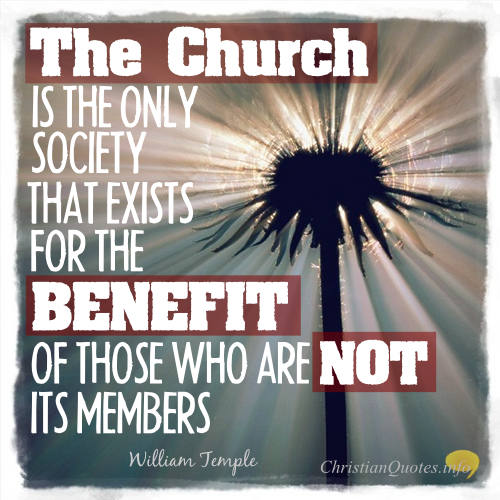
What I have experienced in other places and very much at Holy Trinity is a growing sense of the church as missional – existing for the benefit of others, not just those who are “on the list.” There will always be echoes of our history, but I don’t find it driving our agenda. The agenda continues to evolve. In some ways, the pandemic has been a blessing, forcing us to find new ways to be the Church, but God’s mission is still the same, as Jesus handed it to his disciples on the night before his death.

The church of 2022 is facing some huge challenges. With the Holy Spirit as our guide, we may move forward contributing our share of God’s mission in this world. Things won’t ever again be the same – but that’s always been true.

It has been a joy and a privilege – and at times a great challenge – to be part of the changes of the past 35 years. I do not expect to see the next 35 to their completion. But I am certain they will happen, and I believe that God will be glorified in God’s people.

May we all be one.

Amen.

The Scandal of Unconditional Love

Notes for a sermon preached at Holy Trinity, Edmonton (Old Strathcona)
Mar. 27, 2022. Text: Luke 15:1-3, 11b-32

If it’s not about love, it’s not about God.” – Bishop Michael Curry.

We learn from texts in both testaments of the Bible that love is God’s essential nature, notably in Exodus 34:6f:

The Lord passed before (Moses), and proclaimed,
‘The Lord, the Lord, a God merciful and gracious, slow to anger,
and abounding in steadfast love and faithfulness,
keeping steadfast love for the thousandth generation,
forgiving iniquity and transgression and sin,

Also in the first letter of John 4:7-8:

Beloved, let us love one another, because love is from God;
everyone who loves is born of God and knows God.
Whoever does not love does not know God, for God is love.

And from Jesus himself, in John 13:34, in the only thing he called a commandment:

I give you a new commandment, that you love one another.
Just as I have loved you, you also should love one another.

Today’s we heard one of the best-known and best-loved stories in the Bible about love. It’s most often known as “The Prodigal Son,” but it’s about three people, not one.

It is easy to focus on the younger son, and his father’s joyful reception of him when he returns to the family home. It is a heartwarming account of how much and how unconditionally the father loves his errant offspring. This first scene could stand on its own as a lesson. But then Jesus adds the second scene, in which the older brother refuses to join the welcome. An apparently simple story of restoration takes on greater depth.

The younger brother received a huge gift from his father – one-third of his estate, according to the custom of the time. It would likely have been a large sum, and the father would have had to go to great lengths to free it up. The young man lived high on the hog for a while, and then – disaster struck. Not an uncommon turn of events for people who are unprepared for wealth.

Did the young man repent? The word doesn’t appear in the text, but we are told that he resolved to go home because his life has become unbearable. He rehearses a confession but is never allowed to complete it. His father greets him without condition, without anything but sheer joy at his return. His love overrules everything, even the young man’s waste of the great gift he received.

Things change dramatically when the older brother enters the scene. He can’t even refer to the younger one as his brother and is angered by his father’s behaviour. This reveals the scandal of unconditional love. The father loves both sons, but the older cannot accept the father’s love for the younger. How can he love such an obvious sinner?

I have heard similar sentiments from people over the years. God’s love is a wonderful thing when it applies to us or to those we love or agree with. But when we hear that God’s love extends to some other people – well, it can be very troubling.

Martin Hattersley was a lawyer, a politician, and an Anglican priest. He served as an Honorary Assistant at several city parishes before his death in 2020. His life was profoundly changed when his daughter was murdered in 1988. Out of this came a ministry of involvement in victim support and advocacy on behalf of prisoners. He did not come to it easily. I heard him speak to a clergy gathering, when he talked about the process of coming to terms with the reality of his daughter’s death, and with the troubling idea – born from the teachings of Jesus – that God could still love her murderer. Martin talked about days spent raging at God. He spent days pacing his family room, sometimes in tears, sometimes in visceral anger. How could God love a person who did such an evil thing?

That’s a very important question. I pray none of us ever need to grapple with it in the kind of circumstances that Martin Hattersley did, but it’s a question that I believe is raised every time we deal with people whose actions we see as evil, whether greater or less.

Can we ever see the offender as a child of God, equal to us in God’s eyes? It’s hard; it’s really hard. But we must remember that we are all part of God’s creation, God’s great labour of love, and all human beings are loved by God. Even people whom it is easy to hate – and there are plenty of such people – even they are objects of God’s love.

However…

God’s unconditional love does mean that God loves us – everyone of us – just as we are. But it also means that God loves us too much to want us to stay the way we are. The younger brother is on the road to repentance and a new life. The father deeply loves the older brother, now his sole heir, and he invites him to shed his bitterness and join in the party. Although there is good reason for the older to resent the younger, to continue living with this kind of feeling will only serve to further divide the two. His younger brother wasted the great gift he received, but the older is now in danger of scorning and wasting the great gift of his father’s love.

Loving and praying for our enemies is very difficult. It goes against the grain for most of us, but it’s a significant part of the Gospel imperative. I am reminded of the words of the Absolution from BCP Morning Prayer, which say that God “…desireth not the death of a sinner, but rather that (they) may turn from (their) wickedness, and live.” God desires the best for all his children. God desires life for all of us. Out of this desire, when we are on the wrong track, God calls us to a change of mind, a change of heart.

Did the older brother’s heart ever soften? Did he relent and join the party? We are not told, but that is his father’s wish for him. God calls us to join the party, to turn from whatever is keeping us from entering into the fullness of joy.

And let’s remember that Jesus told the story in response to scribes and Pharisees who were upset at Jesus’ welcome of “tax-collectors and sinners.” Who is invited to dine with Jesus? Not just the supposedly holy, but everyone!

Let’s join the party, not condoning the acts of those who do us harm, but praying for them, and looking for reconciliation in the light of God’s love.

May we seek the good of all.

May we love our enemies and pray for those who persecute us.

May God’s steadfast love for all of God’s children guide us today and always.

Enjoy the party!

Amen.

What kind of king? What kind of people?

Notes for a sermon at Holy Trinity Anglican Church (Strathcona), Edmonton
Reign of Christ Sunday, Nov. 21, 2021
Texts: John 18:33-37; 2 Samuel 23:1-7; Revelation 1:4b-8

Are you the King of the Jews?” may at first seem like a straightforward yes/no question. The Jewish authorities have turned Jesus over to Pilate, demanding his death. At first glance, Pilate is just seeking a quick resolution to the charge. However, I find myself hearing Pilate’s question on another level. Jesus has been accused of claiming kingship, and Pilate can’t quite believe it.

Are you the King of the Jews?” “Really?”

Whatever answer Jesus may give, he does not present as any kind of king that Pilate can recognize. What does a king look like? Certainly nothing like a Galilean peasant. Pilate knew kings – people who lived in palaces, dressed richly, surrounded by servants. Most kings in the ancient world got their positions through force or violence, whether an ancestor’s or their own, and they held on to those positions through force. Pilate can see none of this in Jesus, who is no kind of king that Pilate (or almost anyone else) understands. “My kingdom is not of this world,” as Jesus says. Living under Jesus’ reign is different from living under the rule of an earthly king. So…

       What kind of king is he?
       What kind of kingdom does he reign over?
       What kind of people inhabit this kingdom?

The Bible is ambivalent about human government, especially kingship.[1] There are texts that affirm its positive value, others that caution about it, and still others that are profoundly negative. Our reading from 2 Samuel points to this tension: someone who rules over people should do so “in the fear of God,” meaning that the ruler’s purposes should be God’s purposes. History has too many examples of rulers whose purposes were not aimed at the good of God’s people, but rather driven by self-interest, aggrandizement, and aggression.

Moves to limit the power of kings play an important role in our history. In 1215, Magna Carta sought to protect the rights of the church and the barons, but real steps in establishing rights for the wider populace came later, notably with the British Bill of Rights Act of 1689. In Canada, human rights, as enshrined in the first section of our constitution in 1982, have become a major factor in our lives, notably as part of some rancorous disputes around pandemic protection.[2]

The language of human rights has become commonplace, even finding its way into church life. At General Synod in 1998, we were asked to vote on a declaration of human rights for the church. The measure was narrowly defeated, but I found the debate instructive. I particularly recall one of the bishops saying something like “Human rights are a good thing to promote, but we in the church should remember that this is not our ‘heart language.’ Our heart language as followers of Christ is the language of responsibility, which is found in the Baptismal Covenant.”[3]

That one short speech has stayed with me ever since.

We are celebrating baptism today, affirming with the candidate and her parents and sponsors our own commitment to following Jesus. We are declaring ourselves to be citizens of Jesus’ Kingdom. Following Jesus is never about asserting rights and privileges, but rather about acknowledging and accepting our responsibilities as Jesus’ people. One of those responsibilities is related to human rights – we pledge to respect the dignity of every human being, but that has little to do with our own rights. It’s more about acknowledging others’ equal standing in God’s eyes.

Jesus could have claimed kingship for himself, with all the rights and privileges pertaining to that office. As the incarnate Word of God – the Truth walking among us – he was certainly entitled to due respect. But he never claimed it.

Instead, as Paul wrote in Philippians 2:5-8

Let the same mind be in you that was in Christ Jesus,
who, though he was in the form of God,
   did not regard equality with God
   as something to be exploited,
but emptied himself,
   taking the form of a slave,
   being born in human likeness.
And being found in human form,
   he humbled himself
   and became obedient to the point of death—
   even death on a cross.

Jesus’ kingship is not about him – not like Louis XIV of France, who famously said “L’état – c’est moi.” For Louis and many other monarchs, it is all about them. For Jesus, it is all about God and God’s people, and his self-giving love for all that led him to stand before Pilate, and soon after to die on the cross.

Christian life – the life expressed in promise form in the Baptismal Covenant – is not about us. It’s about our participation in the Reign of Christ, a Kingdom built on justice, mercy, and love.

Christian life is about us being and becoming a kingdom of “priests serving [Jesus’] God and Father.” We are not all priests in the ecclesiastical sense, but as a people we are called to “proclaim by word and example the good news of God,” presenting God to the world in all that we say and do – the essential nature of priestly ministry. This message will not always be received in joy by people, not least because it confronts all our self-driven agendas.

I once asked a young man who was considering Baptism as part of his preparation for marriage what he understood to be the purpose of life. His response startled me: “I guess to get power over other people,” a dramatic contrast to seeking others’ good, entailed in following Jesus. I don’t think he is unique – far from it! – but I had never heard this stance expressed quite so candidly.

Being part of the people of God can sometimes be difficult, as that conversation showed. But the good news is that we are not alone.

We stand with Jesus, who stands with us, together accepting and sharing all the risks of proclaiming the Truth in a world that sometimes seems to despise it.

We are empowered by the Holy Spirit, who moves in our midst and in our hearts, driving out fear, and sowing within us the seeds of love.

We are all children of God, who created us in love, calls us to live in love, and welcomes us into the Kingdom in love.

Thanks be to God!


[1]Excursus: Biblical Ambivalence to Government”, in The New Interpreter’s Study Bible, Abingdon 2003, p.407

[2] A considerable body of jurisprudence has emerged in Canada, using the principle of “reasonable accommodation” in cases of competing rights.

[3] Book of Alternative Services, Anglican Church of Canada, 1985, p. 158

Is it about you?

Last night, at All Saints Anglican Cathedral in Edmonton, Bishop Jane Alexander ordained three people to the priesthood and seven (!) to the diaconate. If I’m not mistaken, it was the largest ordination in this Diocese since at least 1986. The Cathedral was almost full, and there was a large turnout of the diocesan clergy. Some of us had speculated about how long the liturgy would take, and we were agreeably surprised when it came in at about 2 1/4 hours. I didn’t hang around too long afterward.  Bun fights in tight spaces make me a bit anxious, and my hearing issues (hypersensitivity to crowd sound at voice range) make it difficult to function in that kind of noisy environment. Nonetheless, I did have time to greet one of the ordinands, a person with whom I have had a long and special relationship.

I don’t ever recall being at an ordination service for so many people. Most of the ordinations I participated in during my time in the Diocese of Brandon were for individuals. I have no problem with the church celebrating the new ministry of a person who has been raised up for ordination. What has often troubled me is that these celebrations often become about the individual. Ordination should not be about a person having “made it,” but about the church renewing its leadership.

Last night’s service filled me with joy. I knew three of the ten ordinands personally, one better than the other two, but that’s not really the point. I saw ten (count ’em – 10!) people being affirmed in ministries that we prayed would be of benefit to the church and the world. It wasn’t about any one of them, but about the church engaged in the continuous and joyful renewal of its leadership. It was wonderful! I give thanks for the privilege of being present for all ten, even if seven of them were previously totally unknown to me except as names on a list.

On Holy Cross Day, our preacher recalled for us the love displayed and exemplified by Christ’s death on the cross. It doesn’t make sense to some people, but that’s okay. The ten who were ordained last night will share in proclaiming that truth, in their lives and their ministries. (Is there really any difference?)

Today, I welcome three people to the fellowship of the Holy Priesthood and seven people to the company of Deacons. May they continue to proclaim the love of God at all times and all places.

Finally my question to anyone who may be considering ordination in the church. Is your call about what YOU want to do, or about what GOD needs in the world. Is it about the church (God’s people) or about you? I pray that you may be able to answer that question prayerfully and honestly.

On the journey to…

A sermon this morning on Genesis 12:1-4a (the call of Abram) started me thinking about various times in my life I have stepped out of what might be expected, and gone where the call has led.

The first was not of my own volition, but my parents’. When I was only three years old, they decided to pull up roots in England and transplant our family to Canada. We settled in Drumheller, Alberta, a far cry from the great metropolis of London where I was born. I don’t know exactly how my parents felt about it at the time, but it became clear over the years that being so far from family and old friends was difficult for both of them, especially my mother. My early years in this country were marked by a sense of being “not quite at home,” a feeling that has stayed with me throughout my life.

The second such event came when I left teaching school to return to Edmonton, and to do… I wasn’t quite sure what! All my spouse and I knew was that we couldn’t stay where we were, and the opportunities were far greater in the city where we had both attended University. Some family members were horrified that I would give a seemingly secure and respectable job to search for something different.

That move led to a graduate degree, a job with our Provincial Government, and us settling down as a family. But God had other ideas. After nine years in that job, we again pulled up stakes and left for Saskatoon for me to enter theological college. I had no real idea where this was leading, except for the conviction that I was called to go down this road.

The road led to ordination and the call to be the pastor of a small-town parish. It was a great adventure, but not without its problems. After a few years there, I moved on to a suburban parish, where I stayed almost thirteen years. In time, I felt the need to move on: I accepted a call to become Dean and Rector of St. Matthew’s Cathedral, Brandon, Manitoba.

This was another move into the unknown: a new parish, a new city, a new province, and a new diocese. I didn’t realize at the time just how big a move this would be. Local customs are different, even at the relatively small remove of a couple of Canadian provinces. But we persisted, through some great years, and some not-so-great, until my retirement in 2013.

Each one of those moves required a measure of faith. In every case, I had the sense that I was going where I had to go, except perhaps the first one, when I had no choice in the matter.

In two of the places where I served the Church, I had conversations with people whose whole lives had been centered on that place. Many of them were puzzled why I might want to live somewhere else: “[town] has everything a person needs.” That may have been true, but going elsewhere was not contingent upon needs, but upon a call, just as Abram heard God’s call to leave home and family and travel to “a land which I will show you.”

I have been on this journey all my life, and now God has brought me to a place where I might reasonably hope to live out my days in peace and reasonable comfort. Sometimes, though, I find myself wondering…