Notes for a sermon preached at Holy Trinity Anglican Church, Edmonton, Alberta on July 5, 2026. Text: Matthew 11:16-19, 25-30
What’s a yoke? And what does it mean to take Jesus’ yoke upon us?

As so often in Jesus’s teachings, the word has agricultural roots. Oxen were yoked together to pull a plow, sharing the burden of the work, and submitting to the farmer’s bidding. Another kind of yoke is the milkmaid’s yoke, a horizontal bar laid across the shoulders to allow the carrier to bear a heavier load more easily.[1]
Oxen were usually yoked together in unequal pairs, to help a younger ox learn the discipline of bearing the yoke from an older one. The younger submits to the older, and both submit to the farmer. The milkmaid carries her yoke because her job is to bring the milk to the master’s table: she doesn’t do it for her own reasons, but because her role in life is to submit to the master.
Clearly, Jesus uses the word as a metaphor for submission. “Yoke” turns up in a number of places in Scripture, in both positive and negative senses. It can refer to the process of learning the law from a rabbi, or to the law itself. It can also refer to oppression by an overlord of some kind, especially a conqueror. It implies a relationship based on submission. It may be to a person, to an employer, or to an authority of some kind, or to an inner urge like an addiction, but it’s always a superior/inferior situation.
When Jesus says, “Take my yoke upon you…”, we are hearing an invitation to submit to his authority. We hear a promise to do this in our baptismal rite when the candidates or their sponsors are asked, “Do you promise to obey [Jesus] as your Lord?” Submission to Jesus is baked into the life of the Church! We seek to do as Jesus would have us do. The question is not “What would Jesus do?” but “What would Jesus wish us (or me) to do?” Seeking to discern the answer to this question is at the foundation of what we call vocation—answering the call, accepting the invitation. And note this: on one level, vocation is a “once and done” proposition, which we affirm in baptism, but on another level, it’s a day-by-day process, as we seek the way ahead in our lives, both as individuals and as a church.
However we read it, submitting to Jesus’ authority—taking his yoke upon us—goes against the flow of cultural norms and expectations.
Many commentators on the passage see it as a comparison between Jesus’ teaching and the teaching of the Rabbis, making the Torah a heavy burden. If that is the sense of the passage, then Jesus is pointing away from the religious norms of his day to a new and less onerous understanding of the Law. It doesn’t take a great stretch to see that this reading can lead to anti-Semitism. However, other commentators look back to various passages in the Hebrew Scriptures, and find that the idea of a “yoke” is more often associated with harsh or imperial rule.[2] If we read the passage with that in mind, Jesus’ invitation is to shed the chains of the Kingdoms of this world, to live into the Kingdom of God, a Kingdom of justice, mercy, compassion, and love, a lighter burden than the chains of any worldly Kingdom. The invitation then becomes not just a call to live into his understanding of the Law, but to see that life as refusing the ultimacy of worldly rulers’ authority.
The religious invitation becomes a profoundly political one. In a world ruled by Caesar, saying “Jesus is Lord” was a challenge to Caesar’s rule.
In today’s liberty-loving political climate, the idea of taking anyone’s yoke on us is still counter-cultural. There are people who cling to the idea of the rugged individualist, whose idea of freedom is that no-one can tell them what to do. That’s a myth, of course—down that road lies chaos. I would suggest that the rugged individualist labours under the yoke of their own pride. Everyone bears some yoke or other, either externally or internally. As Bob Dylan sang,
But you’re gonna have to serve somebody, yes indeed
You’re gonna have to serve somebody,
It may be the devil or it may be the Lord
But you’re gonna have to serve somebody.[3]
We always have the choice to accept or reject Jesus’ yoke. The call to choose is deeply rooted in Scripture, going back at least as far as the Israelites’ time in the wilderness. When the Promised Land was in sight, Moses said to the people,
I call heaven and earth to witness against you today that I have set before you life and death, blessings and curses. Choose life so that you and your descendants may live, loving the Lord your God, obeying him, and holding fast to him, for that means life to you and length of days…
Deuteronomy 30:19-20a
He had stated the consequences of choosing wrongly two chapters earlier:
Because you did not serve the Lord your God joyfully and with gladness of heart for the abundance of everything, therefore you shall serve your enemies whom the Lord will send against you, in hunger and thirst, in nakedness and lack of everything. He will put an iron yoke on your neck until he has destroyed you. Deuteronomy 28:47-48
There’s that word “yoke” again!
We don’t have a choice about serving someone or something, but we do have a choice about whom to serve.
As Joshua said to the people of Israel,
… choose this day whom you will serve…
as for me and my household, we will serve the Lord.
Joshua 24:15
Jesus’ invitation to take his yoke upon us is a call to live into the Kingdom of God, a Kingdom of justice and joy, mercy and grace,[4] a Kingdom ruled by the God who is love, who calls us day by day to live in and into that love.
So let us say “Yes!” to this gracious call—today, tomorrow, and always.
Amen.
[1] https://www.christianity.com/jesus/life-of-jesus/teaching-and-messages/the-yoke-of-jesus-biblical-meaning-and-importance.html
[2] I first encountered this interpretation in the annotations on this passage in The New Interpreter’s Study Bible, Abingdon Press, 2003, p. 1766f.
[3] © 1979 by Special Rider Music.
[4] See Hymn #631 in Common Praise, Anglican Church of Canada, 1998


 Queen Elizabeth II is a remarkable woman, a person for whom I have great respect. She has negotiated the demands of a more-or-less impossible job with grace, dignity, and resolution. She will be greatly mourned by many, including this writer, when she dies.
 I congratulate Prince Harry and Meghan. Love has brought them together, and I pray that love will see them through the years ahead. It will probably not be easy for either of them, especially her, although she does seem to have her eyes wide open.
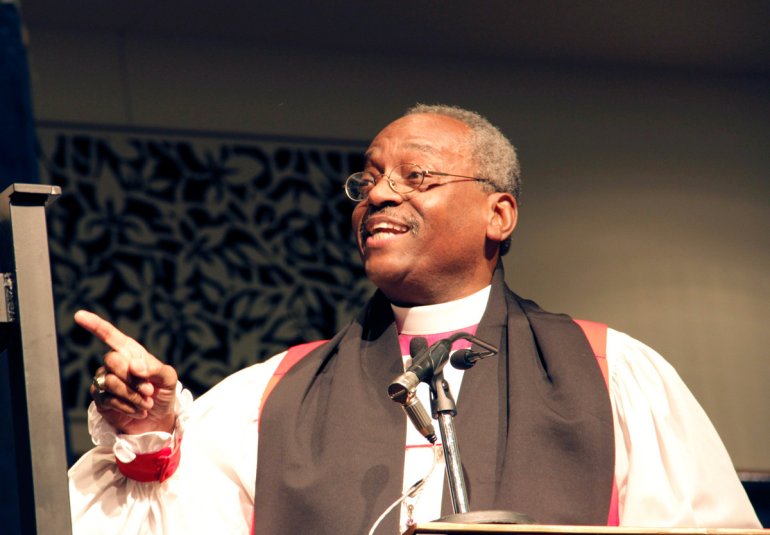 Bishop (no, Brother!) Michael preached the Gospel. He reminded us that love IS the answer, and that “If it’s not about love, it’s not about God.” He asked us to imagine a world where love rules. He mostly didn’t address the marriage couple directly, which some friends of mine have criticized, but his attention was very clearly on them at most times. What this implied to me was that their marriage was to be evidence of the love by which God created the world, by which God redeemed the world, and by which God continues to renew the world. I don’t think they are stupid people: I believe they got the point!
 I am sure that everyone of us would answer this question in differing personal, theological, and spiritual terms. I am no less sure that we here today share something in how we behold the cross. After all, it has been the principal symbol of our faith since the 4th century. We know about Jesus’ death on the cross. We decorate many of our churches with crosses of all descriptions. Some of us make the sign of the cross. Many people wear crosses on their persons.
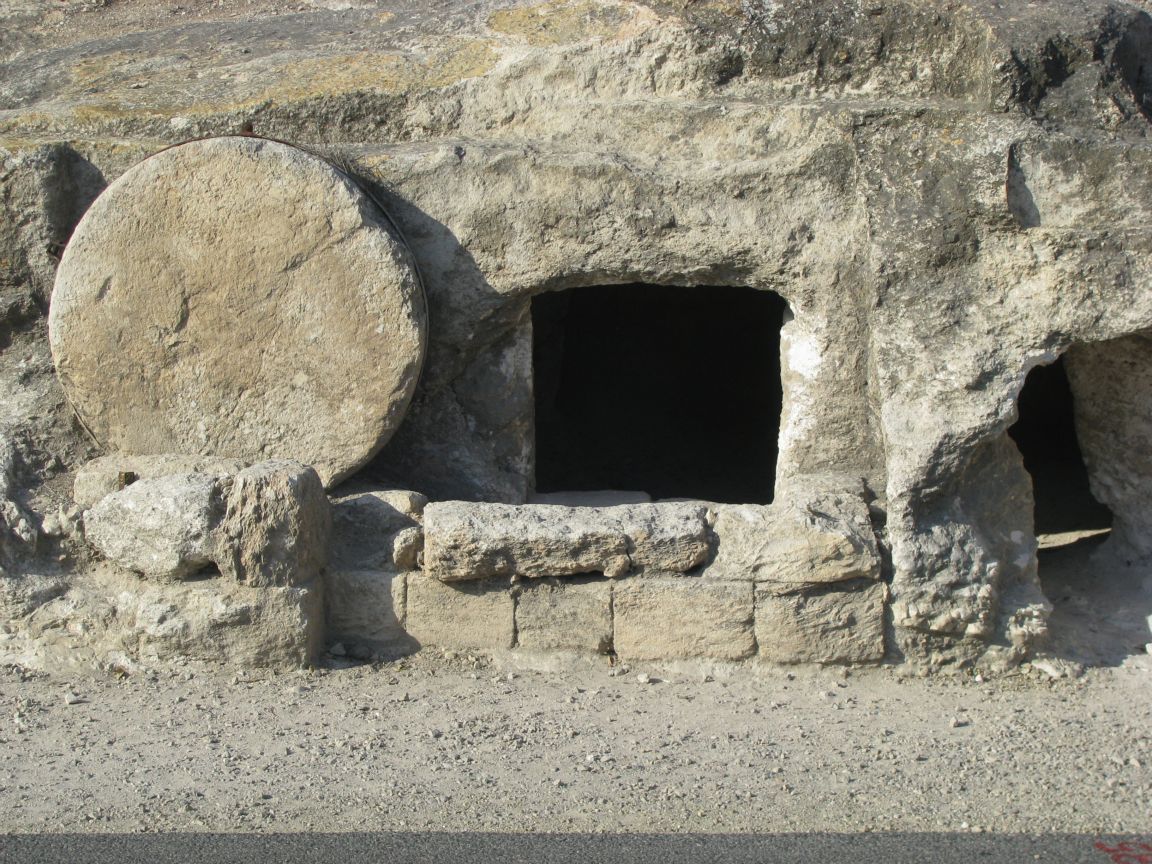 ion about this before beginning the Eucharist, focussing on the question of why people thought it necessary to remember someone for things that very likely did not happen, glossing over the one solid piece of evidence about his life. Giving a tomb for Jesus’ burial was an act of devotion and generosity that had profound importance in the Gospel story: why can’t we be satisfied with that? Joseph isn’t alone in this. There are other New Testament figures about whom various legends grew up, mostly without solid attestation, often imputing miraculous lives to these individuals.
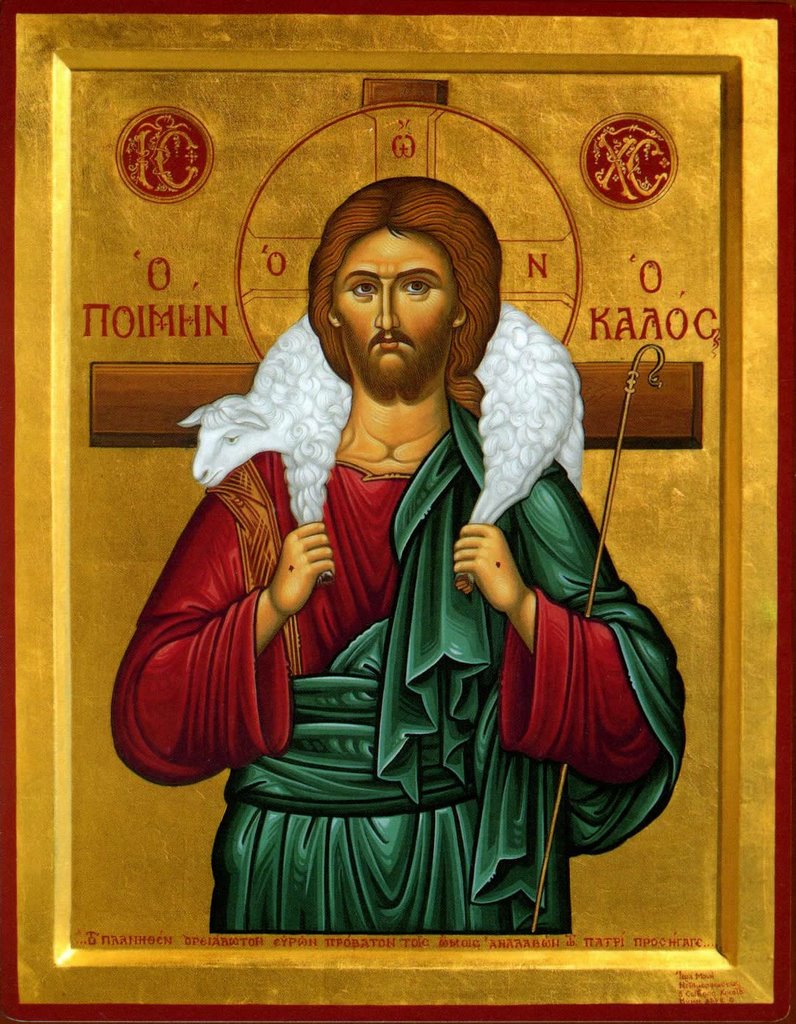 hbour.” Yes!
