Notes for a sermon preached at Holy Trinity Anglican Church (Old Strathcona), Edmonton AB, Oct. 15, 2023. Text: Matthew 22:1-14; (Exodus 32:1-14)
In 26 years of parish ministry, I officiated at around 100 weddings, and was a guest at many receptions. I never once heard of a wholesale rejection of an invitation, with a substitute guest list, and if anyone was ever ejected from one of those occasions for how they were dressed, it didn’t come to my attention. But today we hear Jesus telling a story of those two things happening, in a parable told to the leaders of the nation (the chief priests and the elders of the people), clearly aimed at them.
The story may have been directed to a particular group in a particular time, but I believe it has something important to say to us today. I would suggest that the central act of the story is invitation – the King invites the people of the story to a wedding banquet for his son. By their responses, the prospective guests showed themselves unworthy of the invitation. The King’s response seems violently over the top but remember that Jesus often uses hyperbole like this to emphasize a point. The A-list guests won’t come, so the King invites everyone he can find to the banquet – everyone!

The first invitation might have been a matter of asking his usual guest list who might have treated it as nothing special. The prospective guests find something better to do, like the people of Israel at Sinai, who spurned the covenant made through Moses for something much more exciting – a great feast around a golden calf. “…the people sat down to eat and drink, and rose up to revel.” Note however: in the Exodus story, God does not carry out the threatened destruction, but graciously relents when Moses intercedes. In Jesus’ story, the people with something better to do suffer dire consequences for their rejection of the invitation.
But then comes the great turnaround: if the expected guests won’t come, the King graciously extends the invitation to everyone. The invitation is not made according to the usual criteria. (Who IS on the A-list, anyway?) Instead, the invitation is a matter of pure grace – opening the doors to all who will come, making a place at the table for both good and bad. No one had to qualify for this guest list. They just had to say “yes.”
Except… one man was not wearing a wedding robe, and he was thrown “into the outer darkness.” We are left wondering,
“Where’s the grace in that?”
The grace of the second invitation reflects unconditional love: it doesn’t matter who you are; God loves you and wants you at the banquet. But the removal of the improperly-clad guest looks like love with strings attached – putting limits on God’s infinite love.
Unconditional love means that God loves us just the way we are. God loves all his creation! But with that comes the realization that God’s love is beyond our imagining, and that God loves us too much to want us to stay the way we are.
Or as Anne Lamott wrote:
I do not at all understand the mystery of grace –
only that it meets us where we are
but does not leave us where it found us.[i]
I have encountered many congregations in my life in the church, in a variety of settings and roles. Not once have I heard a church say that they did not want to be welcoming. People generally understand on a very basic level that welcoming all is part of living into God’s grace, but we sometimes forget that just welcoming people is only part of the job. The other side of the equation is that God has expectations of us, as individuals and as a church. The church may be a “come as you are” party, but it’s also a “come prepared to change” party.
Being a church that welcomes all is a good thing, but being a church with a mission is also a good thing. Being only a welcoming church can be self-defeating when it develops into as “anything goes!” This seems to be one of the major subtexts of Matthew’s gospel: some in his audience believed that the Law had been set aside, and they were free to do as they pleased.[ii]
Being only a missional church is likewise self-defeating when it presents as welcoming people only according to their ability to fit into the mission. Down the one road lies chaos as everyone does what pleases them, and the church loses sight of its reason for being. Down the other road lies exclusivity, as insistence on “fitting in” drives people away.
How to fix the chaos? Invite people to share in the church’s mission.
How to fix the exclusivity? Welcome everyone – without question.
The “chaos road” is characterized by what Dietrich Bonhoeffer called cheap grace:
Cheap grace is the grace we bestow on ourselves.
Cheap grace is the preaching of
forgiveness without requiring repentance,
baptism without church discipline,
Communion without confession…
Cheap grace is grace without discipleship, grace without the cross,
grace without Jesus Christ, living and incarnate.[iii]
In a church dominated by ideas of cheap grace, nothing really matters. Bonhoeffer challenged the church of his day (in pre-war Germany) to realize that everything matters; that following Christ is a matter of life and death.
He wrote (edited for inclusive language):
When Christ calls a [person], he bids [them] come and die.[iv]
The balance between welcoming and exclusivity is never easy, and it is never static. Churches constantly swing between the two poles. Healthy churches understand that swing as a response to the mystery we call the grace of God, on guard against both chaos and rigid exclusivity. Healthy churches invite and welcome people to join with them in the mystery of grace: meeting us where we are but calling us ever deeper into a life ruled by the love of God, seeking to be part of God’s mission.
All are invited to this place. All are welcome. And all are challenged to learn day by day the mystery of costly grace, which calls us ever forward into new life in Christ. So today and every day:
Come to the table – all are welcome.
Come to the banquet of the King – all are welcome.
Come to the wedding feast of the Lamb – all are welcome.
Yes, come, but come expecting to be changed.
Come with open eyes and ears and hearts and minds.
Come with your spirit laid bare to God.
Put on the wedding robe of those who seek to know and serve Christ in all things. Come into the mystery of God’s grace – and give thanks.
Amen.
[i] From “Traveling Mercies”
[ii] Matthew 5:17-20
[iii] From “The Cost of Discipleship”
[iv] Ibid.

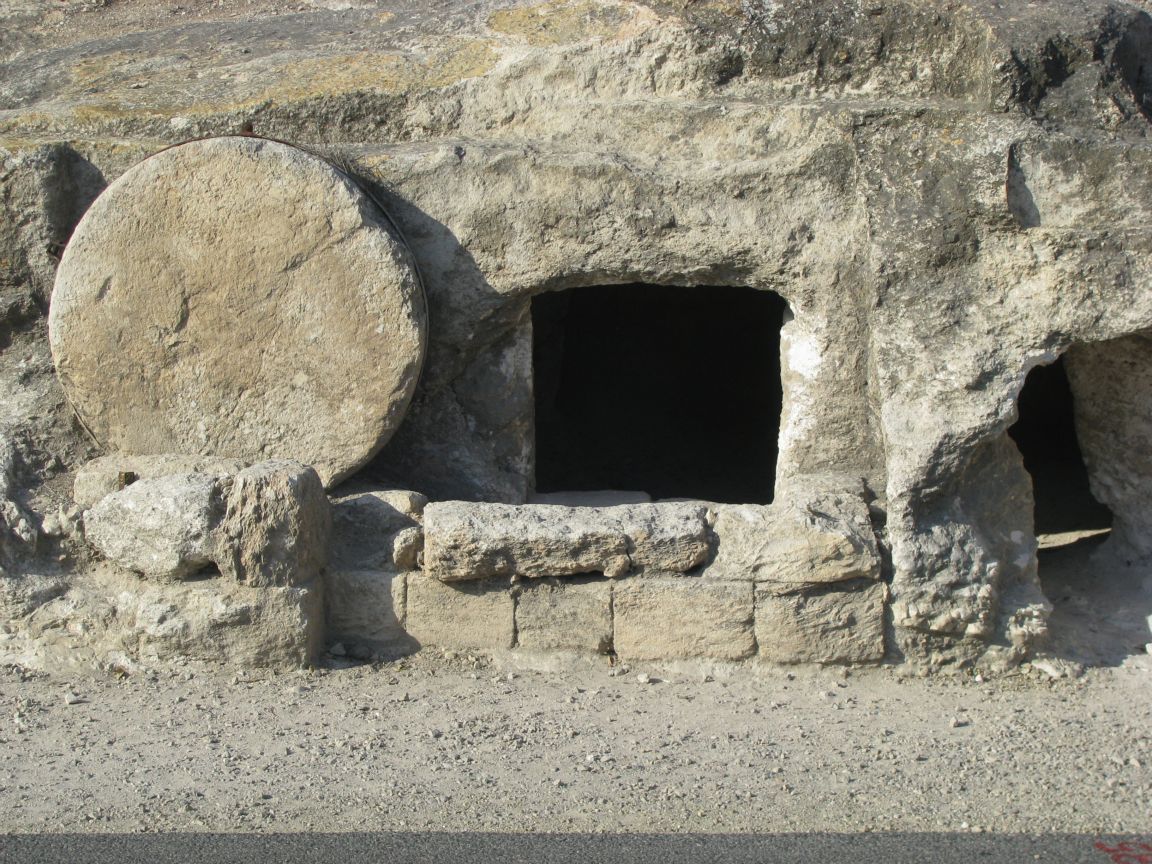 ion about this before beginning the Eucharist, focussing on the question of why people thought it necessary to remember someone for things that very likely did not happen, glossing over the one solid piece of evidence about his life. Giving a tomb for Jesus’ burial was an act of devotion and generosity that had profound importance in the Gospel story: why can’t we be satisfied with that? Joseph isn’t alone in this. There are other New Testament figures about whom various legends grew up, mostly without solid attestation, often imputing miraculous lives to these individuals.
 Into the blue...