On the journey to…

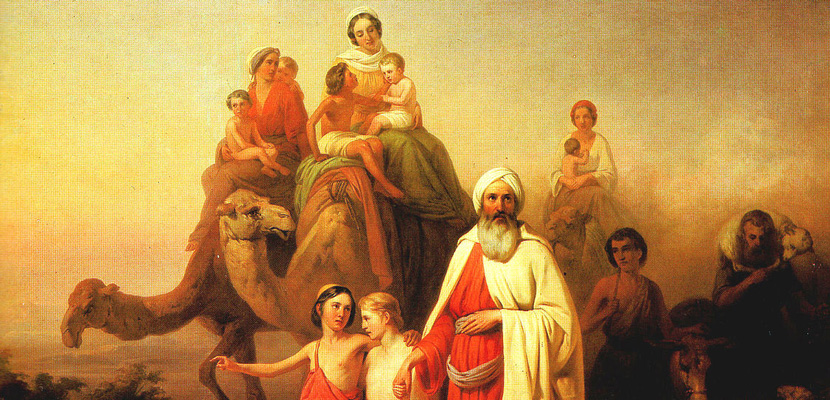
A sermon this morning on Genesis 12:1-4a (the call of Abram) started me thinking about various times in my life I have stepped out of what might be expected, and gone where the call has led.

The first was not of my own volition, but my parents’. When I was only three years old, they decided to pull up roots in England and transplant our family to Canada. We settled in Drumheller, Alberta, a far cry from the great metropolis of London where I was born. I don’t know exactly how my parents felt about it at the time, but it became clear over the years that being so far from family and old friends was difficult for both of them, especially my mother. My early years in this country were marked by a sense of being “not quite at home,” a feeling that has stayed with me throughout my life.

The second such event came when I left teaching school to return to Edmonton, and to do… I wasn’t quite sure what! All my spouse and I knew was that we couldn’t stay where we were, and the opportunities were far greater in the city where we had both attended University. Some family members were horrified that I would give a seemingly secure and respectable job to search for something different.

That move led to a graduate degree, a job with our Provincial Government, and us settling down as a family. But God had other ideas. After nine years in that job, we again pulled up stakes and left for Saskatoon for me to enter theological college. I had no real idea where this was leading, except for the conviction that I was called to go down this road.

The road led to ordination and the call to be the pastor of a small-town parish. It was a great adventure, but not without its problems. After a few years there, I moved on to a suburban parish, where I stayed almost thirteen years. In time, I felt the need to move on: I accepted a call to become Dean and Rector of St. Matthew’s Cathedral, Brandon, Manitoba.

This was another move into the unknown: a new parish, a new city, a new province, and a new diocese. I didn’t realize at the time just how big a move this would be. Local customs are different, even at the relatively small remove of a couple of Canadian provinces. But we persisted, through some great years, and some not-so-great, until my retirement in 2013.

Each one of those moves required a measure of faith. In every case, I had the sense that I was going where I had to go, except perhaps the first one, when I had no choice in the matter.

In two of the places where I served the Church, I had conversations with people whose whole lives had been centered on that place. Many of them were puzzled why I might want to live somewhere else: “[town] has everything a person needs.” That may have been true, but going elsewhere was not contingent upon needs, but upon a call, just as Abram heard God’s call to leave home and family and travel to “a land which I will show you.”

I have been on this journey all my life, and now God has brought me to a place where I might reasonably hope to live out my days in peace and reasonable comfort. Sometimes, though, I find myself wondering…

A theology of money?

Notes for a sermon preached at Holy Trinity Strathcona, Sept. 25, 2016

Texts: Jeremiah 32:1-3A, 6-15; 14-16; 1 Timothy 6:6-19; Luke 16:19-31

At one time I was deeply involved in Stewardship in this Diocese, including 1½ years as Stewardship and Planned Giving Officer. In that capacity, I received many preaching invitations, most often to parishes that perceived themselves as needing help in their finances.

“Stewardship” has become an important word in church life over the last few decades. We did various financial programs before that, but an apparent overemphasis on money per se led us to look for a more “theological” term. It’s not a bad word—it has both biblical and theological import—but it seems to me that it has become a code-word for how we fund the church. I believe most church people, if asked, would now say that stewardship is about getting more money out of church members.

In my last parish, I got a strong negative reaction if I raised the question of Stewardship programs. Previous programs had used some strong-armed tactics. It ended up putting them in a worse financial situation than they might otherwise have been.

A few years ago the church renamed our national office of Stewardship and Financial Development as “Resources for Mission,” emphasizing that the main thing is the Church’s mission, which requires a variety of resources, including, but not limited to, money.

dollar-signThe church sits uneasily with money. I read of a recent meeting of national staff in which they had concluded that we need a new theology of money. I would agree, but I would drop the word “new”—have we have had any really coherent teaching on this subject? Historical church attitudes to money have veered between the extremes of seeking either great wealth or intentional poverty.

In my various parish visits for Stewardship preaching, the clergy often said to me that they were grateful that the Diocese had someone to come and talk about these things, things which made them very uncomfortable. I understand that: a parish priest speaking about money from the pulpit cannot help but be aware that his or her own stipend is a major line item in the parish’s budget—in many cases the largest single expense. It can sound like you’re begging—even if your theology of stewardship is totally sound.

This brings me to today’s lessons, all of which have something to do with money. Maybe they will help us (and maybe also Church House!) get a handle on a theology of money.

First, I Timothy, the source of one of the commonest and most erroneous Bible quotes. People often say that “money is the root of all evil,” but note what is actually written:

…the love of money is a root of all kinds of evil.

It is not money that matters but what we do with it in our lives and in our hearts. Money per se is ethically neutral, a convenient means of exchange, a means to an end, whether good or evil. It has no real existence beyond that, but how we regard it and use it has immense spiritual significance.

…in their eagerness to be rich some have wandered away from the faith and pierced themselves with many pains.

And further on,

(The rich) are to do good, to be rich in good works, generous, and ready to share, thus storing up for themselves the treasure of a good foundation for the future, so that they may take hold of the life that really is life.

It’s what we do with it that counts. God’s Mission is the all-important thing. If we have wealth, we are charged to use it for God’s purposes before ours. Regardless of our own personal wealth or poverty, the challenge is to seek the good, to look to know what will help advance the Kingdom of God in this world, and to use our God-given resources towards that goal.

Sometimes it may be very unclear what will actually advance the Kingdom. The prophet Jeremiah lived in just such a time of great uncertainty and anxiety. The Babylonians were threatening the Kingdom of Judah, the kings were weak, and the people had retreated behind a triumphalist theology. (God had made a covenant with them and would not allow his holy city and temple to fall. All they had to do was invoke his name.) The prophet saw otherwise, understanding the reality of the threat, and the people’s confidence to be misplaced. So he does a prophetic action: he buys some land. This looks like madness when the invading hordes are at your gates, but he offers it as a sign of hope. This may not seem the right time to affirm God’s purposes (probably better to be getting all your stuff together in preparation), but Jeremiah asserts that now is the time to work for the Kingdom.

If not me, then who?
If not here, then where?
If not now, then when?

The answer he gives us is “Me, here, and now.” It is always the right time and place to do God’s work.

And do it we must, lest we end like the rich man in the Gospel. There’s much else that could be said about this story, but it seems that at least part of the message is the injunction to do good when the opportunity presents itself. The rich man had years in which he could have helped Lazarus, but he did nothing. As Jesus tells it, the consequences are clear.

Notwithstanding the current recession, we live in one of the most fortunate countries in the world. The vast majority of our people are well-fed, decently housed, educated, and in good health. We have been given great riches, as a people, and as individuals.

Let us then not fail to use what God has given us for the good of God’s people and God’s world.

Let us keep the eyes of our Spirits open, that we may see the need around us.

And let us keep all of our resources at the ready to do God’s work.

May it be so.

Promises made, promises not kept

I’ve been thinking a lot lately about promises. We find them in all kinds of situations and relationships: marriages, employment, politics, just to name the first three that come to mind. We make many promises in life, and many of us are very aware of making promises that we could not keep. That’s a very human thing.

A promise is an interesting thing. It’s a statement that we will do something in the future. Some are conditional, as in “I’ll do such-and-such if you do thus-and-so.” Others are unconditional, as in “I’ll do such-and-such, come what may.” Conditional promises are the ordinary day-to-day stuff of business. Contracts are essentially bilateral promises: “We will let you have this car for the next 2 years, as long as you keep up your lease payments.” Letting down our side of the promise empowers the other party to invoke whatever penalty or escape clauses there are in the contract. Miss too many car payments, lose your car. It’s pretty simple. Most of us understand conditional promises quite well.

promise.jpg

Unconditional promises are another thing entirely. In the rites of the Anglican Church of Canada, marriage and ordination vows are both unconditional. The ordinand or spouse makes certain promises about future behaviour, without any conditions or implied penalty clauses. The sad fact is, however, that many people approach these unconditional promises as if they were conditional. I’ve seen that in a number of weddings at which I have officiated. Maybe not at the weddings, but certainly in the later history of the couples. There’s no need to cite particular cases, because I am sure that most of us know people who have approached their marriage vows this way.

As for ordinations, in our church candidates make a whole slew of promises. [You can read them on pages 646-7 (for priests) or 655-6 (for deacons) in the Book of Alternative Services  for the actual promises.] The content of the promises is one thing. The nature of the promises is another. When I was ordained priest, the preacher explicitly used the imagery of marriage to talk about our new relationship with the Church. The promises are unconditional, except as implied in the final exhortation from the Bishop:

May the Lord who has given you the will to do these things give you the grace and power to perform them.

To which the ordinand replies, “Amen.”

What happens when marriage or ordination vows are broken? In the first case, all kinds of personal and relational damage: broken homes, damaged children, financial ruin, injury, and even death. In the second case, the results are sometimes less clear. When a priest or deacon strays from the ordination vows, the resulting hurts may be less immediate, but they can be deep and long-lasting in a community which has relied on his or her pastoral guidance.

Clergy are only human, and the church is a human institution, but both are supposed to be dedicated to the goal of building God’s Kingdom. As a friend describes it, that’s the way things are supposed to be, while we live in the world of the way things are.

Clergy failings happen, but they create all sorts of difficulties among God’s people, hindering rather than building up the Kingdom.

But let’s not forget that clergy are one party to an implied promise, between congregation and cleric. When clergy receive a call from a new parish, the parish is implicitly making a promise about what the relationship entails. This is spelled out in the rites for Celebration of a New Ministry in the Canadian “Book of Occasional Celebrations.” There is an implied contract between congregation and minister, which is actually made specific in the Canons of the General Synod (see especially Canons XVII, XVIII & XIX), and the various Diocesan Canons and policies which apply.

Parishes and clergy make reciprocal promises, but at times the promises are treated as conditional, as in, “We’ll have you as our priest/pastor/minister (choose your preferred language!), as long as you behave yourself, treat us right, and we’re able to pay you according to scale.” Other promises can be made in the course of clergy search processes, sometimes implying that the parish is something other than what it is. That’s deception, whether or not it is intentional!

Let’s go back to marriage. Deception about the true state of things is grounds for declaring a marriage null and void, resulting in an “annulment” in the language of the civil courts. Our church’s Canon on Marriage gives extensive grounds for such a declaration. (See section III of Canon XXI in the Canons of the General Synod.) Some years ago, I had occasion to process such an application for a woman who was sure that what she had entered into was no marriage. I was gratified to learn that the courts of the church agreed with her. Her supposed spouse had deceived her about his nature and his intentions in entering into the covenant of marriage. It was a hugely painful process to work through it with her, but there was much healing in the result.

Broken promises made conditionally are relatively easy to deal with. Broken promises made unconditionally are much harder problems. Marriages, ordinations, and appointment of clergy are the examples that I have had cause to think about recently. They are all modeled on promises God made to the people of God, the covenants with Noah, Abraham, Moses, and David, which lead us to the New Covenant made with Jesus.

promiseOfTheDayJesus promised “I am with you always.” We strive to be always with those we love, whether spouses, the Church, or congregations. We fail at times. May we find loving ways of dealing with our failures, and the failures of those we love.

quotes-and-poems-awesome-6

The last, and perhaps most important, question is what to do about broken promises. I have no great solution at hand. Broken promises break all sorts of things, estrange people, make enemies, cause hurts, damage lives. Sometimes reconciliation is in view, sometimes not. What I do know is that reconciliation is the ministry that Christ left to his people.

All this is from God, who reconciled us to himself through Christ, and has given us the ministry of reconciliation; that is, in Christ God was reconciling the world to himself, not counting their trespasses against them, and entrusting the message of reconciliation to us.  (2 Cor 5:18-19)
Guns or love?

I feel sick at heart. In some ways, I should be rejoicing: a major issue for which I have advocated for years has taken a huge step forward in our church. A big issue in the choir in which I sing and serve on the executive is very close to resolution. My personal life is placid, calm, full of blessings.

And yet…

I picked up this week’s issue of Maclean’s Magazine, to which  I’ve subscribed for many years, and was immediately discouraged by the cover headline: “The Republic of Fear.” I browsed through it, and promptly threw it to one side. So many of the stories had something to do with how badly things are going in today’s world. I may pick it up again and read some of it, but tonight it only served to remind me of how troubled I am about what is going on today:

There are so many violent incidents in the news: NiceBaton Rouge (twice), Minneapolis, Turkey, Dallas, Calgary, ISIL, just to name a few. Guns seem to the rule of the day, and for the life of me, I just don’t understand the gun-ownership mentality of

There are so many leaders preaching negative thoughts: in the wider world I thinkof Trump, Clinton (somewhat less), Teresa May, Putin. Locally, I read my newspaper, the Edmonton Journal, and see so much negative thinking in the people who write in it and to it, with the exception of Paula Simons.

The reaction of some of our church’s bishops to the big issue, whether our church will allow clergy to officiate at marriages of same-gender couples, has been very depressing. They feel disrespected and abandoned by the rest of the church. I am sorry for that, but the language in which these statements have been made makes me feel disrespected

I could go on, but what’s the point? The world sometimes seems to be so full of negativity these days, when all I wish for is that people could love each other, care for each other, treat each other as beloved children of our God. And what I see is more and more hatred

Where is this leading? I don’t know, and sometimes (like when I tossed Maclean’s aside tonight) I don’t want to know. What I know is that God calls us to live in the love God has declared towards all people.

“Love your neiggood_shepherd-7135901hbour.” Yes!
And the lawyer asked , “Who is my neighbour?”
Jesus’ answer (the parable of the Good Samaritan) is basically this:
“Who is not your neighbour?”
We don’t get to choose who to love.
The only choice is whether or not to love — and that’s no choice at all.

Brothers and sisters, let us learn to love each other as God first love us. Without that, there may be no hope for the human race. For those who see guns as the answer to all the problems of the world, I can only say: “I love you.”


Sports and me, and other things

I had a brief exchange with a Facebook friend the other day. The friend is a baseball fan; I am not. To be truthful, I’m not much of a fan of any sport. OK, I’ll watch the occasional hockey game, and once in a while I’ll turn on a Canadian Football League game, but on the whole, my life proceeds very well without watching any sports, whether on TV or live.

It hasn’t always been so. In my first year of university, some of the great events of my first year living in residence were the football parties. A black-and-white TV, several pizzas, and the inevitable and (then-illegal) cases of beer. And all sorts of guys hanging around having a good time. The action on the fuzzy screen was almost incidental. I’ve never played football, except a couple of ill-advised forays into “touch” football, both of which ended with many bruises and sore joints for most participants.

I used to watch the Edmonton Oilers on TV, back in the glory days of the ’80’s w
hen Wayne Gretzky was in his prime. I enjoyed the daring and skill the team displayed, even if I’ve never really understood the game’s subtleties. My love for the Oilers started to wane when Gretzkoilersy was traded to LA in 1988. The only other hockey I ever watched much of was my home town’s senior team, the Drumheller Miners, who won the Allan Cup in 1966. My father was the team physician, and got free admission. I went to a lot of the games with him, sitting in the high bleachers behind the goal. The ambiance counted more for me than the game. As I said, I’ve never really grasped the subtleties of the game.


Hockey is only one game that I don’t really get. Truth be told, I don’t really get any of the common team sports, which may be because I was never any good at any of them, or any other athletic pursuit, team or otherwise. As a child, I was clumsy, slow, and badly coordinated, and Physical Education in school was usually something akin to torture: I couldn’t do most of what we were asked to do, and my classmates teased me endlessly about my incompetence.

There’s good reason why I don’t relate well to sports!

Nonetheless…
I still find myself getting caught up in others’ excitement about sporting events, because it seems to have something important to do with community. The great days watching football with my university buddies were great times of community. The rejoicing over the Oilers’ Stanley Cup victories was a collective party for the whole of this city.

If you like a sport, well and good. If you care deeply about it, that’s your business. I’ll try not to rain on your parade by revealing my lack of interest in something that you love very much.  All I ask is that you be tolerant of me when my eyes glaze over as you discuss the accomplishments (or lack thereof) of your favorite team or player.

I get excited by other things (classical music, church history and politics, food, photography…), and I know that my own passions can provoke the same kind of glazed-eye response as much of sports talk evokes in me. It takes all kinds to make a world, and that’s good.

Whether it’s sports, music, knitting, or whatever, let’s try to rejoice in each other’s passions, without trying to make our own passion someone else’s.


NMP & Holy Saturday

I started writing this in January, and am only now revisiting it on Holy Saturday, a day of very special significance in the Christian calendar, but which is typically ignored &/or misunderstood. More about that later…

When my spouse and I were about to retire, she and I attended a retirement dinner given by her employer. One of the other guests, who had retired a year or two earlier, said that the best advice she could give to new retirees was for them to remember that most things henceforth would be NMP:

Not. My. Problem.

For those who have been in administrative or supervisory roles, that’s a hard lesson to learn. For clergy, it can be even harder. We develop relationships with people, and establish ways of operating in our charges that create emotional bonds with people and places. If we didn’t do that, we wouldn’t be doing the work we are called to.

However…

When we leave a place, we have to leave behind all the pastoral and administrative relationships that we developed in the years in that place. That’s a hard thing to do, for both us and the people to whom we have ministered. Some do it well, some not so well, but there will always be people who are hurt by the process.

An  example:
During the first year in one charge, a parishioner whom I had only met in passing at that time came to talk to me. His wife had told him that their marriage was over. He had had a very close relationship with my predecessor, who still lived in the community while employed in a different ministry. The man was deeply bereft, not just because his wife was leaving him, but because his former pastor had told him to come and see me. He told me, “I thought that X was my friend, and he told me to go away.”

It’s easy for people to confuse pastoral relationships with ordinary friendship. When the pastoral relationship ends, as it inevitably will, does the friendship end?

My predecessor had done what he and I both knew to be the right thing by referring a pastoral issue to me, but the parishioner could not see it that way.

When clergy leave a place, the situation is reversed. Some people slough off the relationship like they do an old coat. “That priest is gone, now we’ll start to connect with the next one.” Others — like the man above — find it harder to disconnect, because the relationship has become entangled.

My predecessor knew for himself that that my parishioner’s issues were NMP.

I’ve tried hard to hold to this, and have mostly succeeded. I do confess to having failed a time or two, because something hit me hard and I reacted emotionally. It’s very easy to do this in real life, and even easier to do it via social media. I have asked forgiveness on at least one occasion, but it would have been much better for all concerned if I had never had occasion to do so.

Everyone is human. Everyone makes mistakes. But not everyone learns from their mistakes. When something is NMP, please don’t try to make it yours all over again.

Back to Holy Saturday…
This is the day when the Church recalls that Christ lay dead in the tomb. It comes between the profound shock of Jesus’ Crucifixion and the astonishing joy of the Resurrection. It is a day of emptiness, of grief, and of waiting. To be sure, looking through the lens of Easter tells us what we await. But let us remember that Jesus’ disciples grieved on that day without knowing with any certainty what the next day would bring. All they knew was that their Master was dead, and they could not see the future.

Leaving a place or a career can often be very much a “Holy Saturday” experience. It is disorienting. It brings grief. It leaves us longing for a lost past and hoping for an unseen future. And as in every grief process, the griever can make wrong decisions while the future reality unfolds.


A new ___ ?

Some time in the ’90’s, the Rev. Loren B. Mead led a clergy conference for the Anglican Diocese of Edmonton. He had graciously agreed to come on a reduced fee, but we did not receive a discounted conference. Far from it — I recall it as one of the best of the various clergy conferences I attended while in parish ministry. I don’t recall much of the specific conference topics, and I have long since lost my notes from it, but one thing stands out.

In the final session, after recapping the major areas of discussion, Mead left us with “twelve truths” for ministry. Some of them were explicitly about church issues, but several could be applied very generally. The one that made the most immediate sense to me at the time was:

“A new ___ won’t solve all your problems.”

shutterstock_101551237When I posted this on Facebook without any referent, all sorts of people responded with either a question about what the blank represented, or their own suggestion for filling it in. The thing is, they’re all right in their own ways. What Mead was getting at in the original context (or so I heard it) was the tendency for people to latch onto a single solution for complex problems.

At the time of the conference, I was well into my second parish charge. When I arrived there, the Bishop told me to get them a building quickly, because the issue threatened to tear the congregation apart. There were a few people who resisted the whole idea of having our own building instead of the rented space we were using, but most of them were utterly fixated on getting into our own church. “It’ll be better once we get our building” was the mantra, spoken in a variety of ways, but always with the same subtext: all the problems of the congregation would be fixed by a building.

Wrong!

We did get into our own building, less than 3 years after my arrival in the parish, but the hordes of new people many were expecting never materialized. Rather, several families who had worked hard on the building project started to drift away from the church. Our income dropped by 10% in the first year, while the building occupancy costs drove the budget up by 20%. It was true that we had space to meet, we could advertise a fixed location, and we could set our service time without bumping into another congregation. But… (there’s always a “but,” isn’t there?) people’s energy levels were low. Years of working on a project had taken its toll. The new building didn’t solve all the problems — it merely helped with some existing ones, and brought along a whole set of new ones.

It took some time, but by the time I left there, the parish had managed to put its edifice complex behind it, and was beginning to behave like a missional church.

I had an analogous experience in my first charge, where I was the first resident cleric in 20 years. They had worked hard to become self-supporting once again, instead of being linked to the parish in the neighbouring town. A lot of hope was pinned on having me there, which I didn’t really wake up to until my first annual meeting, about 7 months in. One man said, “We thought the church would come to life again, and the Sunday School would be full like it was in the ’50’s.” The new priest was to be the solution to all their problems, leading them straight ahead into a glorious past. Those expectations were just as misplaced as the expectations around my next charge’s building. During my time there, we made a number of advances together, but the unrealistic expectations around my presence in an ageing congregation could never quite be overcome.

I have also seen this kind of magical thinking at work in all sorts of places inside and outside the church — enough material here to fill a small book! It appears to be happening to some extent in my former diocese, which has been through some very difficult times. A new Bishop is now taking office, and some of my acquaintances appear to me to have placed all their hope on him. I wish him and them well: they have a huge task ahead of them. Nonetheless, a change of leadership, while often very important, will not by itself solve all the problems of the diocese, nor of any other organization.

DSC_0011Individuals often fall prey to this tendency. Clergy (of whom I know quite a few!) can fall into the trap of thinking that a new charge will be the solution to their vocational and professional problems. It’s known as the “geographical cure” among some bishops of my acquaintance. It rarely works, because moving a cleric in burnout simply moves his or her problems from one place to another.

“A new ___ won’t solve all your problems.”

You can fill in your own blanks according to your situation. I’m certain it will be appropriate for you. Whatever happens, let it be a warning not to place all your hope in one solution, expecting a magical solution. There’s no magic on tap! In Christian theological terms, we might call it “pseudo-Messianic thinking,” looking for a new Messiah when the truth is we have one already. Following the true Messiah, Jesus of Nazareth, is the only real solution, as long as we don’t treat God like a kind of fairy godmother. Rather, the solution to problems is to be found in hard work, careful consideration of issues, working to change things that we can change, and turning what we can’t change over to God.


Note: I intend no offense to anyone in my former parishes or diocese. If any is taken, I apologize. Things are what they are, and this is my experience and my own opinion.


To respond to violence

peace-dove-and-sign

Many people dead…
Massive terror…
The borders of France closed…
Strong responses promised…

And how are we to respond?

I am a Christian, a person who attempts to follow the way Jesus of Nazareth taught and demonstrated in his life, death, and resurrection. That said, I recognize that the term “Christian” has taken on a number of loaded meanings in this highly politicized world, this world beset by civil, religious, and inter-ethnic strife. Far too many people who claim the name of Jesus Christ are espousing violence, and violent responses to others’ violence.

Events of a few years ago taught me the huge value in Jesus’ teachings in the Sermon on the Mount,  particularly his teachings about response to violence. Note that I understand violence to include not just physical violence, but any assault on one’s person, including professional and personal insults.

Jesus said:
‘You have heard that it was said, “An eye for an eye and a tooth for a tooth.” But I say to you, Do not resist an evildoer. But if anyone strikes you on the right cheek, turn the other also; and if anyone wants to sue you and take your coat, give your cloak as well; and if anyone forces you to go one mile, go also the second mile.’ (Matthew 5:38-41)

Turning the other cheek has often been interpreted to suggest that Christians should be wusses: lie down and let your attacker beat you again. Nothing could be further from the truth. Without going into a detailed exposition of the text, suffice it to say that this is better interpreted as standing up and requiring that you be treated as an equal. We expose the attacker for who he or she is by countering their hate with our selves: sons and daughters of the Most High, equally deserving of respect as those who present as enemies.

I had long believed this, but some events in my ministry a few years ago taught me its truth in a way that I could never have imagined before. It’s a long story, but let’s just say that I found myself under attack from some quite unexpected quarters. I had various people counselling me through this. Some urged me to fight back in kind. Others said I should go away for a while, and let things die down. Fight or flight, the classic responses to aggression.

I chose to do neither. Instead, I held my head high, and continued on in my ministry, doing my work in the best way I knew how. A year later, the parish had changed, as my co-worker observed. She had gone on a year’s leave just before the stuff blew up, and when she returned, she encountered a radically different atmosphere. Another friend told me later that my example had helped the parish turn the corner. I turned the other cheek, standing up and saying (by example) that you can’t treat people with disrespect as had been done to me.

That’s my story. Now on the world stage we find ourselves once again faced with appalling acts of violence against innocent people. The standard response — fighting back — has not worked. Read about it HERE. I believe with all my heart that we need to find a new way, one in keeping with the Gospel of Christ. A collective turning the other cheek and loving our neighbours. And yet, the words coming out of France can best be summed up as “REVENGE!”

There has to be a better way. Seeking revenge, even the limited revenge demanded by the Old Testament (“eye for eye, tooth for tooth…” cf. Exodus 21:23-25), perpetuates the cycle of violence. Revenge proves the attacker right, sucking us into an inescapable vortex. The last 14 years have proved this beyond any doubt. Revenge does not work; it does not stop violence.

What is the better way? It won’t be popular. Seeking with Jesus to halt the cycle of violence will inevitably lead to cries of betrayal and cowardice. My admittedly limited personal experience proved to me that loving our enemies is costly, but is ultimately of immeasurable value.

Let us seek to find that better way in our lives, our communities, and between nations. Let’s leave the last word to the prophet Micah:

For out of Zion shall go forth instruction,
   and the word of the Lord from Jerusalem.
He shall judge between many peoples,
   and shall arbitrate between strong nations far away;
they shall beat their swords into ploughshares,
   and their spears into pruning-hooks;
nation shall not lift up sword against nation,
   neither shall they learn war any more;
but they shall all sit under their own vines and under their own fig trees,
   and no one shall make them afraid;
   for the mouth of the Lord of hosts has spoken. (Micah 4:2b-4)

Post-script: Bishop Pierre Whalon has written eloquently on the same topic. Read his comments HERE.


Remembrance Day 2015

Red-PoppyOur parish church is the regimental church of the Southern Alberta Light Horse. Their retired colours hang in the ceiling of the nave; a regimental memorial display sits at the rear of the south aisle, below the WWII Roll of Honour; and every November 11, we host a Remembrance Day service, beginning with prayers at the Church, followed by a procession to Light Horse Park on 104 St., where wreaths are laid at the cenotaph. I have participated in many different events for Remembrance Day, but the practice at Holy Trinity is special, bringing together in a highly explicit way the Christian faith and the public commemoration of our war dead.

Today’s service was better attended than any in the past, because Premier Rachel Notley attended and took a special role, reading a lesson from Micah, and a “Commitment to Service” at the end of the church prayers. It was standing room only. Ms Notley had attended our service for some years as the MLA for our area, and many of us had expected that she would be at one of the larger events around the city. Instead, she chose to continue her commitment to her constituency. I congratulate her for that. It’s too bad that the media mucked up the time, in one case announcing the service for 10:45 — we began at 9:45.

Another special element was the inspired preaching of our Rector. I have rarely seen him more passionate in the pulpit, delivering a truly heart-felt message of calling us to remember until the age to come is fully upon us.

It was a very good service, and many people commented on it. However, the thing that made it special for me was something very personal. My brother (the family historian) managed to find our grandfather’s service record on the website of the Royal Leicestershire Regiment. Grandpa Jack died one month before the Armistice in 1918. Our grandmother kept much of the story to herself: a very private person, for the rest of her life she grieved privately for the husband who had left her with three young children and a fourth on the way. A few years ago, my brother tracked down the location of his grave in France. We had hoped to visit it in 2013, in conjunction with a trip to a conference in Paris, which did not come to fruition. It remains on my bucket list.

His death had profound implications for our family. Granny moved from the Lake District in the north of England to Eastbourne, on the English Channel — about as far away as she could get and still be in England. My mother grew up with a horror of war, which I first really realized at the time of the Cuban missile crisis in 1962. She took to her bed for days, terrified that war was coming. Her feelings about war conflicted with my father’s sense of duty, contributing to my own very mixed emotions around this day.

We didn’t have much more than a few sketchy details about the circumstances of Grandpa’s death. The entry on the regimental website explains much that I didn’t know before, including a wonderful testimony to my grandfather’s character. What this gave to me this morning as I watched wreaths being laid, as we stood in silence for two minutes, as the piper piped the lament, was a focus to my thoughts I had rarely had before. William JackI found myself asking all kinds of “What if’s” What if he had not died? He would have returned to his medical practice, my mother’s life would have been vastly different. She would probably never have met my father — and I wouldn’t be standing here today.

The death of Cap’t William Boyd Jack in France on October 11, 1918 is in that sense one of the defining moments of my own life, even though it happened almost 30 years before I was born. How many others standing around that cenotaph had similar stories to tell? My Grandpa’s death seems at the same time heroic and futile — but utterly and profoundly important 97 years later.

Remembrance Day will never be the same for me again. I will always seek to remember, and to ask “What if?”

What’s Missing?

I haven’t posted much in the past year, ever since passing the 1st anniversary of my retirement. Some, maybe most, of the issues that were on the top when I first left full-time ministry have evaporated, or at least receded into the background. It’s now two years since I retired, and I’m feeling more in tune with what a newly-retired colleague once said: “I have discovered that God made me for retirement.”

I have several places to serve in the community, plus frequent-enough opportunities to preach and preside at worship. There’s not a lot of pressure in my life, and that’s just fine with me. My health is pretty good, we have enough income to live on, and we have reasonable reserves for the future. All told, life is pretty much OK.

And yet…

It feels like there may be something missing. Many days I accomplish almost exactly nothing that anyone else might consider useful. I’m going to take more time in the next while to think and pray about where I’m headed. I know I need to read more: there are several books on my shelf with bookmarks in them, mostly pretty near the beginning. That’s a start.