Notes for a sermon preached at St. Matthew’s Cathedral, Brandon on February 21, 2010, the first Sunday in Lent. Texts: Luke 4:1-13; Ps 91:1-2, 9-16
As I worshiped this morning at Holy Trinity, Old Strathcona (Edmonton), I thought back to this sermon I preached nine years ago.
I believe it has continuing relevance to issues in the church today.
As many people are aware, there has been much turmoil in the Anglican Communion in recent years. If one only followed the secular press, the impression would likely be that the issues centered on sexuality, specifically same-gender relationships. While we should not ignore the significance of “the issue,” we in the church need to pay closer attention to the underlying questions that have served to make the presenting issue such a hot button. Among other issues, there are questions of “theological anthropology”—the doctrine of what it means to be human; questions of ecclesiology—the doctrine about the church; and very importantly, the matter that is my concern today, questions of our understanding and use of scripture.

As we begin the season of Lent, when the discipline of Bible reading and study is specially emphasized, we do well to take a careful look at how we approach the Bible. The first thing we need to observe is that there is no single right way to read scripture, and certainly no definitively Anglican one. The Anglican Communion has recently appointed an international commission to study Anglican use of the Bible. As one commentator noted, if we were all agreed everywhere on our use of the Bible, the commission would be unnecessary.
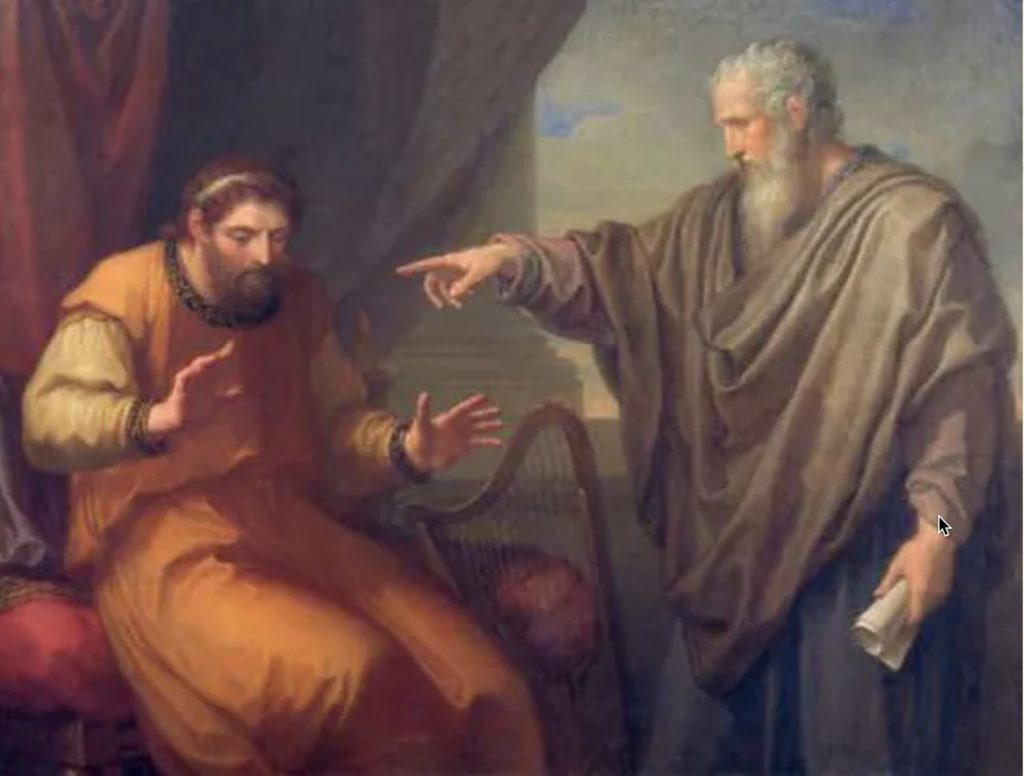
This morning we heard the traditional Gospel for the first Sunday of Lent, Jesus’ temptations. We could spend much time with the actual temptations. What I instead want to draw our attention to today is the manner of Jesus’ response to the devil—he quotes scripture, citing two texts from Deuteronomy. The devil presents the first two temptations in his own words, but in the third, he turns Jesus’ tactics back at him. The devil quotes scripture!—the very same psalm we used this morning.
Jesus’ response to the third temptation—another text from Deuteronomy—ends the debate. Using one text to counter another shows us very clearly that simply quoting a verse from the Bible never proves anything. If you search hard enough, you should be able to find a text supporting almost any position you want to take on any given issue. Texts taken out of context can be twisted into almost any interpretation we choose, and that is not an appropriate use of scripture. That’s what the devil does in the third temptation, and although Jesus counters the challenge with another verse, what he is really doing is pointing beyond the text to what came before it—God’s own purpose, God’s own ways.
In the temptation story, both Jesus and the devil appear to use scripture in a literal fashion, but Jesus’ final response goes beyond a literal reading to find the deeper reality behind the “plain sense” of the words.
As we open our Bibles seeking to receive God’s word, we should remember that God came before the book, which is written in human language and interpreted by human minds. No language can fully encompass the reality which is God and God’s ways. No written word can ever truly express the Living Word of God. Nonetheless, we rely on “The Good Book” to guide us into a deeper understanding of who God is, and who we are before God. This understanding comes as we live into the words, making them our own, seeking to model our lives on God’s ways, revealed through the pages of scripture, and in the life, work and person of Jesus.

The great 20th-century theologian Karl Barth said that the Bible is not the Word of God, but rather becomes the Word of God when it is interpreted in a community of believers. The interpretation—the meaning of the words—is found in the lives of those who seek by God’s grace to hear the truth within and beneath them. What do our words mean? We reveal the answer in and through our lives. What is the meaning of Jesus as the Word of God? The answer is revealed in his life, death and resurrection.
However we view the Bible, from a completely literal approach to the totally metaphorical, simply reading the words is not sufficient. As we together seek to live into the words we read and pray, we come together to embody the Word of God. We take the texts off the page, and into our lives, turning the words into the Living Word—the power of the Holy Spirit enlivening and mobilizing the People of God.
Even in its diversity. Anglican tradition does have a number of “fixed points.” One is that we use the Bible a lot. Our worship has much more actual scriptural content than you will find in some churches who proclaim themselves to be “Bible-based.” We read scripture in a disciplined and detailed fashion. Furthermore, our liturgies—both BCP and BAS—are full of scriptural quotations and allusions. The big differences within Anglicanism lie in manners of interpretation. Some read the Bible as literal words of God. Others receive scripture as a unique human response to hearing the word of God. The question that divides these two positions is “Did it actually happen that way?” Those who take the first viewpoint are inclined to say “Of course it did. The Bible (i.e. God) says so.” Those who take the second viewpoint will tend to give a less definitive answer, seeking to bring other evidence (science, history, archeology, etc.) to bear on the text. And the twain shall never agree.
A question which divides is not helpful in bringing people together and building up the Body of Christ. A question that can help us come together is “What does it mean for us today?” We seek to find meaning in action, in our lives together.
The devil can quote scripture, using the written word of God to tear down God’s people like someone bashing a wall with a hammer. Let us remember: a hammer may be used to tear down, but it can also be used to build up, just as the Word of God is intended to build up, to strengthen and empower God’s people.
Scripture was the fundamental tool of Jesus’ ministry, from his time in the desert to the time of his Ascension. So may we follow his example, using the written word to help us continue to become the Living Word, as we follow the Incarnate Word of God.


 This is a working draft of a sermon which I decided not to use. Comments are welcome!
 given for a purpose beyond our own needs. That means that stewardship is very much about money, but before it’s about money, it’s about how we use our treasure to move forward in our participation in God’s mission.
 Queen Elizabeth II is a remarkable woman, a person for whom I have great respect. She has negotiated the demands of a more-or-less impossible job with grace, dignity, and resolution. She will be greatly mourned by many, including this writer, when she dies.
 I congratulate Prince Harry and Meghan. Love has brought them together, and I pray that love will see them through the years ahead. It will probably not be easy for either of them, especially her, although she does seem to have her eyes wide open.
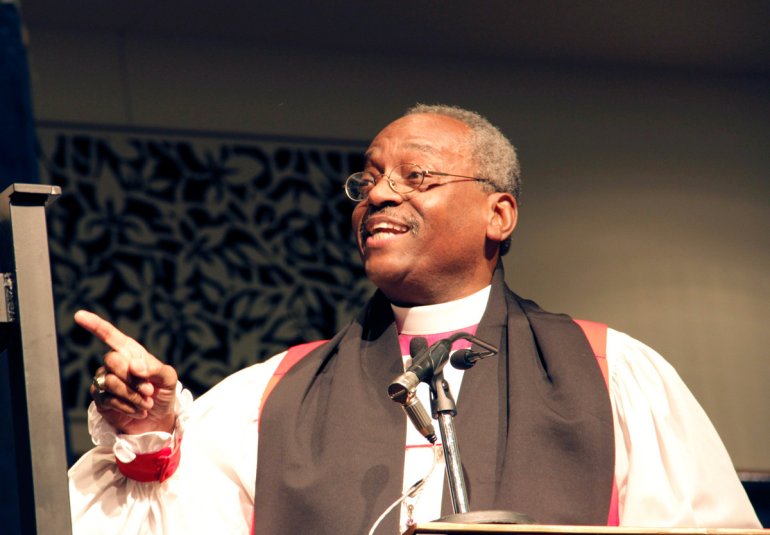 Bishop (no, Brother!) Michael preached the Gospel. He reminded us that love IS the answer, and that “If it’s not about love, it’s not about God.” He asked us to imagine a world where love rules. He mostly didn’t address the marriage couple directly, which some friends of mine have criticized, but his attention was very clearly on them at most times. What this implied to me was that their marriage was to be evidence of the love by which God created the world, by which God redeemed the world, and by which God continues to renew the world. I don’t think they are stupid people: I believe they got the point!
 I am sure that everyone of us would answer this question in differing personal, theological, and spiritual terms. I am no less sure that we here today share something in how we behold the cross. After all, it has been the principal symbol of our faith since the 4th century. We know about Jesus’ death on the cross. We decorate many of our churches with crosses of all descriptions. Some of us make the sign of the cross. Many people wear crosses on their persons.
 t belie the goals with which we have been charged. We fail because we are human, but our failures are inevitably held up against the strong light of divine ideals. There’s nothing wrong, and everything right, about those ideals. Nonetheless, we should temper our expectations with the knowledge that people can and do fail.
 Into the blue...