Notes for a sermon preached at Holy Trinity, Strathcona (Edmonton) on the 3rd Sunday of Advent, Dec. 15, 2019.
Texts: : Isaiah 35:1-10; Matthew 11:2-11
The quotes from Isaiah in the text following are from the New Jewish Publication Society Tanakh translation.
Last Sunday our Associate Priest posed the question: “What would it be like if I preached like John the Baptist?” Very good question! She gave us some very good ideas about what repentance and embracing God’s Kingdom is all about.
I want to continue this thought, today asking the question, “What would it be like if I preached like Jesus?”
In one respect, it would be very much like preaching like John the Baptist. We read in Matthew 4.17 that Jesus’ first public proclamation was the same as John’s: “Repent, for the kingdom of heaven has come near.” When John said this, he was pointing to the imminent arrival of the Messiah. When Jesus said it, he was pointing to the actual coming of the Kingdom in his person.
Beginnings are only beginnings, and the story goes beyond both John’s preaching and Jesus’ initial call. Jesus’ public ministry began after John had been arrested and imprisoned, but John’s disciples kept contact with their master while he was in prison. John heard about Jesus and what he was doing, and so sent some of his followers to ask Jesus if he really was the one whom they expected.
Jesus told John’s disciples: “Go and tell John what you hear and see…” What they are to tell John evokes the great prophetic vision we heard from Isaiah 35:
…the blind receive their sight, the lame walk, the lepers are cleansed, the deaf hear, the dead are raised, and the poor have good news brought to them.
The Kingdom of God has come near. Indeed, it is already (but not yet) here! This is the message that Jesus tells John’s disciples to take back to him: look and see what God is doing in your midst.
If I were to preach like Jesus, this is what I would say. And this IS what I say: look and see what God is doing, and then go and tell. We can’t go and tell John—he’s been gone for almost two thousand years—but we can tell everyone else.
What do we need to tell? Simply, that God is alive and active in our world, working wonders for all people.
So what’s the problem? Why aren’t we out on the streets in hordes proclaiming the mighty works of God? What’s holding us back? I believe our reading from Isaiah can give us some guidance.
Isaiah 35 comes from a time late in the exile, when there was only a faint hope of a return to Jerusalem and the restoration of the Kingdom of Judah. Few of us here have experienced exile in its literal sense. (Read Psalm 137 for an idea of what that is like.) But “exile” can serve as a metaphor for the state of the church two millennia after Christ’s death and resurrection.
Walter Brueggemann (in Cadences of Home: Preaching Among Exiles, 1997) has suggested that exile is not primarily geographical (even in the Bible) but social, moral, and cultural. “Exile” for us today may be understood as a sense of (1) loss of a structured, reliable “world” where (2) treasured symbols of meaning are mocked and dismissed.
I believe many of us today can relate to this metaphor. I grew up in a world (small-town Alberta in the 50’s and 60’s) where we assumed that everyone was a Christian, and the things of Christian faith were simply part of the culture. Not so today. People today often find that declaring their faith publicly elicits derision, hostility, or (worse!) apathy.
If we can relate to “exile” as a metaphor, then we can surely relate to the longing of the people of Judea for a return to Mount Zion from exile in Babylon.
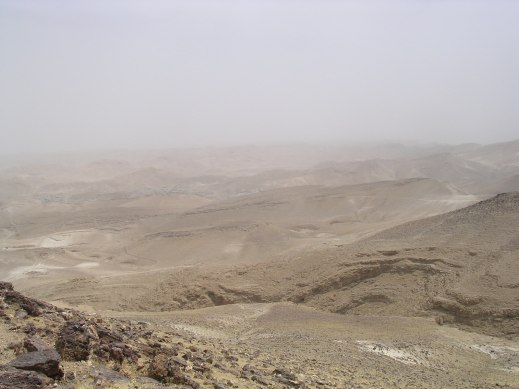
The prophet proclaims the coming return in terms of a highway through the desert, on which healing of every kind will take place, both for those journeying and for the land through which they will travel. It is to be a direct road from Babylon to Jerusalem. This straight-line route passes through some of the most inhospitable land on the planet: hot, dry, and barren, uninhabited until oil was found there.
And yet…
this is the place where God’s people are told
Be strong, fear not;
Behold your God!
Requital is coming,
The recompense of God—
He Himself is coming to give triumph.
The fear engendered by the exile is wiped away, and God’s people are led rejoicing to their true home:
… the ransomed of the Lord shall return,
And come with shouting to Zion,
Crowned with joy everlasting.
They shall attain joy and gladness,
While sorrow and sighing flee.
I have been involved in the church in various ways for much of my life, and continuously for the last 40 years. There have been times when I have seriously wondered whether I was throwing my life away. In my first year of ordination, it seemed I had been presented with an impossible task, in a setting where I felt out of place, within a church that appeared to be in decline. I had a strong sense of exile that year.
Nevertheless…
Since that first year I have come to see in the various places where I have served and with which I have had contact, that God’s work continues. Great things are happening here at Holy Trinity, across this diocese and national church, around the world in our Communion, around our city and country, and in every place where the Good News is preached and lived.
We are still on that journey, still on that sacred way back to Zion, still working out what God’s purpose is in our midst. But while we are on that journey to the already-but-not-yet Kingdom, great things are happening, things for which we can only say “Thanks be to God!”
God was not done with the exiles in Babylon. God is not done with us. We will stream up to the altar in our liturgy recalling the redeemed of the Lord streaming to Zion. We come at the call of Holy One of Israel, and then we go as Jesus told John’s disciples – to tell what we have seen and heard.
Be joyful! Be full of gratitude! God is doing great things in our midst. Ought we do anything else than “Go and tell!” Surely this is what Jesus told us to do.
Share the good news.
Be strong, fear not.
Go and tell!
God has blessed us richly.
Let us say “Thanks be to God.”
Let us be a blessing to all whom we meet.
Let us say “Alleluia!”
And “Amen!”


 I am sure that everyone of us would answer this question in differing personal, theological, and spiritual terms. I am no less sure that we here today share something in how we behold the cross. After all, it has been the principal symbol of our faith since the 4th century. We know about Jesus’ death on the cross. We decorate many of our churches with crosses of all descriptions. Some of us make the sign of the cross. Many people wear crosses on their persons.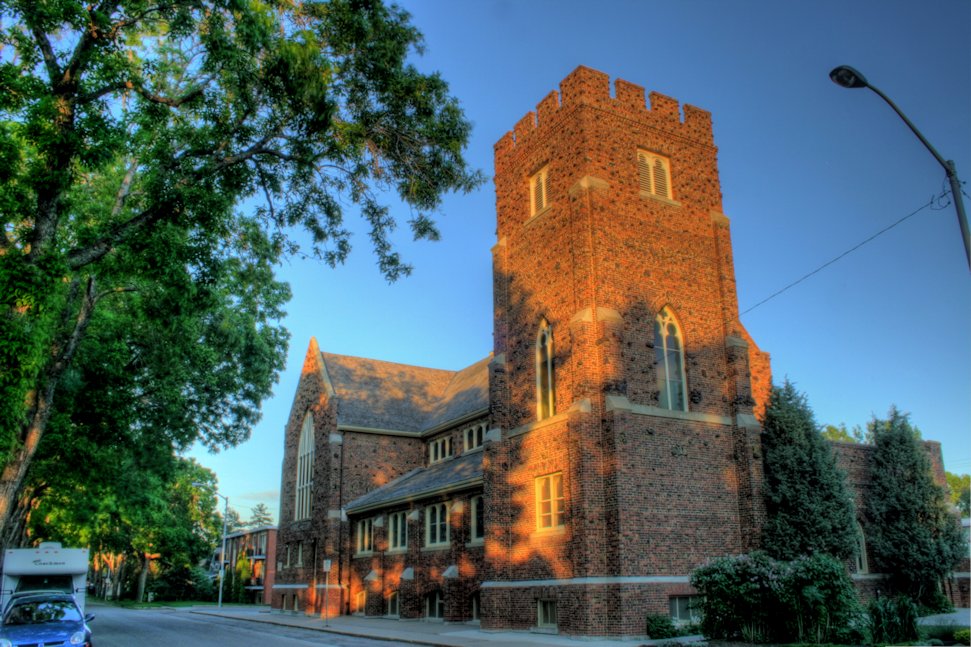
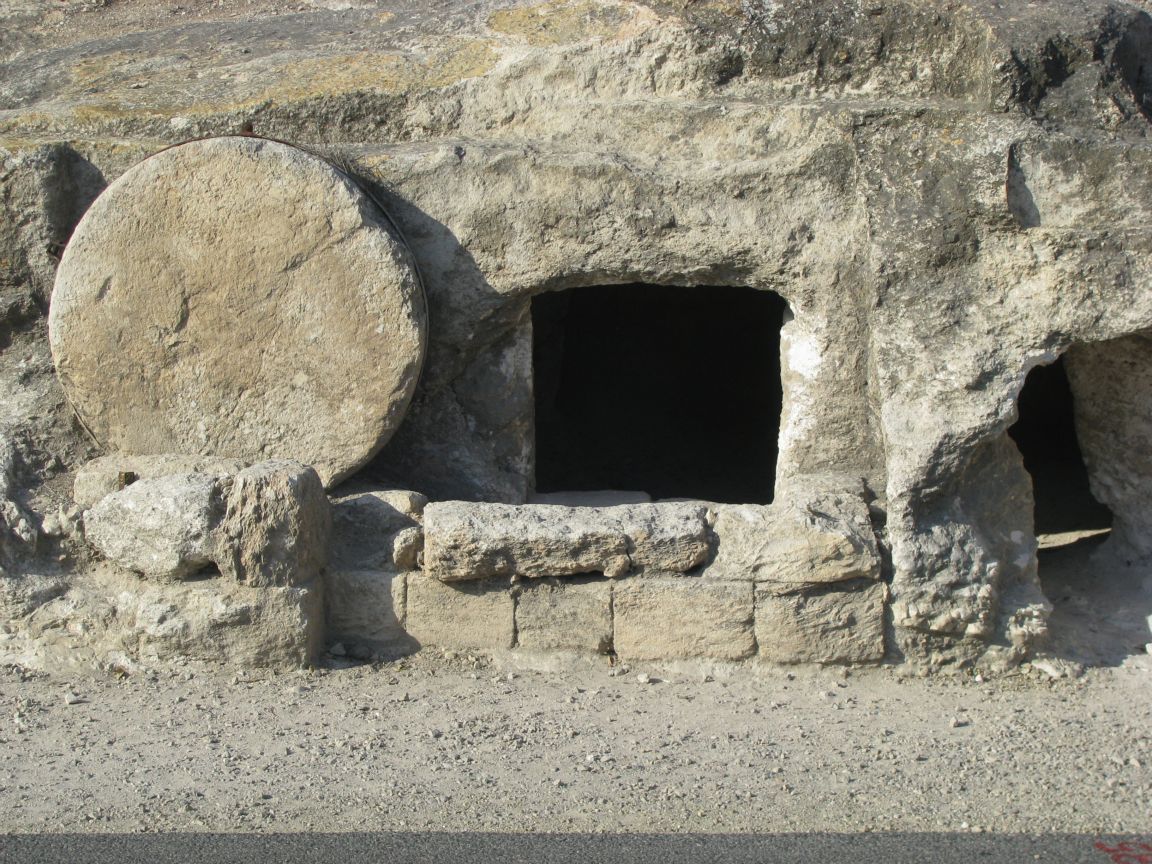 ion about this before beginning the Eucharist, focussing on the question of why people thought it necessary to remember someone for things that very likely did not happen, glossing over the one solid piece of evidence about his life. Giving a tomb for Jesus’ burial was an act of devotion and generosity that had profound importance in the Gospel story: why can’t we be satisfied with that? Joseph isn’t alone in this. There are other New Testament figures about whom various legends grew up, mostly without solid attestation, often imputing miraculous lives to these individuals.
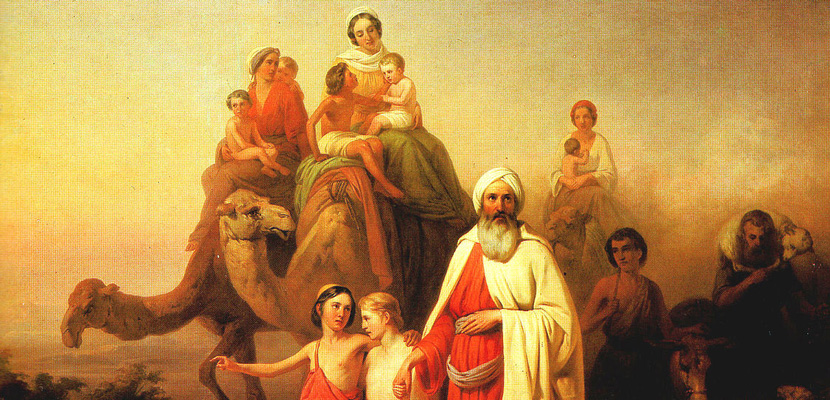
 The church sits uneasily with money. I read of a recent meeting of national staff in which they had concluded that we need a new theology of money. I would agree, but I would drop the word “new”—have we have had any really coherent teaching on this subject? Historical church attitudes to money have veered between the extremes of seeking either great wealth or intentional poverty.