Looking Through the Cross

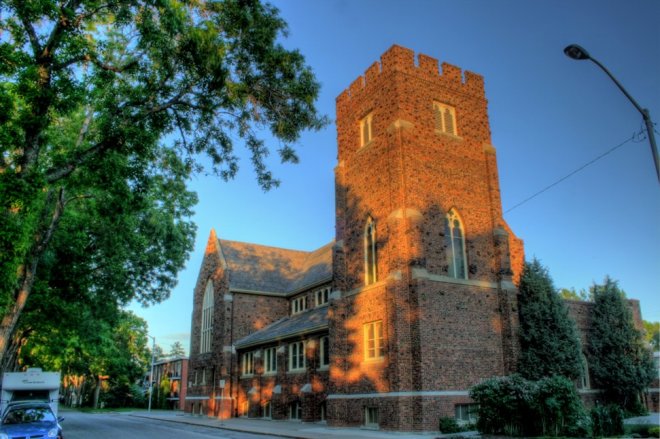
Notes for a sermon on 1 Corinthians 1:18-25 at Holy Trinity Anglican Church (Strathcona) on Sunday, March 4, 2018.

What do we see when we look at the cross?

2000px-Coa_Illustration_Cross_Easter.svg.pngI am sure that everyone of us would answer this question in differing personal, theological, and spiritual terms. I am no less sure that we here today share something in how we behold the cross. After all, it has been the principal symbol of our faith since the 4th century. We know about Jesus’ death on the cross. We decorate many of our churches with crosses of all descriptions. Some of us make the sign of the cross. Many people wear crosses on their persons.
The cross is all around us. When a symbol is so all-pervasive, it can become a constant reminder of the reality behind it or … sad to say, it can become wallpaper. We live with it, but it rarely affects us.

When Paul came to Corinth, he did not come carrying a cross, but rather bearing “the message about the cross.” Some people received the message he proclaimed, but many others dismissed it.

Depending upon their background, they heard Paul’s message as a “stumbling block” or simply “foolishness.”

Foolishness? If you expect your God to be a mighty and victorious warrior, immortal and invincible, proclaiming the divinity of a person who died a shameful death is nonsensical. “Real” Gods don’t do that kind of thing!

Stumbling block? If you expect your Messiah to be visibly blessed and honored by God, the assertion that a victim of crucifixion is the Christ is outrageous. More than that, it is scandalous, in the Hebrew sense that it is heard as something that causes a person to sin. (Note that our word “scandal” comes from the Greek for “stumbling block” — skandalon.)

Whichever way people heard it, the actual story of the cross of Christ was clear and immediate to the people of Corinth—a city of the Roman Empire, a regime which kept the peace through violence and intimidation. Rome’s ultimate means of punishment was crucifixion, which was reserved for the worst enemies of the state. In 2018 it is an act about which we must remind ourselves, but in the year 50 in Corinth, it was a common presence in people’s lives. No one needed to be told what it meant.

And today? Can we still be scandalized by the cross? Do we ever see it as mere foolishness? I would suggest that the answer to both questions is “yes,” in the wider world to be sure, but also among folk who are seeking to follow Jesus.

Our Thursday morning study group has just read a book by the late Christopher Lind, entitled “Rumors of a Moral Economy.” Lind wrote of how contemporary society is dominated by a competition-driven economy, which when allowed to function without restraint leads to greater and greater concentration of wealth, and a diminution of the common good.

In pure competition, there are only winners and losers: a system at best indifferent to human needs. In a competition-driven world, proclaiming Christ crucified can easily be heard as exalting a loser.

Lind’s book also pointed to how a moral economy must be rooted in community and a sense of the common good. When community breaks down (as it easily does in a purely competitive situation), people become isolated, and spiritual needs often end up being expressed in questions about what God can do for us. When faith is all about meeting our own needs, nothing less than a totally divine saviour will do, and then we stumble over the idea that Jesus ended his life rejected by all. Some of them will say, “Well, Jesus really was God, so the crucifixion didn’t really matter.” This is an ancient heresy, called “Docetism,” the belief that Jesus only seemed to be human.

Make no mistake: Jesus was as human as you and me. He ate and drank, he slept, he wept, he felt all the things we do. And just as surely, he died as all of us will in our own time.

Jesus gave up his life on the cross to reveal the power and the wisdom of God—already embodied in his own person.

As Paul wrote:

… though he was in the form of God,
   (he) did not regard equality with God
   as something to be exploited,
but emptied himself,
   taking the form of a slave,
   being born in human likeness.
And being found in human form,
   he humbled himself
   and became obedient to the point of death—
   even death on a cross.                                       (Philippians 2:6-8)

The cross defies any ordinary human explanation. There’s no logical deduction, no “standard wisdom,” no simple text-book answer that leads us to the truth of the message Paul brought to Corinth.

God’s power and glory is revealed here, not in a mighty triumph, but in the death of one who was sinless, who gave up his life as a holy sacrifice on behalf of all of God’s people. It is the ultimate act of self-identification with us: all whom Jesus came to redeem.

So: what do we see when we look at the cross?

Let me rephrase the question: what do we see not when we look AT the cross, but when we look THROUGH it?

It is not so much the cross that should demand our attention, but the reality that lies behind and beyond it: the loving-kindness of the God who loved us into being, who loved us enough to send his Son, and who loves us and all humanity every day of our lives.

Let us then hold the cross before us.

Let us see in and through it how Jesus laid down his life for us, in the ultimate and defining act of love, in words from the 1st letter of John.

We know love by this, that he laid down his life for us—and we ought to lay down our lives for one another.                                                    (1 John 3:16)

And Jesus said

This is my commandment, that you love one another as I have loved you. (John 15:12)

The message of the cross is the power of God, and the power of God is love. May this be our proclamation in word and deed, today and always.

Amen.

Doing it again

Today I had the privilege of preaching and presiding at the Eucharist at Holy Trinity (aka “HTAC”). I had been scheduled to preach for a while, but other commitments took both our Rector and our Assistant Priest away from the parish. So…

Yours truly got to do what I used to do most Sundays for a quarter of a century. They say that riding a bike is easy once you learn how to do it, and once you have learned, doing it again is simple. You just get in the saddle and pedal.

That’s rather how today felt. HTAC is not “my” parish, at least not in the sense that St. Matthew’s Cathedral and St. Augustine’s-Parkland were. There, I was the Rector, expected to be present and available every day, and to do what had to be done at pulpit and altar most Sundays. Most Sundays at HTAC, I’m sitting in the back row of the bass section in the church choir, and happy to be there.

Today was different. I prayed with the choir before the service as usual, but today I led the prayers. I sang the psalm with the choir, but today from the presider’s desk. I proclaimed the Gospel and preached, and then went to the altar to preside at the sacrament.

These things happen every Sunday at HTAC. But today I assumed roles that other people usually take. And (I have to confess) it felt good.

Readers of this blog may have intuited that I wasn’t really ready to retire in 2013, but rather that the situation was forced on me. Today reminded me that I still feel most alive when I’m ministering in the pulpit and at the altar. I still believe that this I what God made me for, but I recognize that other people have similar calls, and that I have to let go as I am able.

I am truly grateful for today’s experience. I hope that my ministry today helped at least someone. That’s all I can expect, and all any ordained person can hope for.

Thanks be to God for this day. I have posted the text for today’s sermon under “Sermons and theological discussions.” Read it HERE.

Holy_Trinity_Anglican_Church_Edmonton_Alberta_Canada_01A
View from the Northwest – 100 Street and 84 Ave.

Is it about you?

Last night, at All Saints Anglican Cathedral in Edmonton, Bishop Jane Alexander ordained three people to the priesthood and seven (!) to the diaconate. If I’m not mistaken, it was the largest ordination in this Diocese since at least 1986. The Cathedral was almost full, and there was a large turnout of the diocesan clergy. Some of us had speculated about how long the liturgy would take, and we were agreeably surprised when it came in at about 2 1/4 hours. I didn’t hang around too long afterward.  Bun fights in tight spaces make me a bit anxious, and my hearing issues (hypersensitivity to crowd sound at voice range) make it difficult to function in that kind of noisy environment. Nonetheless, I did have time to greet one of the ordinands, a person with whom I have had a long and special relationship.

I don’t ever recall being at an ordination service for so many people. Most of the ordinations I participated in during my time in the Diocese of Brandon were for individuals. I have no problem with the church celebrating the new ministry of a person who has been raised up for ordination. What has often troubled me is that these celebrations often become about the individual. Ordination should not be about a person having “made it,” but about the church renewing its leadership.

Last night’s service filled me with joy. I knew three of the ten ordinands personally, one better than the other two, but that’s not really the point. I saw ten (count ’em – 10!) people being affirmed in ministries that we prayed would be of benefit to the church and the world. It wasn’t about any one of them, but about the church engaged in the continuous and joyful renewal of its leadership. It was wonderful! I give thanks for the privilege of being present for all ten, even if seven of them were previously totally unknown to me except as names on a list.

On Holy Cross Day, our preacher recalled for us the love displayed and exemplified by Christ’s death on the cross. It doesn’t make sense to some people, but that’s okay. The ten who were ordained last night will share in proclaiming that truth, in their lives and their ministries. (Is there really any difference?)

Today, I welcome three people to the fellowship of the Holy Priesthood and seven people to the company of Deacons. May they continue to proclaim the love of God at all times and all places.

Finally my question to anyone who may be considering ordination in the church. Is your call about what YOU want to do, or about what GOD needs in the world. Is it about the church (God’s people) or about you? I pray that you may be able to answer that question prayerfully and honestly.

A Community that Sends

Notes for a sermon preached at Holy Trinity (Strathcona) on August 27, 2017

Texts: Romans 12:1-8; Matthew 16:13-20

Last Sunday, Fr. Chris spoke of the challenge to the Church to “go out.” There is much more that can be said about this, including Archbishop William Temple’s dictum that the “Church is the only society on earth that exists for the benefit of non-members.” One way of stating our mission: We are to go out to be of benefit to the world around us.

Let’s back this up a step or two, and think about who is doing the sending. What kind of group is it that can send its members out in this way? I take my cue from Paul, and his appeal to the church in Rome, part of which we heard in today’s lesson. The lectionary does us a bit of a disservice, by splitting Chapter 12 between two Sundays, but let’s work with what we have been given.

Paul starts out by saying, “I appeal to you therefore…” That last word should alert us to the fact that what comes next is not some sayings plunked into the text in an arbitrary way. It has a context.

The preceding three chapters (9 – 11) deal with what some contemporary scholars consider to be the central issue of Romans, the question of the fate of Israel. Paul agonizes over the problem, lamenting the fact that most Jews have not accepted Jesus as the Messiah. He ultimately refuses to let go of his faith in God’s fidelity to his promises, concluding that in God’s great mercy, salvation would not be denied to the people of Israel. The section closes with an outburst of praise (curiously not in the Lectionary):

O the depth of the riches and wisdom and knowledge of God! How unsearchable are his judgments and how inscrutable his ways! ‘For who has known the mind of the Lord?
   Or who has been his counselor?’
 ‘Or who has given a gift to him,
   to receive a gift in return?’
For from him and through him and to him are all things. To him be the glory for ever. Amen.

And… therefore…

If God has been gracious to all, our response should then be to strive to live lives that reflect that grace, not merely as individuals, but in a company of the faithful whose corporate life displays God’s grace. Paul uses the image of the body, more concisely than in 1 Corinthians 12, to argue that we are interdependent—needing each other and rejoicing in each person’s unique gifts. Paul enjoins us “not to think of [ourselves] more highly than [we] ought to think,” but to regard ourselves with “sober judgment” as members of the Body of Christ. I might use “humility” here, remembering that that doesn’t mean self-abasement (“worm theology”), but being honest with ourselves, with our brothers and sisters, and with God, about who we are and what are our gifts.

It is easy to miss how counter-cultural is Paul’s concept of Christian community. He wrote:

Do not be conformed to this world, but be transformed by the renewing of your minds, so that you may discern what is the will of God…

The world in which Paul lived was the Roman Empire, one of the most successful regimes in history. This was a time of unprecedented peace and prosperity, enforced by Roman military might. However, the Empire relied on a rigidly structured society, in which everyone knew his or her place, and upward social mobility was almost unheard-of. The subjugated peoples of the Empire could enjoy the benefits of Roman rule so long as they kept to their places. Into this mix, Paul throws a huge measure of egalitarianism. When he calls on followers of Christ to see themselves as no better than they should, it implies that they should regard their companions on the way as their equals, just as Jews and Christians are equal in God’s economy of grace and mercy.

The point of the church, however, is not just to build a community where everyone loves each other. That’s a good thing by itself, of course, but the mission of proclaiming God’s love in the marketplace must be based in a people practicing what they preach. The life of the Christian community is a large part of its message.

Harold Percy, a well-known Canadian writer about mission, has outlined Christian mission in terms of the Kingdom of God. We are called
to proclaim the Kingdom,
to celebrate the Kingdom, and
to model the Kingdom.

When people look at us—a community of people who follow Jesus as the Messiah—they should see a body which strives to behave as if God’s reign is being fulfilled in our midst. Our calling is to be a model of the Kingdom. Of course, models never quite live up to the reality they are pointing to; every church community inevitably falls short of the Glory it is striving to proclaim. But that doesn’t mean we should quit trying!

It grieves me deeply to know that there are people who assert themselves over others by “who they are,” at times invoking the name of our Saviour. We saw some of the symptoms of that in Charlottesville two weeks ago. So-called “identity politics” have no place in God’s Kingdom. White supremacy, racism, anti-Semitism, misogynism, homophobia and their like are evils upon the body politic. When they find their way into Church life, they are toxic to the Gospel we are called to proclaim.

We are followers of Jesus of Nazareth, the one whom Peter confessed to be the Messiah. Jesus came to “draw all people to [himself].” As his Body, we are called to draw all people to him, inviting all to share in the grace, mercy, and unbounded love of the God who cannot let his people go.

God loves ALL his people—and so should we!

Let’s go and show it.

The language of reconcilation — in one word

I have recently learned that some (many?) of the indigenous peoples of our province and country are objecting to the use of the word “our” in referring to them. In the context we were discussing, it seems we are no longer to pray for “our indigenous brothers and sisters,” but for “the indigenous peoples.” The specific objection is that the possessive pronoun “our” implies ownership, and the indigenous people are no-one’s property. I really get the second part, but I was a bit taken aback by the first idea. Does saying “our brothers and sisters” imply we own them? As I understand the English language, possessives can have that meaning, but their use in this kind of context refers more to interpersonal relationships than to ownership — at least in as far as I use the language.

That’s my perspective. But I do recognize that my use of language is not absolute, and how I use a word may not resonate well with someone from a different cultural/linguistic environment. For indigenous peoples in Canada, living with a heritage of the underside of colonialism, the implication of ownership and control is clearly very powerful, overriding any nuance of meaning that I may have understood.

There is a principle of building community which Paul expands on at length in chapters 8 through 10 of his First Letter to the Corinthians. The presenting issue is whether Christians should eat meat which has been sacrificed to idols — not a huge issue in most places today, at least as far as I can see. Nonetheless, Paul’s extended discussion of the issue comes to a widely-applicable ethical position. His position can be summed up as not knowingly doing anything that will give offense to another “brother or sister,” whether or not that thing is important to us.

Do I fully comprehend the power of using “our” in the context of referring to Indigenous people? Of course not: I am of settler stock, in fact, I am an immigrant. It is impossible for me to grasp the depth of the issues in the same way as a resident of a place like Maskwacis or Opaskwayak. But I can hear the effect that my language — easily taken for granted — can give offense, causing hurt where no hurt was intended.

I am resolved to pay attention to the language I use, striving always to hear how it may hurt others. It’s a hard road, but reconciliation depends on hearing each other in spirit and in truth. May my speech be clear and loving.

On the journey to…

A sermon this morning on Genesis 12:1-4a (the call of Abram) started me thinking about various times in my life I have stepped out of what might be expected, and gone where the call has led.

The first was not of my own volition, but my parents’. When I was only three years old, they decided to pull up roots in England and transplant our family to Canada. We settled in Drumheller, Alberta, a far cry from the great metropolis of London where I was born. I don’t know exactly how my parents felt about it at the time, but it became clear over the years that being so far from family and old friends was difficult for both of them, especially my mother. My early years in this country were marked by a sense of being “not quite at home,” a feeling that has stayed with me throughout my life.

The second such event came when I left teaching school to return to Edmonton, and to do… I wasn’t quite sure what! All my spouse and I knew was that we couldn’t stay where we were, and the opportunities were far greater in the city where we had both attended University. Some family members were horrified that I would give a seemingly secure and respectable job to search for something different.

That move led to a graduate degree, a job with our Provincial Government, and us settling down as a family. But God had other ideas. After nine years in that job, we again pulled up stakes and left for Saskatoon for me to enter theological college. I had no real idea where this was leading, except for the conviction that I was called to go down this road.

The road led to ordination and the call to be the pastor of a small-town parish. It was a great adventure, but not without its problems. After a few years there, I moved on to a suburban parish, where I stayed almost thirteen years. In time, I felt the need to move on: I accepted a call to become Dean and Rector of St. Matthew’s Cathedral, Brandon, Manitoba.

This was another move into the unknown: a new parish, a new city, a new province, and a new diocese. I didn’t realize at the time just how big a move this would be. Local customs are different, even at the relatively small remove of a couple of Canadian provinces. But we persisted, through some great years, and some not-so-great, until my retirement in 2013.

Each one of those moves required a measure of faith. In every case, I had the sense that I was going where I had to go, except perhaps the first one, when I had no choice in the matter.

In two of the places where I served the Church, I had conversations with people whose whole lives had been centered on that place. Many of them were puzzled why I might want to live somewhere else: “[town] has everything a person needs.” That may have been true, but going elsewhere was not contingent upon needs, but upon a call, just as Abram heard God’s call to leave home and family and travel to “a land which I will show you.”

I have been on this journey all my life, and now God has brought me to a place where I might reasonably hope to live out my days in peace and reasonable comfort. Sometimes, though, I find myself wondering…

A theology of money?

Notes for a sermon preached at Holy Trinity Strathcona, Sept. 25, 2016

Texts: Jeremiah 32:1-3A, 6-15; 14-16; 1 Timothy 6:6-19; Luke 16:19-31

At one time I was deeply involved in Stewardship in this Diocese, including 1½ years as Stewardship and Planned Giving Officer. In that capacity, I received many preaching invitations, most often to parishes that perceived themselves as needing help in their finances.

“Stewardship” has become an important word in church life over the last few decades. We did various financial programs before that, but an apparent overemphasis on money per se led us to look for a more “theological” term. It’s not a bad word—it has both biblical and theological import—but it seems to me that it has become a code-word for how we fund the church. I believe most church people, if asked, would now say that stewardship is about getting more money out of church members.

In my last parish, I got a strong negative reaction if I raised the question of Stewardship programs. Previous programs had used some strong-armed tactics. It ended up putting them in a worse financial situation than they might otherwise have been.

A few years ago the church renamed our national office of Stewardship and Financial Development as “Resources for Mission,” emphasizing that the main thing is the Church’s mission, which requires a variety of resources, including, but not limited to, money.

dollar-signThe church sits uneasily with money. I read of a recent meeting of national staff in which they had concluded that we need a new theology of money. I would agree, but I would drop the word “new”—have we have had any really coherent teaching on this subject? Historical church attitudes to money have veered between the extremes of seeking either great wealth or intentional poverty.

In my various parish visits for Stewardship preaching, the clergy often said to me that they were grateful that the Diocese had someone to come and talk about these things, things which made them very uncomfortable. I understand that: a parish priest speaking about money from the pulpit cannot help but be aware that his or her own stipend is a major line item in the parish’s budget—in many cases the largest single expense. It can sound like you’re begging—even if your theology of stewardship is totally sound.

This brings me to today’s lessons, all of which have something to do with money. Maybe they will help us (and maybe also Church House!) get a handle on a theology of money.

First, I Timothy, the source of one of the commonest and most erroneous Bible quotes. People often say that “money is the root of all evil,” but note what is actually written:

…the love of money is a root of all kinds of evil.

It is not money that matters but what we do with it in our lives and in our hearts. Money per se is ethically neutral, a convenient means of exchange, a means to an end, whether good or evil. It has no real existence beyond that, but how we regard it and use it has immense spiritual significance.

…in their eagerness to be rich some have wandered away from the faith and pierced themselves with many pains.

And further on,

(The rich) are to do good, to be rich in good works, generous, and ready to share, thus storing up for themselves the treasure of a good foundation for the future, so that they may take hold of the life that really is life.

It’s what we do with it that counts. God’s Mission is the all-important thing. If we have wealth, we are charged to use it for God’s purposes before ours. Regardless of our own personal wealth or poverty, the challenge is to seek the good, to look to know what will help advance the Kingdom of God in this world, and to use our God-given resources towards that goal.

Sometimes it may be very unclear what will actually advance the Kingdom. The prophet Jeremiah lived in just such a time of great uncertainty and anxiety. The Babylonians were threatening the Kingdom of Judah, the kings were weak, and the people had retreated behind a triumphalist theology. (God had made a covenant with them and would not allow his holy city and temple to fall. All they had to do was invoke his name.) The prophet saw otherwise, understanding the reality of the threat, and the people’s confidence to be misplaced. So he does a prophetic action: he buys some land. This looks like madness when the invading hordes are at your gates, but he offers it as a sign of hope. This may not seem the right time to affirm God’s purposes (probably better to be getting all your stuff together in preparation), but Jeremiah asserts that now is the time to work for the Kingdom.

If not me, then who?
If not here, then where?
If not now, then when?

The answer he gives us is “Me, here, and now.” It is always the right time and place to do God’s work.

And do it we must, lest we end like the rich man in the Gospel. There’s much else that could be said about this story, but it seems that at least part of the message is the injunction to do good when the opportunity presents itself. The rich man had years in which he could have helped Lazarus, but he did nothing. As Jesus tells it, the consequences are clear.

Notwithstanding the current recession, we live in one of the most fortunate countries in the world. The vast majority of our people are well-fed, decently housed, educated, and in good health. We have been given great riches, as a people, and as individuals.

Let us then not fail to use what God has given us for the good of God’s people and God’s world.

Let us keep the eyes of our Spirits open, that we may see the need around us.

And let us keep all of our resources at the ready to do God’s work.

May it be so.

Promises made, promises not kept

I’ve been thinking a lot lately about promises. We find them in all kinds of situations and relationships: marriages, employment, politics, just to name the first three that come to mind. We make many promises in life, and many of us are very aware of making promises that we could not keep. That’s a very human thing.

A promise is an interesting thing. It’s a statement that we will do something in the future. Some are conditional, as in “I’ll do such-and-such if you do thus-and-so.” Others are unconditional, as in “I’ll do such-and-such, come what may.” Conditional promises are the ordinary day-to-day stuff of business. Contracts are essentially bilateral promises: “We will let you have this car for the next 2 years, as long as you keep up your lease payments.” Letting down our side of the promise empowers the other party to invoke whatever penalty or escape clauses there are in the contract. Miss too many car payments, lose your car. It’s pretty simple. Most of us understand conditional promises quite well.

promise.jpg

Unconditional promises are another thing entirely. In the rites of the Anglican Church of Canada, marriage and ordination vows are both unconditional. The ordinand or spouse makes certain promises about future behaviour, without any conditions or implied penalty clauses. The sad fact is, however, that many people approach these unconditional promises as if they were conditional. I’ve seen that in a number of weddings at which I have officiated. Maybe not at the weddings, but certainly in the later history of the couples. There’s no need to cite particular cases, because I am sure that most of us know people who have approached their marriage vows this way.

As for ordinations, in our church candidates make a whole slew of promises. [You can read them on pages 646-7 (for priests) or 655-6 (for deacons) in the Book of Alternative Services  for the actual promises.] The content of the promises is one thing. The nature of the promises is another. When I was ordained priest, the preacher explicitly used the imagery of marriage to talk about our new relationship with the Church. The promises are unconditional, except as implied in the final exhortation from the Bishop:

May the Lord who has given you the will to do these things give you the grace and power to perform them.

To which the ordinand replies, “Amen.”

What happens when marriage or ordination vows are broken? In the first case, all kinds of personal and relational damage: broken homes, damaged children, financial ruin, injury, and even death. In the second case, the results are sometimes less clear. When a priest or deacon strays from the ordination vows, the resulting hurts may be less immediate, but they can be deep and long-lasting in a community which has relied on his or her pastoral guidance.

Clergy are only human, and the church is a human institution, but both are supposed to be dedicated to the goal of building God’s Kingdom. As a friend describes it, that’s the way things are supposed to be, while we live in the world of the way things are.

Clergy failings happen, but they create all sorts of difficulties among God’s people, hindering rather than building up the Kingdom.

But let’s not forget that clergy are one party to an implied promise, between congregation and cleric. When clergy receive a call from a new parish, the parish is implicitly making a promise about what the relationship entails. This is spelled out in the rites for Celebration of a New Ministry in the Canadian “Book of Occasional Celebrations.” There is an implied contract between congregation and minister, which is actually made specific in the Canons of the General Synod (see especially Canons XVII, XVIII & XIX), and the various Diocesan Canons and policies which apply.

Parishes and clergy make reciprocal promises, but at times the promises are treated as conditional, as in, “We’ll have you as our priest/pastor/minister (choose your preferred language!), as long as you behave yourself, treat us right, and we’re able to pay you according to scale.” Other promises can be made in the course of clergy search processes, sometimes implying that the parish is something other than what it is. That’s deception, whether or not it is intentional!

Let’s go back to marriage. Deception about the true state of things is grounds for declaring a marriage null and void, resulting in an “annulment” in the language of the civil courts. Our church’s Canon on Marriage gives extensive grounds for such a declaration. (See section III of Canon XXI in the Canons of the General Synod.) Some years ago, I had occasion to process such an application for a woman who was sure that what she had entered into was no marriage. I was gratified to learn that the courts of the church agreed with her. Her supposed spouse had deceived her about his nature and his intentions in entering into the covenant of marriage. It was a hugely painful process to work through it with her, but there was much healing in the result.

Broken promises made conditionally are relatively easy to deal with. Broken promises made unconditionally are much harder problems. Marriages, ordinations, and appointment of clergy are the examples that I have had cause to think about recently. They are all modeled on promises God made to the people of God, the covenants with Noah, Abraham, Moses, and David, which lead us to the New Covenant made with Jesus.

promiseOfTheDayJesus promised “I am with you always.” We strive to be always with those we love, whether spouses, the Church, or congregations. We fail at times. May we find loving ways of dealing with our failures, and the failures of those we love.

quotes-and-poems-awesome-6

The last, and perhaps most important, question is what to do about broken promises. I have no great solution at hand. Broken promises break all sorts of things, estrange people, make enemies, cause hurts, damage lives. Sometimes reconciliation is in view, sometimes not. What I do know is that reconciliation is the ministry that Christ left to his people.

All this is from God, who reconciled us to himself through Christ, and has given us the ministry of reconciliation; that is, in Christ God was reconciling the world to himself, not counting their trespasses against them, and entrusting the message of reconciliation to us.  (2 Cor 5:18-19)

Guns or love?

I feel sick at heart. In some ways, I should be rejoicing: a major issue for which I have advocated for years has taken a huge step forward in our church. A big issue in the choir in which I sing and serve on the executive is very close to resolution. My personal life is placid, calm, full of blessings.

And yet…

I picked up this week’s issue of Maclean’s Magazine, to which  I’ve subscribed for many years, and was immediately discouraged by the cover headline: “The Republic of Fear.” I browsed through it, and promptly threw it to one side. So many of the stories had something to do with how badly things are going in today’s world. I may pick it up again and read some of it, but tonight it only served to remind me of how troubled I am about what is going on today:

There are so many violent incidents in the news: NiceBaton Rouge (twice), Minneapolis, Turkey, Dallas, Calgary, ISIL, just to name a few. Guns seem to the rule of the day, and for the life of me, I just don’t understand the gun-ownership mentality of

There are so many leaders preaching negative thoughts: in the wider world I thinkof Trump, Clinton (somewhat less), Teresa May, Putin. Locally, I read my newspaper, the Edmonton Journal, and see so much negative thinking in the people who write in it and to it, with the exception of Paula Simons.

The reaction of some of our church’s bishops to the big issue, whether our church will allow clergy to officiate at marriages of same-gender couples, has been very depressing. They feel disrespected and abandoned by the rest of the church. I am sorry for that, but the language in which these statements have been made makes me feel disrespected

I could go on, but what’s the point? The world sometimes seems to be so full of negativity these days, when all I wish for is that people could love each other, care for each other, treat each other as beloved children of our God. And what I see is more and more hatred

Where is this leading? I don’t know, and sometimes (like when I tossed Maclean’s aside tonight) I don’t want to know. What I know is that God calls us to live in the love God has declared towards all people.

“Love your neiggood_shepherd-7135901hbour.” Yes!
And the lawyer asked , “Who is my neighbour?”
Jesus’ answer (the parable of the Good Samaritan) is basically this:
“Who is not your neighbour?”
We don’t get to choose who to love.
The only choice is whether or not to love — and that’s no choice at all.

Brothers and sisters, let us learn to love each other as God first love us. Without that, there may be no hope for the human race. For those who see guns as the answer to all the problems of the world, I can only say: “I love you.”


On bishops and other callings

bishop-mitre-h-87A good friend and colleague recently disclosed that he had been chosen as one of the four final candidates in an election for Bishop. (Read about it here.) It put me into a reflective mood, recalling the occasions when I had a brush with episcopal office.

The first time was in 1997 in the Diocese of Edmonton, my home and current diocese. I had been serving as an Archdeacon for a couple of years, and for the first time had had some significant interactions with people in other parishes. Out of that came a request from someone present in one of those events that I allow her to put my name forward in the upcoming election of a new bishop. I was quite daunted by the idea, even though I admit to being flattered by the request. After some thought and prayer and discussion with my wife, I decided to let it happen.

The search committee asked each candidate to submit a fairly large bundle of material, including a detailed CV in a particular format, and a personal statement about ministry, and my sense of the episcopal office and how I might fill it if I were so called.

Assembling the CV was a good exercise: it was the first time since my ordination that I had put all of my work history down in one place. The document turned out to be much longer than I expected, considering I had only been ordained for 10 years. I felt a real sense of accomplishment when I re-read it after finishing.

The statement was quite another matter. I sweated blood over it, reading, thinking, praying, writing, tearing up, writing again, finally telling myself that it wasn’t going to get any better. It may be the best piece of writing I’ve ever done. In the years since, I have returned to it often, to check up on my continuing sense of vocation, and where my ministry is headed.

At the electoral synod, I was seated with the rest of the clergy, as required for voting. My wife was sitting in the observers’ seats at the back of the Cathedral, along with some other people from my parish. The preliminaries having been taken care of, we proceeded to vote, and then to sit and wait for the results. I wasn’t dead last in that first ballot, but pretty close, with 2 clergy and 3 lay votes. I knew who the clergy votes came from (me and my proposer), but to this day I have no idea who were the 3 laypeople who felt I was the best choice for bishop. On the second ballot, it was down to 1 clergy and 2 lay votes, still not the very bottom, but it seemed like a good time to drop out and stop wasting people’s time. The folks from the parish said they could all hear my wife’s sigh of relief when my withdrawal was announced.

That day, the diocese of Edmonton elected the Rt. Rev. Victoria Matthews as the first female diocesan bishop in the Anglican Church of Canada.

The second time I found myself on an episcopal election slate was for the Diocese of Qu’Appelle in 2006. I had been quite astonished to get the call from their search committee asking me whether I would accept the nomination. (My proposer had not contacted me first, as should have happened.) I asked for some time to consider it, coming as it was more or less out of the blue. My wife and I talked about it at length, and I  consulted my Bishop of the day. I was less than 3 years into a new ministry, and it hardly seemed the time to leave.

Nonetheless…
A call like this did not seem to be one that could be ignored — it might well be of the Spirit. My bishop suggested that the only real way to determine that was to let my name stand. And so I did. It felt quite different from Edmonton in 1997. For one thing, I would be moving to a completely new city, working with people I did not know at all. For another, that Diocese is a land of wide-open spaces, and many small multi-point charges. As bishop, I would likely spend much of my time in long-distance driving. The final thing was that I was nine years older and more experienced, and had a much better sense of my own capabilities and what the office of Bishop entailed.

The documentation they required was much like that asked for in 1997, so had most of it more or less ready to go, after another revisit to my personal ministry statement.

The results of that election were somewhat more gratifying. There were six candidates, and I ran a solid third until the third and final ballot. My good friend Gregory Kerr-Wilson was elected that day, while I sat at home in Brandon with my phone handy, waiting for results of the ballots.

That’s the story, although there’s an epilogue of sorts. I was approached to let my name stand in another election a year or two later. After considerable thought and prayer, I concluded that I did not hear the call to episcopal office, and did not let my name stand.

The formal processes I went through were quite different from the one my friend is in. Nonetheless, it is very clear to me that the internal process of seeking to discern a call to ministerial office is much the same however it may be externally structured. The writing of my personal ministry statement was an important turning point in my own ministry, and the document became one of the touchstones of my continuing vocation.

I learned, particularly in the 1997 election, that vocation must be heard within, and that requires intense prayer. My understanding of prayer is that it begins with listening, not with telling God what you want God to do. That became abundantly clear in 1997, in 2006, and then when I declined nomination.

Did I ever want to be a Bishop? I don’t know. I do know that some people say that anyone who really want the office shouldn’t get it — but probably deserves it. The office is almost impossible, but some people of my acquaintance have managed to make it look easy. I know that’s not true. I am also quite sure that, had I been elected, I would probably have managed to make it look very difficult!

Thanks be to God for all who let their names stand for Bishop.
And thanks be to God for all Bishops who serve Christ in His Church.