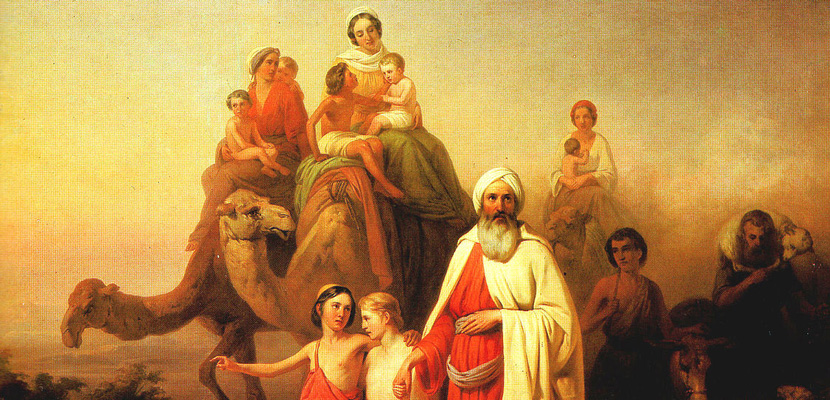
Against all expectations…

Notes for a sermon on John 6:1-21, July 29, 2018,
Holy Trinity Anglican Church (Strathcona), Edmonton

Some life-changing events come about almost by accident. I had an epiphany once at a clergy conference on Christian Education. The presenter was talking about how various kinds of educational events and programs attract people at various stages of spiritual development. In part of her talk, she said that one group of people were the sort who would always support certain programs, but we shouldn’t expect there to be very many of them.

Then she stopped, saying that she got very impatient with people who said things like “We had a mission event, and it was a total failure – only 6 people showed up!” “What do you mean, ONLY 6? You had 6 people who were moved to turn up. God sent you those people. Give thanks for that, and work with them!”

After that digression, she resumed her prepared talk, but I don’t recall taking much of it in. I had been totally blown away by what I had just heard. I sat and thought about it, realizing that it was just what Jesus did in the first part of our Gospel for today.

The feeding of the 5,000 was a major event in Jesus’ ministry. It’s one of the few stories that appears in all four Gospels, with the details nearly identical between them, and in all four it is followed immediately by Jesus walking on the water. We could spend a lot of time speculating on the “how” of the story; to do that seems to me rather to miss the point.

Jesus’ exchange with Phillip and Andrew shows how the disciples are thinking: there is not enough to feed the masses, and there’s no reasonable expectation that they could get enough together to do it. There’s just not enough! What Jesus does is not to ask if there’s enough, but rather to ask what they can put their hands on. Five loaves and two fish! A realist might say at that time “Better send them all home – there’s nothing we can do.” Jesus has a different idea: he takes what God has provided, gives thanks, and proceeds to work with what he has.

Against all expectations, the people were fed, with 12 baskets left over.

DSCN0370
Loaves and fishes mosaic, Church of the Multiplication, Tabgha, Israel

How it happened is unanswerable. What happened is clear: as the story has come to us, Jesus acted, and people were fed. He challenged his disciples’ scarcity mindset. He used what was at hand to show that God’s generosity will not be limited. Why it happened is the point: very simply, to demonstrate God’s unbounded love in action.

Against all expectations, God’s abundance will defeat our myth of scarcity – every time! But like Phillip and Andrew we need to learn to trust in it.

But isn’t the scarcity narrative powerful? Our society is built on the notion of shortages. People believe there is never enough, so we hoard our wealth and live in fear of running short. It becomes a dog-eat-dog world, dedicated to the survival of the fittest, as people compete for what we believe are increasingly scarce resources.

I believe the results are clear.

There are people going hungry all over the world, not just in far-flung places, but in homes in this wealthy province.

There are people without access to clean water, not just in far-flung places, but in areas of our country largely populated by Indigenous people.

There are people without adequate (or any) housing, not just in far-flung places, but within a few blocks of this church building.

Why does this happen? I believe it is because we become so focused on scarcity that we lose our trust in God’s abundance and God’s desire to share this bounty with all of God’s people.

The scarcity bug often infects the church. “We can’t do that, because we don’t have…” (fill in the blanks!)

Not long after that clergy conference I had the opportunity to put my epiphany into practice. The parish where I was then the Rector was joining a multi-church program called NeighborLink. The program pools volunteers from churches to provide helping services to people in the community. Each participating church recruits a coordinator and a roster of volunteers, who are then deployed through a central office. We had appointed a coordinator and put out a call for volunteers with a date set for commissioning them.

Three weeks before the date, the coordinator came into my office and said, “Robin, we’ve got to pull the plug. It won’t work. We have only three volunteers.” Thinking that we had no reasonable expectation of any more, I was about to agree, when I thought of that insight from the conference. “Wait a second,” I said, “we have three volunteers. Let’s give thanks for them, and then work with what God has given us.” She sat there for a moment looking stunned, and then said, “Maybe you’re right.”

Against all expectations, three weeks later we commissioned 10 volunteers.

It wasn’t quite 5 loaves and 2 fish feeding 5,000, but it certainly felt a bit like that. We trusted in God’s goodness, gave thanks, and worked with what we had.

My friends, let us strive never to live with a mindset of scarcity, but rather rejoice in the abundance of God’s creation, giving thanks for all things at all times.

Jesus came to show us God’s love in action.

Against all expectations, he fed people in their time of hunger.

Against all expectations, he brought peace to his disciples, terrified on the storm-tossed sea.

Against all expectations, he defeated the powers of sin and death by giving up his own life.

Against all expectations, he lived God’s love in a world which so desperately needed (and still needs) to know it.

Against all expectations, he showed that God’s love can never be exhausted.

Against all expectations, he loves us all.

May we live in that love, rejoicing in God’s inexhaustible abundance. Let us give thanks, and then let us work with what God has given us.

Thanks be to God. Amen.

Stewardship and other spiritual disciplines

Notes for a sermon preached at Holy Trinity, Tofield AB, June 3, 2018
Texts: 1 Sam 3:1-20; Mark 2:23-3:6

How many of you remember Sunday January 17, 1982? Not too many? I didn’t remember the exact date, but I worked it out based on one scripture reading, which we heard this morning from I Samuel, the story of Samuel’s call. It turned up in the lectionary at a time when I was wrestling with my own sense of vocation.

Speak, for your servant is listening.”

These words spoke volumes to me then. They led me into the discipline of discernment through prayer: paying attention to God’s call, a practice that led eventually to seminary, ordination, and 26 years in parish ministry. Without hearing that scripture reading, I might well not be standing before you today.

Hearing the call is one thing. Following it is another. All of us are called to ministry through our baptisms, but not all follow that call. For the boy Samuel, his call was the beginning of a lifetime of serving the Lord, playing a pivotal role in the history of Israel. We remember him as the person who anointed first Saul and then David as King of Israel. We don’t know a lot about his life between hearing the call and the rise of the monarchy, except that

As Samuel grew up, the Lord was with him and let none of his words fall to the ground. And all Israel from Dan to Beer-sheba knew that Samuel was a trustworthy prophet of the Lord.

We are told that the demand for a king did not come until Samuel was old and his sons had proved unworthy. Samuel’s response to the people who wanted a king was to do what he had first begun to do so long ago: he prayed, seeking to listen to the Lord. It seems to me that this had to be the result a life-time of following the call, hearing and speaking the Word of the Lord. It was no accident, but the consequence of years of following the discipline of prayer. We can easily picture Samuel through long years of service in the holy place, attending to ritual day after day, and always taking the time to listen.

Speak, for your servant is listening.”

He listened!

Discipline bears fruit. How do great musicians achieve excellence at their art? They practice. [Old joke: A man gets off the subway in NYC carrying an instrument case. He asks a bystander, “How do I get to Carnegie Hall?” “Practice, man. Practice!”] How do great athletes become star players? Same answer! It does help if you have natural talent, but if you haven’t heard the call to disciplined exercise of your talent, your inborn gift will never flower fully. The more you practice, the more the exercise of the gift becomes second nature: it becomes truly a part of who we are.

Samuel’s calling led to years of disciplined service, and ultimately to the recognition that he was the one called to lead God’s people into a new way of being.

In our Gospel today, Jesus points to the spiritual discipline of sabbath-keeping, a practice commanded in the law. He is breaking the law, at least in the eyes of his opponents. They focus on the legalities, but Jesus’ interest is more on the underlying spirituality of keeping sabbath:

The sabbath was made for humankind,
 and not humankind for the sabbath.

Writing in The Christian Century, Thomas G. Long recalled how as a youth he heard this saying as permission to go and do all the things he liked doing on Sunday, freed from the restrictions imposed by his parents and his home church. He realized as he grew older that he was mistaken, coming to understand that sabbath-keeping should be undertaken not because you must do it, but because it’s good for you. The sabbath is a gift from God, calling us to take a day of out every seven to do things that draw us closer to God and each other. In her 1989 book “Keeping the Sabbath Wholly,” Marva J. Dawn identifies four key aspects of keeping the sabbath:

(1) ceasing—not only from work but also from productivity, anxiety, worry, possessiveness, and so on; (2) resting— of the body as well as the mind, emotions, and spirit—a wholistic rest; (3) embracing—deliberately taking hold of Christian values, of our calling in life, of the wholeness God offers us; (4) feasting—celebrating God and his goodness in individual and corporate worship as well as feasting with beauty, music, food, affection, and social interaction.
(excerpt of a review on Amazon.com)

What I want to emphasize here is that keeping the sabbath takes intention and discipline. To truly keep the sabbath, to get out of it what God intended for us, we need to keep practicing. That doesn’t mean just not doing stuff, like the old Sunday rules. It means taking the time every week to turn our lives over to God’s purposes: ceasing, resting, embracing, and feasting.

Finally, another spiritual discipline. I came here today because I claim to have some knowledge and experience in the matter of stewardship. Please don’t call me an “expert,” which just means someone with a briefcase more than 100 km from home!

I was glad to give your Rector some suggestions about how to approach the matter of stewardship. Will they bear fruit? I hope so, and the pledges that will be received today will begin to tell that story. But let’s be sure of this: stewardship of our possessions is not a matter of a “once and done” campaign, but rather a question of a life-long spiritual discipline.

Like Samuel’s discipline of listening to God, and Jesus’ call to sabbath-keeping among his disciples, the discipline of stewardship takes practice. Stewardship is born out of the insight that everything we have is gift, and that these gifts are stewardshipgiven for a purpose beyond our own needs. That means that stewardship is very much about money, but before it’s about money, it’s about how we use our treasure to move forward in our participation in God’s mission.

Spiritual disciplines are gifts from God, Spirit-led responses to God’s call.

We are called to discern God’s call. We respond in the Spirit by turning our hearts in prayer, seeking to know God’s desires for our lives.

We are called to turn our lives to God’s purposes. We respond in the Spirit by setting aside one day in seven to focus on those purposes—which then gives a Godly focus to the other six.

We are called to use our material gifts for the furtherance of God’s mission. We respond in the Spirit by dedicating a portion of our possessions, our time, talent, and treasure, to the work of God’s church—which then gives a holy focus on how we use what we retain.

May all our lives be lives of dedication to God’s purposes, lived out in the joy of holy discipline.

Amen.

The Sacramental World of the Bible

Originally written for “Trinity Today,” the monthly newsletter of Holy Trinity Anglican Church, Old Strathcona, Edmonton, Alberta

As General Synod 2016 approached, Anglicans across the country were invited to study a report entitled “This Holy Estate,” on the question of same-gender marriages. The Thursday morning study group at Holy Trinity Anglican Church spent four weeks in this undertaking. It was an illuminating time for me, not because it changed my perspective on the “big question” (it didn’t much!), but because it showed me just how broad a spectrum of viewpoints could be encompassed in a group of less than ten people, particularly with respect to the Bible and how we read it. None of us in the group read the Bible from a purely literal standpoint, but the place it occupied in our lives was very different, from a profound reverence to near-indifference.

The exercise led me to ponder how we ought to approach the holy Scriptures. I am suggesting that we take a sacramental view of the Bible, which I believe will help to open its words for us to become the living Word of God.

The Sacraments as we understand them have both a material and a spiritual reality: the material both points to and conveys the spiritual. The water of Holy Baptism points beyond itself to the reality of incorporation into the Body of Christ, the Church. The bread and wine of the Holy Eucharist likewise points beyond, to the reality of the presence of Christ in the gathered community and the world around us. In the same way, the words of the Holy Bible lead us beyond the printed page to the reality of God’s presence in humanity and in the world which God created, and ultimately to the redemption of the world through the death and Resurrection of Jesus.

Although Anglican tradition has always placed a high value on Scripture, let it be said here that we do not worship the Bible, but rather the God whom the Bible reveals. The great Anglican theologian Richard Hooker said that the Church – the “called-out” people of God – is founded on scripture, tradition, and reason, which has come to be known as “Hooker’s tripod.” Through the interplay of the three legs, the Church can continue to move forward in its participation in God’s mission. Clearly, Scripture has a foundational and supportive role in this mission.

From itpexels-photo-372326.jpegs beginning, Anglicanism has placed a high value on the public reading of Scripture. Besides being written in English, the first Book of Common Prayer (1549) made some important innovations in worship. Cranmer reduced the multiple monastic daily services to two, the “daily offices” of Morning and Evening Prayer, with the implied expectation that people would participate daily. A system of reading the scriptures (a “lectionary”) was provided for these services, so that anyone who attended them regularly would hear the entire Old Testament every two years, the New Testament three times a year, and the Psalms monthly. While daily attendance at the offices was the exception, the Prayer Book established the centrality of the Scripture in our worship.

More recently, we have come to understand the Eucharist as our church’s central act of worship. While the Sunday lectionary we now use is not nearly as comprehensive as the original daily lectionary, it still places a considerable portion of the Bible before worshipers on a regular basis.

Unlike some other churches of the Reformation, the Anglican church has never defined itself confessionally, by articulating core beliefs to which all members are expected to assent. We have instead tended to define ourselves as a communion through our liturgies. Our worship tells us – and others – who we are. If our worship defines us, it is no stretch to see that the importance of the Bible in our worship also helps to defines us.

So… how do we read the Bible? How do we understand what it is and what it is not? How can it speak to us today without it becoming stale? The Collect of the Day for the Sunday between Nov. 6 & 12 gives some hints about our church’s historical view of Scripture.

Eternal God,
who caused all holy scriptures to be written for our learning,
grant us so to hear them, read, mark, learn, and inwardly digest them,
that we may embrace and ever hold fast the blessed hope of everlasting life,
which you have given us in our Saviour Jesus Christ,
who lives and reigns with you and the Holy Spirit,
one God, for ever and ever.

(Anglican Church of Canada, Book of Alternative Services, p. 391,
or the Book of Common Prayer, p. 97)

First, it does not say that the Bible is “God’s Word” but rather that God caused it to be written. Fallible human beings put pen to paper to write its many and varied texts, under divine guidance but not as God’s holy puppets. They saw and heard and remembered – and then wrote.

Second, it clearly asserts that the scriptures are to be used. They are given for our learning: “read, mark, learn, and inwardly digest.” How we do this is a matter of personal choice and habit. There is no one right or wrong way for Christians to interact with the Scriptures, except of course, not to do so at all!

Third, we see that our interaction with the scriptures is not a mind game—knowledge for the sake of knowledge—but should lead us beyond the written word to the Incarnate Word. The intended learning should change us. The goal is always a deeper relationship with God in Christ—everlasting life. We are called to become the living Word of God in the world. The Bible is not the end-point of our faith. It is the prime foundational document of the Christian faith, a faith which is not in the Bible but in the one to whom it points.

How do people use Scripture? Sometimes we may sit alone with our Bible in reading or meditation. Very often we hear Scripture proclaimed in the liturgy. At times, we may join in Bible study. In whatever way we interact with Scripture, we are invited to let the words before us change us and draw us ever deeper into a relationship with the One who caused those words to be written. This is truly sacramental – a holy action drawing us closer to God. The Word of God is thus not a static reality on a printed page, but a dynamic reality in the lives of the faithful.

I sometimes preface sermons with this prayer, which I now offer in closing:

Gracious God
Through the written word and the spoken word,
May we become your living Word,
Through him who was and is the Word made flesh,
Our Lord and Saviour Jesus Christ. AMEN.

Looking Through the Cross

Notes for a sermon on 1 Corinthians 1:18-25 at Holy Trinity Anglican Church (Strathcona) on Sunday, March 4, 2018.

What do we see when we look at the cross?

2000px-Coa_Illustration_Cross_Easter.svg.pngI am sure that everyone of us would answer this question in differing personal, theological, and spiritual terms. I am no less sure that we here today share something in how we behold the cross. After all, it has been the principal symbol of our faith since the 4th century. We know about Jesus’ death on the cross. We decorate many of our churches with crosses of all descriptions. Some of us make the sign of the cross. Many people wear crosses on their persons.
The cross is all around us. When a symbol is so all-pervasive, it can become a constant reminder of the reality behind it or … sad to say, it can become wallpaper. We live with it, but it rarely affects us.

When Paul came to Corinth, he did not come carrying a cross, but rather bearing “the message about the cross.” Some people received the message he proclaimed, but many others dismissed it.

Depending upon their background, they heard Paul’s message as a “stumbling block” or simply “foolishness.”

Foolishness? If you expect your God to be a mighty and victorious warrior, immortal and invincible, proclaiming the divinity of a person who died a shameful death is nonsensical. “Real” Gods don’t do that kind of thing!

Stumbling block? If you expect your Messiah to be visibly blessed and honored by God, the assertion that a victim of crucifixion is the Christ is outrageous. More than that, it is scandalous, in the Hebrew sense that it is heard as something that causes a person to sin. (Note that our word “scandal” comes from the Greek for “stumbling block” — skandalon.)

Whichever way people heard it, the actual story of the cross of Christ was clear and immediate to the people of Corinth—a city of the Roman Empire, a regime which kept the peace through violence and intimidation. Rome’s ultimate means of punishment was crucifixion, which was reserved for the worst enemies of the state. In 2018 it is an act about which we must remind ourselves, but in the year 50 in Corinth, it was a common presence in people’s lives. No one needed to be told what it meant.

And today? Can we still be scandalized by the cross? Do we ever see it as mere foolishness? I would suggest that the answer to both questions is “yes,” in the wider world to be sure, but also among folk who are seeking to follow Jesus.

Our Thursday morning study group has just read a book by the late Christopher Lind, entitled “Rumors of a Moral Economy.” Lind wrote of how contemporary society is dominated by a competition-driven economy, which when allowed to function without restraint leads to greater and greater concentration of wealth, and a diminution of the common good.

In pure competition, there are only winners and losers: a system at best indifferent to human needs. In a competition-driven world, proclaiming Christ crucified can easily be heard as exalting a loser.

Lind’s book also pointed to how a moral economy must be rooted in community and a sense of the common good. When community breaks down (as it easily does in a purely competitive situation), people become isolated, and spiritual needs often end up being expressed in questions about what God can do for us. When faith is all about meeting our own needs, nothing less than a totally divine saviour will do, and then we stumble over the idea that Jesus ended his life rejected by all. Some of them will say, “Well, Jesus really was God, so the crucifixion didn’t really matter.” This is an ancient heresy, called “Docetism,” the belief that Jesus only seemed to be human.

Make no mistake: Jesus was as human as you and me. He ate and drank, he slept, he wept, he felt all the things we do. And just as surely, he died as all of us will in our own time.

Jesus gave up his life on the cross to reveal the power and the wisdom of God—already embodied in his own person.

As Paul wrote:

… though he was in the form of God,
   (he) did not regard equality with God
   as something to be exploited,
but emptied himself,
   taking the form of a slave,
   being born in human likeness.
And being found in human form,
   he humbled himself
   and became obedient to the point of death—
   even death on a cross.                                       (Philippians 2:6-8)

The cross defies any ordinary human explanation. There’s no logical deduction, no “standard wisdom,” no simple text-book answer that leads us to the truth of the message Paul brought to Corinth.

God’s power and glory is revealed here, not in a mighty triumph, but in the death of one who was sinless, who gave up his life as a holy sacrifice on behalf of all of God’s people. It is the ultimate act of self-identification with us: all whom Jesus came to redeem.

So: what do we see when we look at the cross?

Let me rephrase the question: what do we see not when we look AT the cross, but when we look THROUGH it?

It is not so much the cross that should demand our attention, but the reality that lies behind and beyond it: the loving-kindness of the God who loved us into being, who loved us enough to send his Son, and who loves us and all humanity every day of our lives.

Let us then hold the cross before us.

Let us see in and through it how Jesus laid down his life for us, in the ultimate and defining act of love, in words from the 1st letter of John.

We know love by this, that he laid down his life for us—and we ought to lay down our lives for one another.                                                    (1 John 3:16)

And Jesus said

This is my commandment, that you love one another as I have loved you. (John 15:12)

The message of the cross is the power of God, and the power of God is love. May this be our proclamation in word and deed, today and always.

Amen.

Doing it again

Today I had the privilege of preaching and presiding at the Eucharist at Holy Trinity (aka “HTAC”). I had been scheduled to preach for a while, but other commitments took both our Rector and our Assistant Priest away from the parish. So…

Yours truly got to do what I used to do most Sundays for a quarter of a century. They say that riding a bike is easy once you learn how to do it, and once you have learned, doing it again is simple. You just get in the saddle and pedal.

That’s rather how today felt. HTAC is not “my” parish, at least not in the sense that St. Matthew’s Cathedral and St. Augustine’s-Parkland were. There, I was the Rector, expected to be present and available every day, and to do what had to be done at pulpit and altar most Sundays. Most Sundays at HTAC, I’m sitting in the back row of the bass section in the church choir, and happy to be there.

Today was different. I prayed with the choir before the service as usual, but today I led the prayers. I sang the psalm with the choir, but today from the presider’s desk. I proclaimed the Gospel and preached, and then went to the altar to preside at the sacrament.

These things happen every Sunday at HTAC. But today I assumed roles that other people usually take. And (I have to confess) it felt good.

Readers of this blog may have intuited that I wasn’t really ready to retire in 2013, but rather that the situation was forced on me. Today reminded me that I still feel most alive when I’m ministering in the pulpit and at the altar. I still believe that this I what God made me for, but I recognize that other people have similar calls, and that I have to let go as I am able.

I am truly grateful for today’s experience. I hope that my ministry today helped at least someone. That’s all I can expect, and all any ordained person can hope for.

Thanks be to God for this day. I have posted the text for today’s sermon under “Sermons and theological discussions.” Read it HERE.

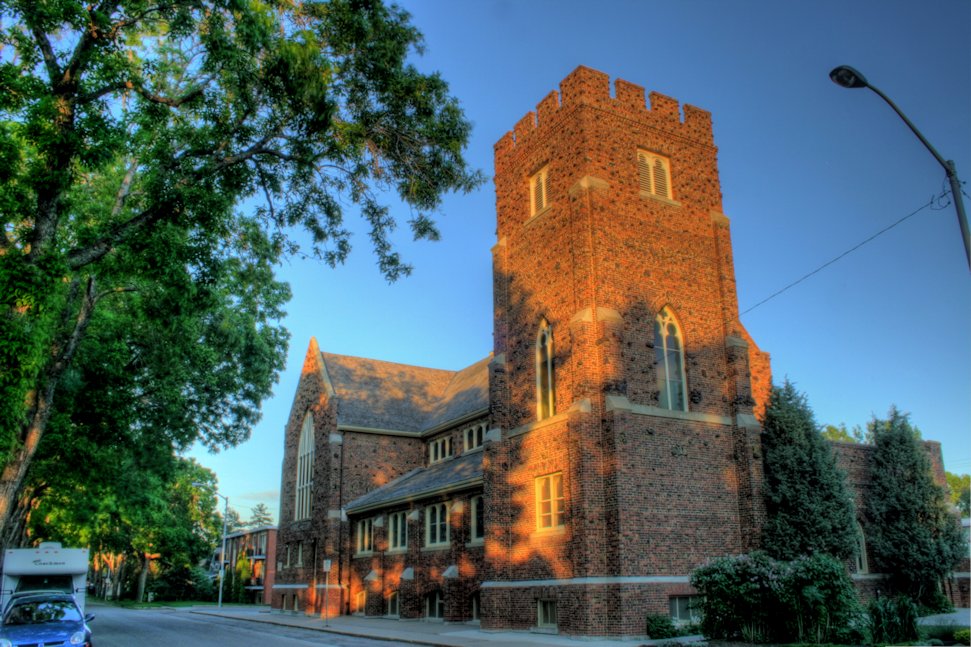
Holy_Trinity_Anglican_Church_Edmonton_Alberta_Canada_01A
View from the Northwest – 100 Street and 84 Ave.

Is it about you?

Last night, at All Saints Anglican Cathedral in Edmonton, Bishop Jane Alexander ordained three people to the priesthood and seven (!) to the diaconate. If I’m not mistaken, it was the largest ordination in this Diocese since at least 1986. The Cathedral was almost full, and there was a large turnout of the diocesan clergy. Some of us had speculated about how long the liturgy would take, and we were agreeably surprised when it came in at about 2 1/4 hours. I didn’t hang around too long afterward.  Bun fights in tight spaces make me a bit anxious, and my hearing issues (hypersensitivity to crowd sound at voice range) make it difficult to function in that kind of noisy environment. Nonetheless, I did have time to greet one of the ordinands, a person with whom I have had a long and special relationship.

I don’t ever recall being at an ordination service for so many people. Most of the ordinations I participated in during my time in the Diocese of Brandon were for individuals. I have no problem with the church celebrating the new ministry of a person who has been raised up for ordination. What has often troubled me is that these celebrations often become about the individual. Ordination should not be about a person having “made it,” but about the church renewing its leadership.

Last night’s service filled me with joy. I knew three of the ten ordinands personally, one better than the other two, but that’s not really the point. I saw ten (count ’em – 10!) people being affirmed in ministries that we prayed would be of benefit to the church and the world. It wasn’t about any one of them, but about the church engaged in the continuous and joyful renewal of its leadership. It was wonderful! I give thanks for the privilege of being present for all ten, even if seven of them were previously totally unknown to me except as names on a list.

On Holy Cross Day, our preacher recalled for us the love displayed and exemplified by Christ’s death on the cross. It doesn’t make sense to some people, but that’s okay. The ten who were ordained last night will share in proclaiming that truth, in their lives and their ministries. (Is there really any difference?)

Today, I welcome three people to the fellowship of the Holy Priesthood and seven people to the company of Deacons. May they continue to proclaim the love of God at all times and all places.

Finally my question to anyone who may be considering ordination in the church. Is your call about what YOU want to do, or about what GOD needs in the world. Is it about the church (God’s people) or about you? I pray that you may be able to answer that question prayerfully and honestly.

A Community that Sends

Notes for a sermon preached at Holy Trinity (Strathcona) on August 27, 2017

Texts: Romans 12:1-8; Matthew 16:13-20

Last Sunday, Fr. Chris spoke of the challenge to the Church to “go out.” There is much more that can be said about this, including Archbishop William Temple’s dictum that the “Church is the only society on earth that exists for the benefit of non-members.” One way of stating our mission: We are to go out to be of benefit to the world around us.

Let’s back this up a step or two, and think about who is doing the sending. What kind of group is it that can send its members out in this way? I take my cue from Paul, and his appeal to the church in Rome, part of which we heard in today’s lesson. The lectionary does us a bit of a disservice, by splitting Chapter 12 between two Sundays, but let’s work with what we have been given.

Paul starts out by saying, “I appeal to you therefore…” That last word should alert us to the fact that what comes next is not some sayings plunked into the text in an arbitrary way. It has a context.

The preceding three chapters (9 – 11) deal with what some contemporary scholars consider to be the central issue of Romans, the question of the fate of Israel. Paul agonizes over the problem, lamenting the fact that most Jews have not accepted Jesus as the Messiah. He ultimately refuses to let go of his faith in God’s fidelity to his promises, concluding that in God’s great mercy, salvation would not be denied to the people of Israel. The section closes with an outburst of praise (curiously not in the Lectionary):

O the depth of the riches and wisdom and knowledge of God! How unsearchable are his judgments and how inscrutable his ways! ‘For who has known the mind of the Lord?
   Or who has been his counselor?’
 ‘Or who has given a gift to him,
   to receive a gift in return?’
For from him and through him and to him are all things. To him be the glory for ever. Amen.

And… therefore…

If God has been gracious to all, our response should then be to strive to live lives that reflect that grace, not merely as individuals, but in a company of the faithful whose corporate life displays God’s grace. Paul uses the image of the body, more concisely than in 1 Corinthians 12, to argue that we are interdependent—needing each other and rejoicing in each person’s unique gifts. Paul enjoins us “not to think of [ourselves] more highly than [we] ought to think,” but to regard ourselves with “sober judgment” as members of the Body of Christ. I might use “humility” here, remembering that that doesn’t mean self-abasement (“worm theology”), but being honest with ourselves, with our brothers and sisters, and with God, about who we are and what are our gifts.

It is easy to miss how counter-cultural is Paul’s concept of Christian community. He wrote:

Do not be conformed to this world, but be transformed by the renewing of your minds, so that you may discern what is the will of God…

The world in which Paul lived was the Roman Empire, one of the most successful regimes in history. This was a time of unprecedented peace and prosperity, enforced by Roman military might. However, the Empire relied on a rigidly structured society, in which everyone knew his or her place, and upward social mobility was almost unheard-of. The subjugated peoples of the Empire could enjoy the benefits of Roman rule so long as they kept to their places. Into this mix, Paul throws a huge measure of egalitarianism. When he calls on followers of Christ to see themselves as no better than they should, it implies that they should regard their companions on the way as their equals, just as Jews and Christians are equal in God’s economy of grace and mercy.

The point of the church, however, is not just to build a community where everyone loves each other. That’s a good thing by itself, of course, but the mission of proclaiming God’s love in the marketplace must be based in a people practicing what they preach. The life of the Christian community is a large part of its message.

Harold Percy, a well-known Canadian writer about mission, has outlined Christian mission in terms of the Kingdom of God. We are called
to proclaim the Kingdom,
to celebrate the Kingdom, and
to model the Kingdom.

When people look at us—a community of people who follow Jesus as the Messiah—they should see a body which strives to behave as if God’s reign is being fulfilled in our midst. Our calling is to be a model of the Kingdom. Of course, models never quite live up to the reality they are pointing to; every church community inevitably falls short of the Glory it is striving to proclaim. But that doesn’t mean we should quit trying!

It grieves me deeply to know that there are people who assert themselves over others by “who they are,” at times invoking the name of our Saviour. We saw some of the symptoms of that in Charlottesville two weeks ago. So-called “identity politics” have no place in God’s Kingdom. White supremacy, racism, anti-Semitism, misogynism, homophobia and their like are evils upon the body politic. When they find their way into Church life, they are toxic to the Gospel we are called to proclaim.

We are followers of Jesus of Nazareth, the one whom Peter confessed to be the Messiah. Jesus came to “draw all people to [himself].” As his Body, we are called to draw all people to him, inviting all to share in the grace, mercy, and unbounded love of the God who cannot let his people go.

God loves ALL his people—and so should we!

Let’s go and show it.

The language of reconcilation — in one word

I have recently learned that some (many?) of the indigenous peoples of our province and country are objecting to the use of the word “our” in referring to them. In the context we were discussing, it seems we are no longer to pray for “our indigenous brothers and sisters,” but for “the indigenous peoples.” The specific objection is that the possessive pronoun “our” implies ownership, and the indigenous people are no-one’s property. I really get the second part, but I was a bit taken aback by the first idea. Does saying “our brothers and sisters” imply we own them? As I understand the English language, possessives can have that meaning, but their use in this kind of context refers more to interpersonal relationships than to ownership — at least in as far as I use the language.

That’s my perspective. But I do recognize that my use of language is not absolute, and how I use a word may not resonate well with someone from a different cultural/linguistic environment. For indigenous peoples in Canada, living with a heritage of the underside of colonialism, the implication of ownership and control is clearly very powerful, overriding any nuance of meaning that I may have understood.

There is a principle of building community which Paul expands on at length in chapters 8 through 10 of his First Letter to the Corinthians. The presenting issue is whether Christians should eat meat which has been sacrificed to idols — not a huge issue in most places today, at least as far as I can see. Nonetheless, Paul’s extended discussion of the issue comes to a widely-applicable ethical position. His position can be summed up as not knowingly doing anything that will give offense to another “brother or sister,” whether or not that thing is important to us.

Do I fully comprehend the power of using “our” in the context of referring to Indigenous people? Of course not: I am of settler stock, in fact, I am an immigrant. It is impossible for me to grasp the depth of the issues in the same way as a resident of a place like Maskwacis or Opaskwayak. But I can hear the effect that my language — easily taken for granted — can give offense, causing hurt where no hurt was intended.

I am resolved to pay attention to the language I use, striving always to hear how it may hurt others. It’s a hard road, but reconciliation depends on hearing each other in spirit and in truth. May my speech be clear and loving.

On the journey to…

A sermon this morning on Genesis 12:1-4a (the call of Abram) started me thinking about various times in my life I have stepped out of what might be expected, and gone where the call has led.

The first was not of my own volition, but my parents’. When I was only three years old, they decided to pull up roots in England and transplant our family to Canada. We settled in Drumheller, Alberta, a far cry from the great metropolis of London where I was born. I don’t know exactly how my parents felt about it at the time, but it became clear over the years that being so far from family and old friends was difficult for both of them, especially my mother. My early years in this country were marked by a sense of being “not quite at home,” a feeling that has stayed with me throughout my life.

The second such event came when I left teaching school to return to Edmonton, and to do… I wasn’t quite sure what! All my spouse and I knew was that we couldn’t stay where we were, and the opportunities were far greater in the city where we had both attended University. Some family members were horrified that I would give a seemingly secure and respectable job to search for something different.

That move led to a graduate degree, a job with our Provincial Government, and us settling down as a family. But God had other ideas. After nine years in that job, we again pulled up stakes and left for Saskatoon for me to enter theological college. I had no real idea where this was leading, except for the conviction that I was called to go down this road.

The road led to ordination and the call to be the pastor of a small-town parish. It was a great adventure, but not without its problems. After a few years there, I moved on to a suburban parish, where I stayed almost thirteen years. In time, I felt the need to move on: I accepted a call to become Dean and Rector of St. Matthew’s Cathedral, Brandon, Manitoba.

This was another move into the unknown: a new parish, a new city, a new province, and a new diocese. I didn’t realize at the time just how big a move this would be. Local customs are different, even at the relatively small remove of a couple of Canadian provinces. But we persisted, through some great years, and some not-so-great, until my retirement in 2013.

Each one of those moves required a measure of faith. In every case, I had the sense that I was going where I had to go, except perhaps the first one, when I had no choice in the matter.

In two of the places where I served the Church, I had conversations with people whose whole lives had been centered on that place. Many of them were puzzled why I might want to live somewhere else: “[town] has everything a person needs.” That may have been true, but going elsewhere was not contingent upon needs, but upon a call, just as Abram heard God’s call to leave home and family and travel to “a land which I will show you.”

I have been on this journey all my life, and now God has brought me to a place where I might reasonably hope to live out my days in peace and reasonable comfort. Sometimes, though, I find myself wondering…

A theology of money?

Notes for a sermon preached at Holy Trinity Strathcona, Sept. 25, 2016

Texts: Jeremiah 32:1-3A, 6-15; 14-16; 1 Timothy 6:6-19; Luke 16:19-31

At one time I was deeply involved in Stewardship in this Diocese, including 1½ years as Stewardship and Planned Giving Officer. In that capacity, I received many preaching invitations, most often to parishes that perceived themselves as needing help in their finances.

“Stewardship” has become an important word in church life over the last few decades. We did various financial programs before that, but an apparent overemphasis on money per se led us to look for a more “theological” term. It’s not a bad word—it has both biblical and theological import—but it seems to me that it has become a code-word for how we fund the church. I believe most church people, if asked, would now say that stewardship is about getting more money out of church members.

In my last parish, I got a strong negative reaction if I raised the question of Stewardship programs. Previous programs had used some strong-armed tactics. It ended up putting them in a worse financial situation than they might otherwise have been.

A few years ago the church renamed our national office of Stewardship and Financial Development as “Resources for Mission,” emphasizing that the main thing is the Church’s mission, which requires a variety of resources, including, but not limited to, money.

dollar-signThe church sits uneasily with money. I read of a recent meeting of national staff in which they had concluded that we need a new theology of money. I would agree, but I would drop the word “new”—have we have had any really coherent teaching on this subject? Historical church attitudes to money have veered between the extremes of seeking either great wealth or intentional poverty.

In my various parish visits for Stewardship preaching, the clergy often said to me that they were grateful that the Diocese had someone to come and talk about these things, things which made them very uncomfortable. I understand that: a parish priest speaking about money from the pulpit cannot help but be aware that his or her own stipend is a major line item in the parish’s budget—in many cases the largest single expense. It can sound like you’re begging—even if your theology of stewardship is totally sound.

This brings me to today’s lessons, all of which have something to do with money. Maybe they will help us (and maybe also Church House!) get a handle on a theology of money.

First, I Timothy, the source of one of the commonest and most erroneous Bible quotes. People often say that “money is the root of all evil,” but note what is actually written:

…the love of money is a root of all kinds of evil.

It is not money that matters but what we do with it in our lives and in our hearts. Money per se is ethically neutral, a convenient means of exchange, a means to an end, whether good or evil. It has no real existence beyond that, but how we regard it and use it has immense spiritual significance.

…in their eagerness to be rich some have wandered away from the faith and pierced themselves with many pains.

And further on,

(The rich) are to do good, to be rich in good works, generous, and ready to share, thus storing up for themselves the treasure of a good foundation for the future, so that they may take hold of the life that really is life.

It’s what we do with it that counts. God’s Mission is the all-important thing. If we have wealth, we are charged to use it for God’s purposes before ours. Regardless of our own personal wealth or poverty, the challenge is to seek the good, to look to know what will help advance the Kingdom of God in this world, and to use our God-given resources towards that goal.

Sometimes it may be very unclear what will actually advance the Kingdom. The prophet Jeremiah lived in just such a time of great uncertainty and anxiety. The Babylonians were threatening the Kingdom of Judah, the kings were weak, and the people had retreated behind a triumphalist theology. (God had made a covenant with them and would not allow his holy city and temple to fall. All they had to do was invoke his name.) The prophet saw otherwise, understanding the reality of the threat, and the people’s confidence to be misplaced. So he does a prophetic action: he buys some land. This looks like madness when the invading hordes are at your gates, but he offers it as a sign of hope. This may not seem the right time to affirm God’s purposes (probably better to be getting all your stuff together in preparation), but Jeremiah asserts that now is the time to work for the Kingdom.

If not me, then who?
If not here, then where?
If not now, then when?

The answer he gives us is “Me, here, and now.” It is always the right time and place to do God’s work.

And do it we must, lest we end like the rich man in the Gospel. There’s much else that could be said about this story, but it seems that at least part of the message is the injunction to do good when the opportunity presents itself. The rich man had years in which he could have helped Lazarus, but he did nothing. As Jesus tells it, the consequences are clear.

Notwithstanding the current recession, we live in one of the most fortunate countries in the world. The vast majority of our people are well-fed, decently housed, educated, and in good health. We have been given great riches, as a people, and as individuals.

Let us then not fail to use what God has given us for the good of God’s people and God’s world.

Let us keep the eyes of our Spirits open, that we may see the need around us.

And let us keep all of our resources at the ready to do God’s work.

May it be so.